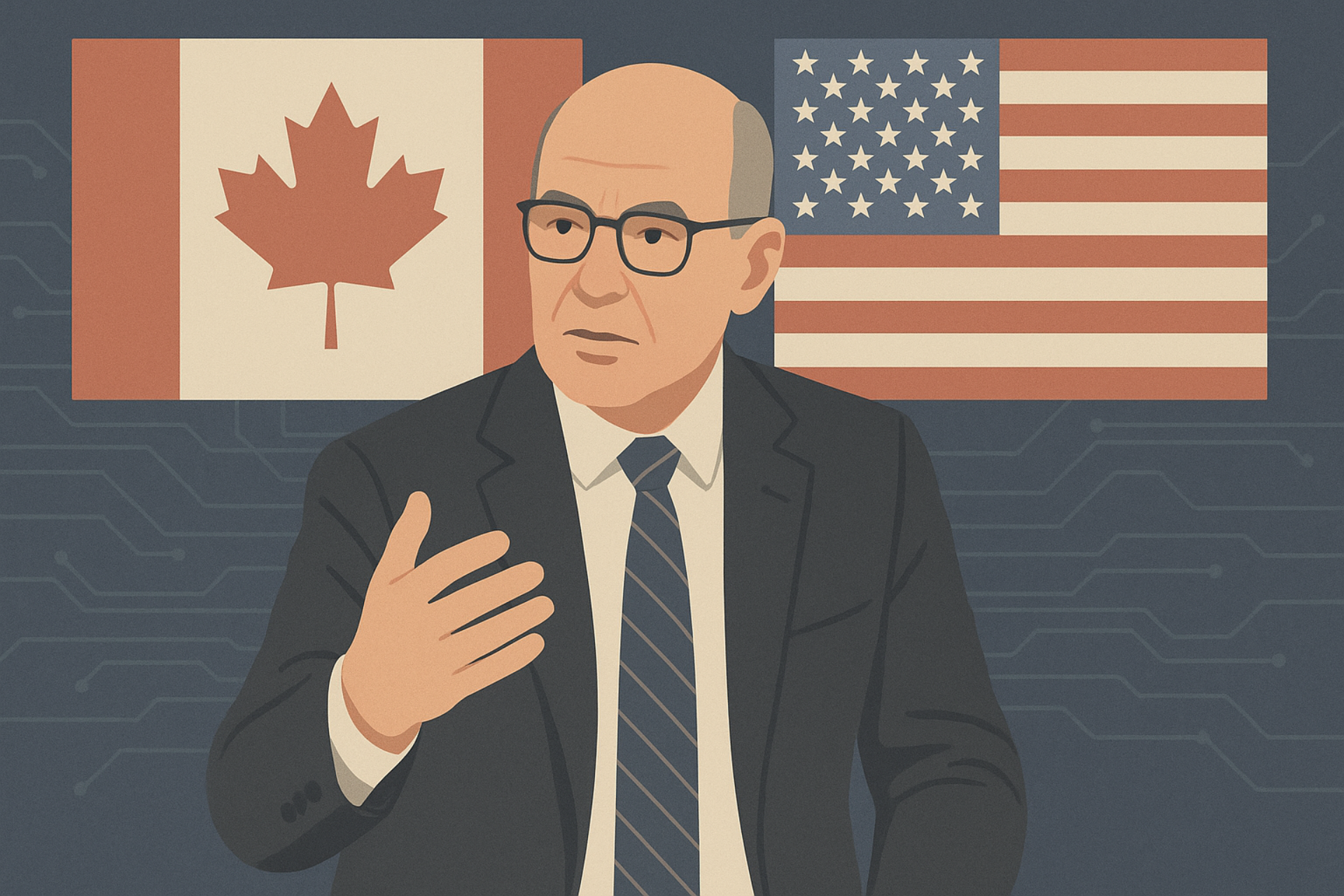
December 12, 2025 Former BlackBerry CEO Jim Balsillie is warning that Canada must quickly reassess its digital and economic policies after the United States released a new National Security Strategy that he says could reshape how technology, data and trade operate across North America. In a Bloomberg interview directed to Canadian Prime Minister Mark Carney’s government, he says the shift will have direct consequences for Canada’s control over strategic digital assets.
The warning comes after U.S. President Donald Trump signed a policy that expands Washington’s interpretation of the Monroe Doctrine. It emphasizes domestic control of strategic data, stronger protection of American intellectual property and the use of trade tools to reinforce U.S. influence across North America.
As declared in the policy signed earlier in the week, the U.S. “will prioritise commercial diplomacy, to strengthen our own economy and industries, using tariffs and reciprocal trade agreements as powerful tools.”
Balsillie told Bloomberg that the changes represent a “whole other level” of U.S. ambition and should prompt Canada to reassess how it governs data, innovation systems and digital infrastructure. “This is an urgent, urgent, urgent time that requires reorientation and capacity,” he warned.
At the centre of Balsillie’s concern is the question of data governance. The former BlackBerry executive has long argued that data should be treated as a national asset. He also believes that Canada’s reliance on foreign cloud platforms and fragmented innovation policy leaves it exposed.
He pointed to recent examples, such as federal support flowing to foreign research institutions, as evidence that Canada still lacks a cohesive digital strategy capable of safeguarding economic competitiveness. According to him, Canada needs a “sovereign cloud” strategy to ensure personal information, health records and financial data are protected and controlled within Canadian borders.
Balsillie’s call to action includes treating data as a national resource and accelerating domestic cloud and computing capability. Business leaders aligned with his view argue that focusing on domestic capacity in cyber, quantum and artificial intelligence is critical as global tech competition intensifies.
The conversation around digital policy comes as Carney’s government balances economic cooperation with the U.S. and its own priorities for economic resilience. Canada currently operates across a mix of public cloud, private cloud and industry-led innovation programs. But Balsillie argues this patchwork is not enough to respond to the scale of the shift underway.