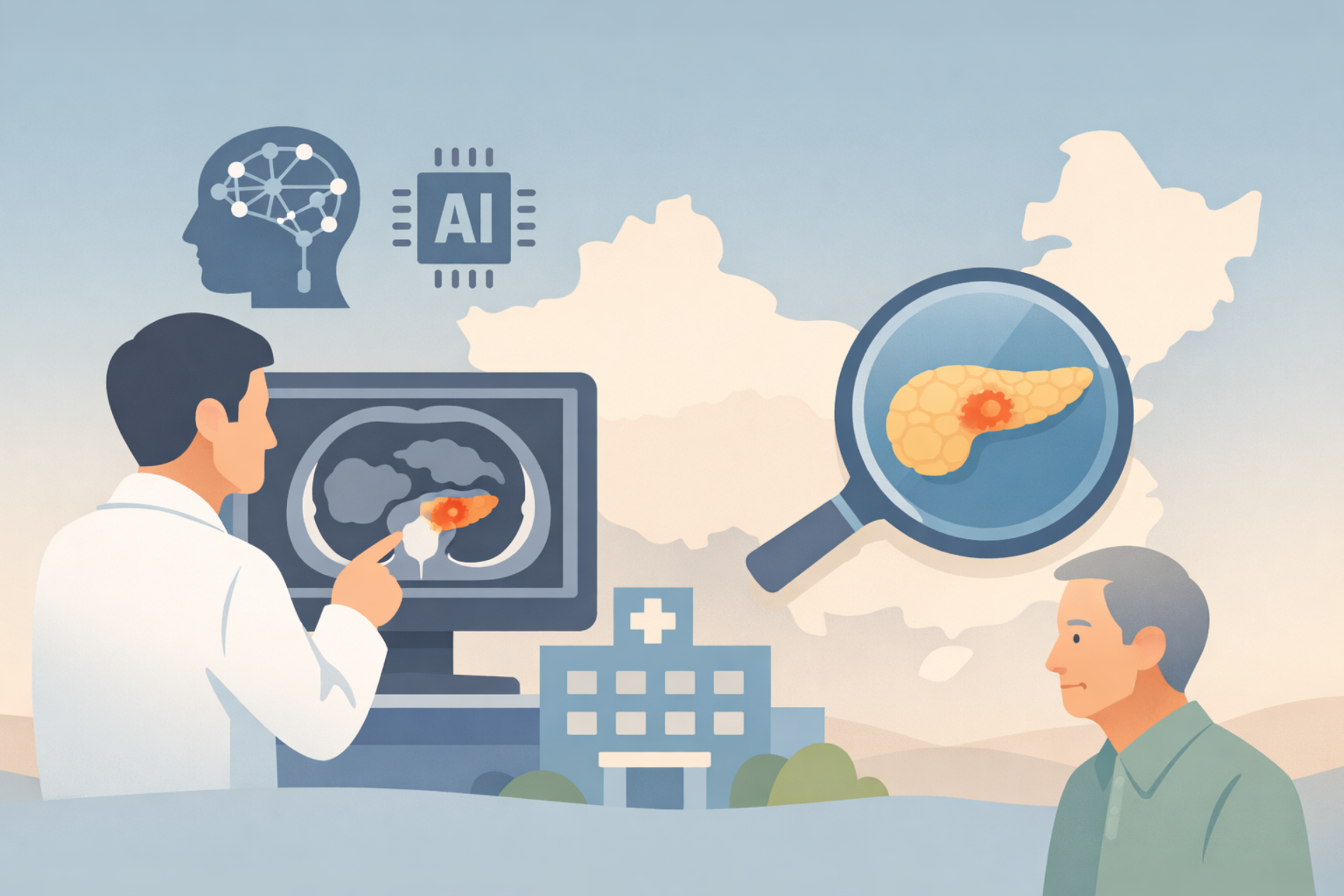
January 5, 2026 An artificial intelligence system being tested in eastern China is detecting pancreatic cancer at unusually early stages, allowing doctors to treat one of the deadliest cancers before patients show symptoms. The tool, developed by researchers affiliated with Alibaba, analyzes routine low-radiation CT scans and has flagged dozens of cancers that might otherwise have gone unnoticed.
The technology, known as PANDA (pancreatic cancer detection with artificial intelligence), helped save the life of Qiu Sijun, a 57-year-old retired bricklayer in eastern China. Three days after a routine diabetes checkup, he received a call from a doctor he had never met before, asking him to return to the hospital.
The diagnosis was pancreatic cancer – one of the deadliest forms of the disease, with a five-year survival rate of around 10 percent. However, it was caught early enough for surgeons to remove the tumor. That early detection was made possible by the AI system, which flagged his scan before symptoms appeared.
The tool is being tested at the Affiliated People’s Hospital of Ningbo University. Doctors there began using it in a clinical trial in November 2024. Since then, it has analyzed more than 180,000 abdominal and chest CT scans and helped identify about two dozen pancreatic cancer cases, including 14 at an early stage, according to Dr. Zhu Kelei, head of the hospital’s pancreatic department.
“I think you can 100 percent say A.I. saved their lives,” he said.
Pancreatic cancer is notoriously difficult to detect early because symptoms often appear only after the disease has advanced. While contrast CT scans can confirm the disease, they involve higher radiation levels and are not recommended for broad screening. PANDA instead analyzes noncontrast CT scans, which are already widely used in routine checkups in China.
The system was trained using thousands of annotated scans and then tested on more than 20,000 noncontrast CTs. According to a 2023 study published in Nature Medicine, it correctly identified 93 percent of patients with pancreatic lesions.
In April, Alibaba said the U.S. Food and Drug Administration granted PANDA “breakthrough device” status, expediting its review process. The tool is now the subject of several clinical trials across China, including in rural regions where pancreatic specialists are scarce.
But some experts caution that false positives remain a concern. Dr. Ajit Goenka of the Mayo Clinic warned that hundreds of patients may have faced unnecessary follow-ups. Others say the system may be most valuable as a safety net in hospitals with limited expertise.