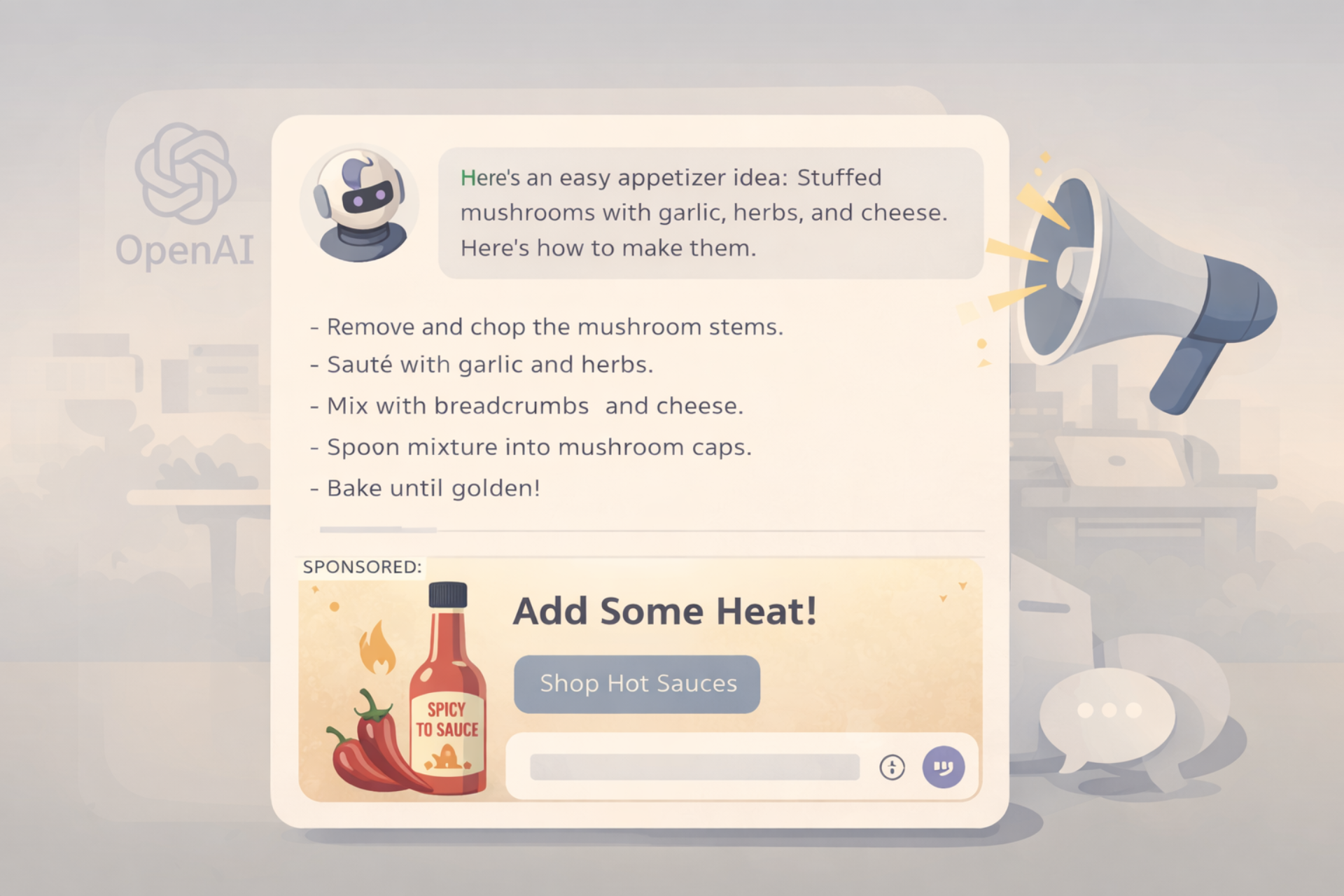
January 19, 2026 The era of an ad-free ChatGPT is coming to an end, as OpenAI said it will begin testing advertising inside ChatGPT in the coming weeks. The chatbot is now introducing sponsored placements for free users and subscribers on its newest, lowest-priced plan. Users on the Plus and Pro tiers will remain ad-free, while ads will not be shown to minors or during conversations about health or politics.
According to OpenAI, ads will appear below ChatGPT’s responses and will be clearly labeled as sponsored. The placements will be contextually relevant to the conversation, but the company says they will not influence the chatbot’s answers. Advertisers will also not have access to user conversations.
In one example shared by the company, a user asking for dinner party ideas sees a sponsored hot sauce ad beneath a recipe suggestion. In another, a response about Santa Fe is followed by an ad from a travel-planning business. Clicking on an ad opens a separate chatbot window where users can seek more information.
Users will be able to turn off ad personalization and delete the data used to tailor ads. OpenAI emphasized that ads will not appear in sensitive categories, including health and political discussions.
Hints that advertising was coming have circulated for months. In October, The Information reported that OpenAI had hired hundreds of former Meta employees, many with experience in ads and monetization. Developers later spotted ad-related code in a beta version of ChatGPT’s Android app, further fueling speculation.
Now, the strategy is becoming explicit and paired with a renewed push toward subscriptions. OpenAI this week rolled out its new “Go” plan to U.S. users, priced at $8 per month. The tier, previously tested in India and other markets, offers ten times more interactions than the free version, access to the latest GPT-5.2 model and expanded memory features.
The timing is not subtle. OpenAI has yet to reach profitability and roughly 95 percent of its nearly one billion weekly users still rely on the free tier. Advertising and lower-cost subscriptions offer a way to monetize that massive audience without pushing everyone toward higher-priced plans.
Alongside ads, ChatGPT has quietly expanded into machine translation. The new tool resembles Google Translate’s web interface, supports 47 languages and allows users to switch between four tones. Options for image and audio translation are visible but not yet active.