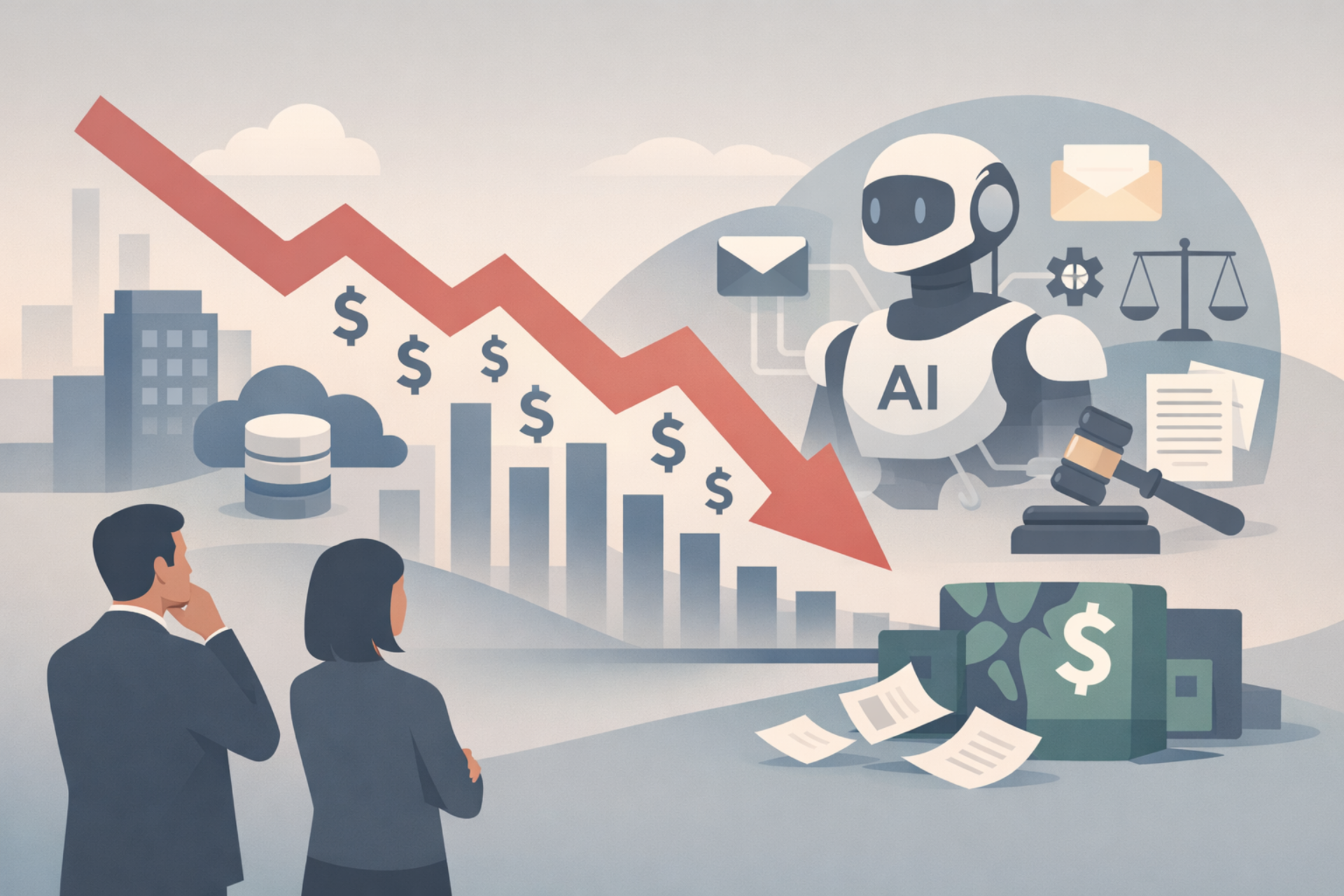
February 4, 2026 Global markets were jolted on Feb. 3 as fears that artificial intelligence could upend the software industry triggered a sweeping selloff, erasing roughly US$300 billion in market value from software and data companies in a single session.
The rout was sparked by two developments that rattled investor confidence. The first was the rapid spread of OpenClaw, an open-source AI agent capable of chaining models together to perform real-world tasks such as drafting emails, booking travel and managing workflows. The second was the launch of a new legal productivity tool from Anthropic, designed to automate contract drafting, research and analysis .
The reaction was swift and severe. Thomson Reuters shares plunged as much as 14 per cent, while Salesforce slid about six per cent. Other data-heavy firms, including SAP and London Stock Exchange Group, also fell sharply as investors questioned whether traditional software “moats” can survive an era of AI-native tools.
Market analysts say the scale of the selloff reflects a deeper anxiety that AI agents could hollow out subscription-based software businesses by shifting value away from proprietary platforms toward automated, model-driven workflows. At the centre of the concern is Anthropic’s legal AI offering, which can handle tasks ranging from contract review to legal research. Analysts cited by the Wall Street Journal and Gartner say such tools threaten to reduce reliance on established databases and software suites, accelerating churn toward general-purpose AI platforms.
OpenClaw, meanwhile, has amplified those fears beyond legal tech. By showing how AI agents can act across applications and systems, the project has fed a broader narrative that entire layers of traditional software could become redundant, a view some on Wall Street have described as the “death of software.”
The selloff also intersected with growing unease over cloud and AI spending. Recent earnings from Microsoft and ServiceNow pointed to slowing growth even as capital expenditures on AI infrastructure remain high. Microsoft shares have fallen sharply this year, with January marking their worst month in more than a decade, despite the company reporting solid profits.
By contrast, not all software names were swept away. Palantir Technologies bucked the trend, posting strong revenue growth and issuing an upbeat forecast that sent its shares higher.
The anxiety is spreading beyond public markets. Private equity firms are reportedly reviewing portfolios for AI vulnerability, while some lenders have already cut back exposure to software companies amid concerns about long-term durability. Still, some investors argue the selloff has gone too far. Valuations across the sector have fallen to multi-year lows, prompting bargain hunters to step in selectively, particularly in companies seen as potential AI beneficiaries rather than casualties.