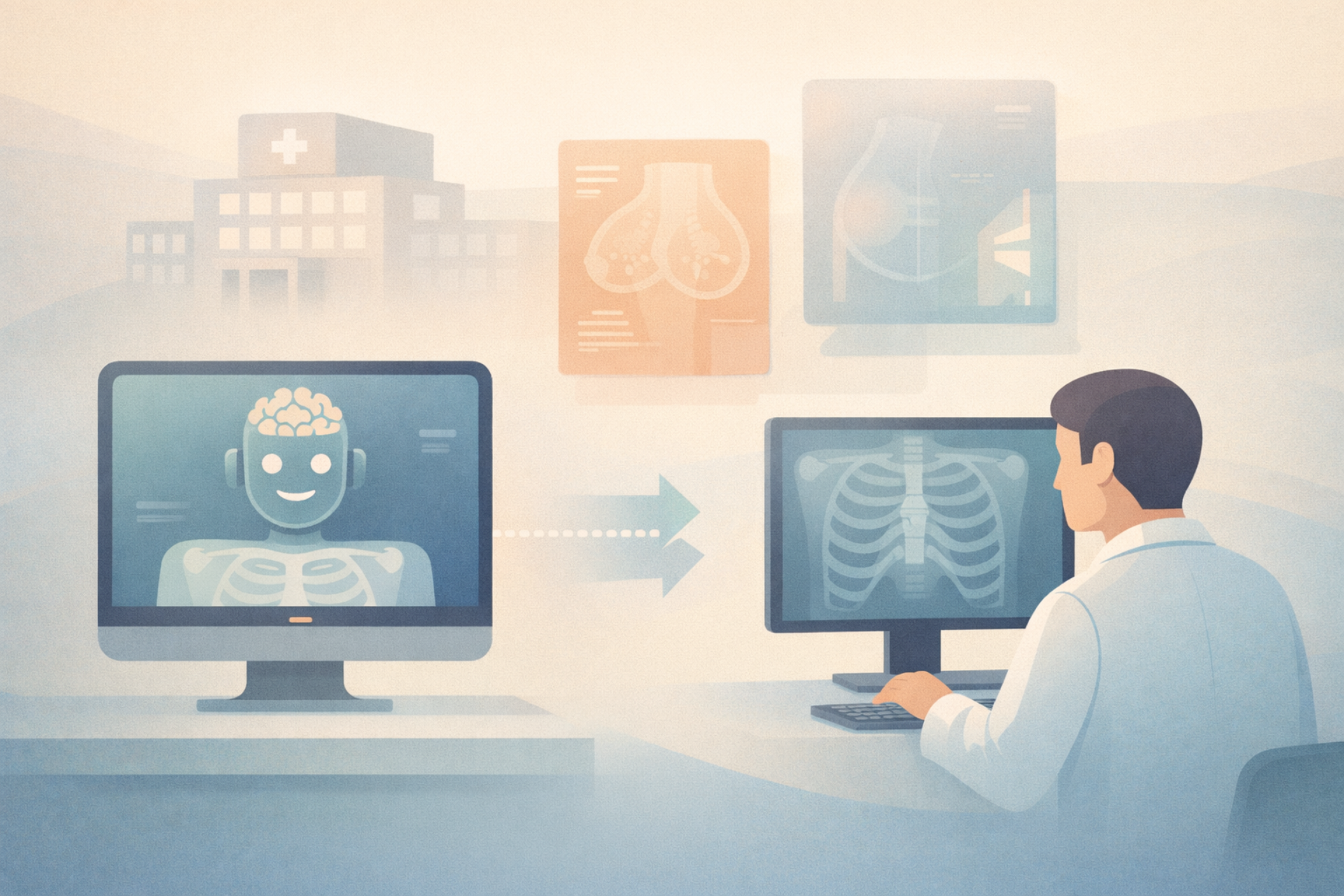
April 3, 2026 The CEO of NYC Health + Hospitals says artificial intelligence could replace a significant portion of radiology work in hospitals once regulators allow it. He argues the shift could cut costs and expand access by letting AI handle initial scans while doctors focus on complex cases.
Mitchell Katz made the comments during a March 25 panel, pointing to how AI is already being used to read mammograms and X-rays. His proposal is straightforward: AI conducts the first read, and radiologists step in only when something looks abnormal.
The pressure behind that thinking is both financial and operational. Imaging demand continues to grow, and radiologists have become more expensive. Katz said hospitals could achieve “major savings” by changing how this work is distributed, especially in areas like breast cancer screening where volume is high.
Some health systems are already moving in that direction. David Lubarsky, CEO of Westchester Medical Center Health Network, said their AI tools miss very few breast cancers and are “actually better than human beings.” For patients considered low risk, he noted that a negative result is incorrect only about three times in 10,000 cases.
For smaller or underfunded systems, the appeal is even clearer. Sandra Scott, CEO of One Brooklyn Health, described the potential as a “game-changer” for hospitals operating on thin margins. Katz also raised the idea of pushing regulators to allow AI to read images independently, with clinicians providing secondary review only when needed.
That shift, however, is far from settled. Radiologists have pushed back strongly against claims that AI can replace core diagnostic work. The debate intensified after comments from Dario Amodei suggesting AI could take over much of the specialty, which drew criticism from clinicians.
One of them, San Diego-based radiologist Mohammed Suhail, warned that removing human oversight could lead to serious patient harm. He argued that current AI systems are not reliable enough to operate independently in clinical settings.
What is emerging is a clear divide. Hospital leaders are looking at AI as a way to manage rising costs and increasing workloads. Clinicians are focused on the risks of over-reliance on systems that are still evolving.
For now, most real-world use sits in the middle – AI assisting, not replacing. But the fact that large hospital systems are openly discussing substitution, not just support, suggests the conversation is shifting from “if” to “how far.”