May 15, 2026 Google has unveiled Googlebook, a new line of laptops designed around its Gemini AI models, marking a major shift in how personal computing devices are built and used. The company is partnering with hardware makers like Acer, ASUS, Dell, HP and Lenovo to produce the first devices, which are set to launch this fall.
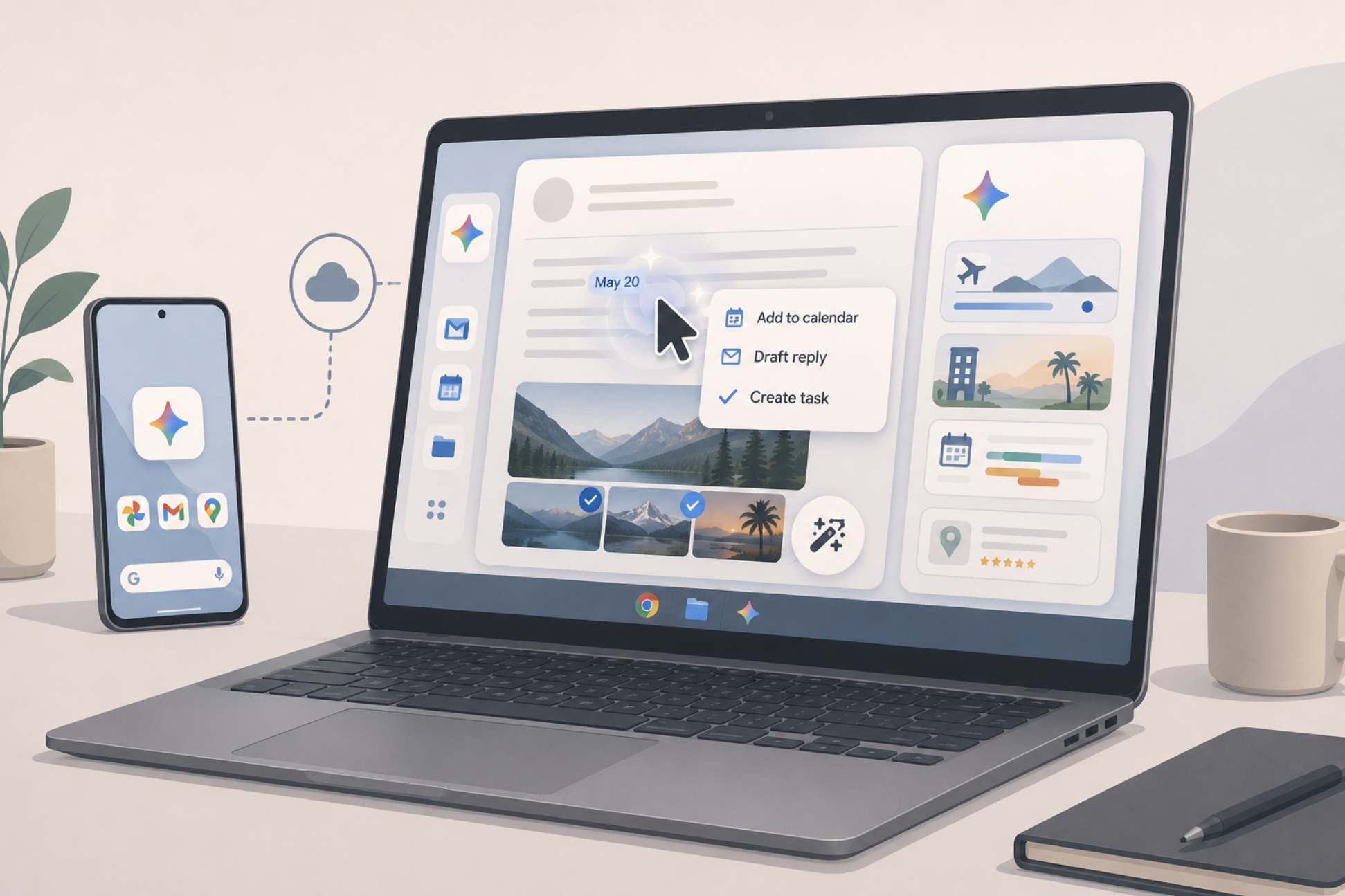
Unlike traditional laptops, Googlebook is being positioned as an AI-first system, built from the ground up to integrate Gemini directly into everyday interactions. At the center of that approach is a feature called “Magic Pointer,” an AI-powered cursor that introduces contextual intelligence into basic navigation. Instead of simply clicking through menus, users can move the cursor across the screen to receive real-time suggestions based on what’s visible. For instance, hovering over a date in an email can trigger an option to schedule a meeting, while selecting multiple images can prompt visual combinations or edits.
Google says this approach reflects a broader design philosophy, embedding AI into workflows without making it intrusive. The system is designed to interpret on-screen context and offer actions dynamically, reducing the need for manual navigation across apps.
The integration extends beyond the laptop itself. Googlebook devices will connect closely with Android smartphones, allowing users to access mobile apps directly on their laptops without switching devices. Files stored on phones can also be browsed, searched and inserted into workflows through the laptop’s file system, effectively merging mobile and desktop environments.
Another key feature is the ability to generate custom widgets using natural language prompts. Users can ask Gemini to create personalized dashboards that pull data from across services such as Gmail, Calendar, and the web. For example, a user planning a trip could automatically assemble flight details, hotel bookings and schedules into a single interface, alongside contextual recommendations.
While the features themselves are notable, the broader strategic shift may be more significant. Googlebook arrives roughly 15 years after the introduction of the Chromebook, which helped define lightweight, browser-based computing. The new devices are expected to take over that role, though Google has not formally announced a discontinuation of Chromebooks. Existing devices will continue to receive updates, and some may transition to the new system over time.
Underneath this transition is a deeper platform change. Google is moving away from ChromeOS and toward an Android-based operating system designed with AI at its core. This signals a shift from cloud-first computing toward intelligence-first computing, where AI is embedded into the operating system itself rather than layered on top.
The move also places Google more directly in competition with Microsoft, which has been advancing its own AI-integrated PC strategy through Copilot+ devices.