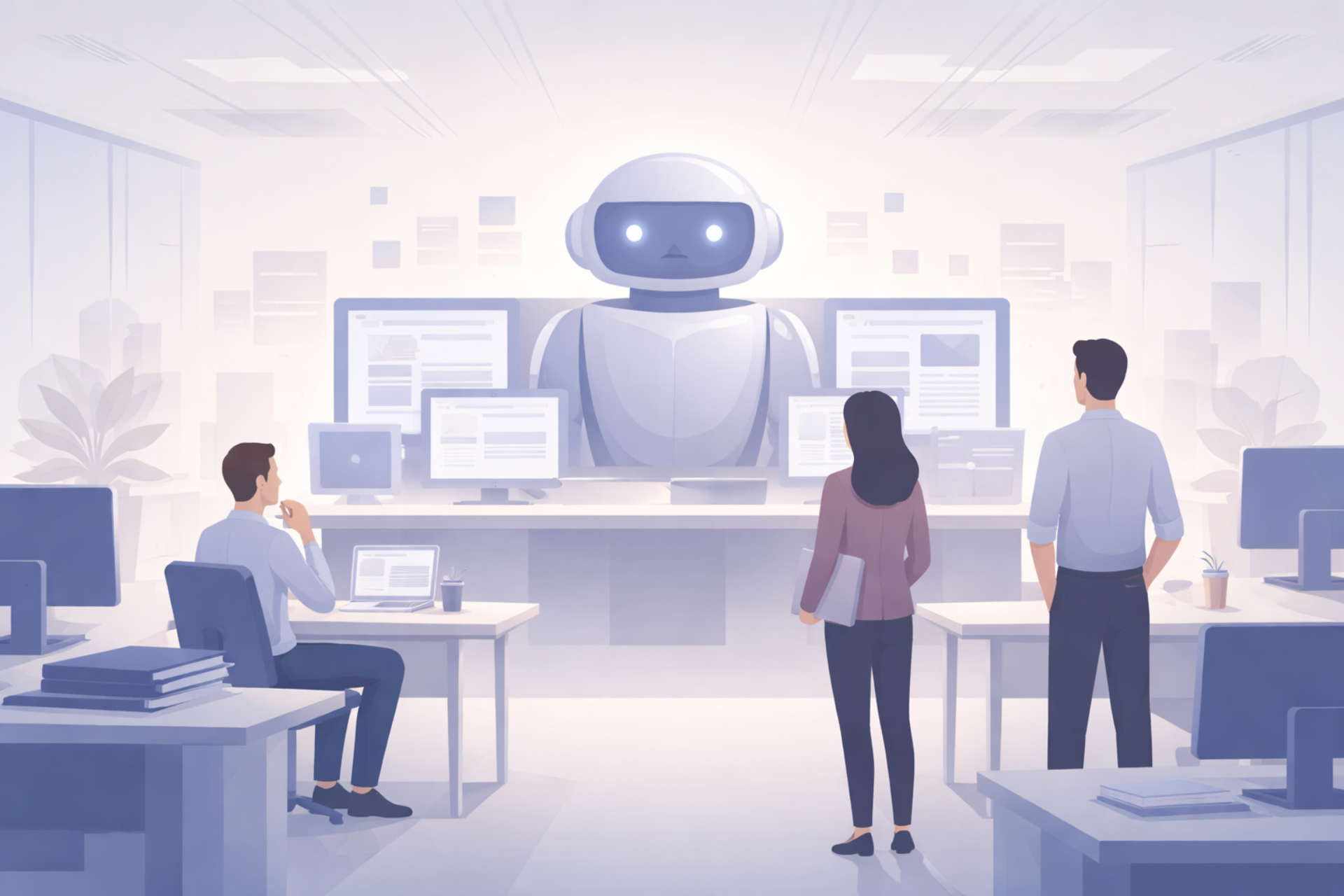
February 16, 2026 Predictions that artificial intelligence could wipe out large swaths of white-collar jobs are resurfacing, with Microsoft AI CEO Mustafa Suleyman warning that automation could transform professional work within 18 months. In a recent interview, Suleyman said AI could soon achieve human-level performance across most computer-based tasks, putting roles in fields like law, marketing, accounting and project management at risk.
His comments add fresh momentum to an ongoing conversation among tech leaders about the speed and scale of AI disruption. Several executives have issued similar warnings over the past year, with some suggesting entry-level office roles could be among the first to be displaced as models improve rapidly.
Suleyman pointed to accelerating computational power as the main driver behind the shift. As processing capacity increases, he argued, AI systems will rapidly improve their ability to perform complex professional tasks, including coding and analysis, narrowing the gap between automation and human expertise.
Other industry figures have voiced comparable concerns. Some AI researchers and executives have suggested that advanced systems could fundamentally reshape white-collar employment, with speculation ranging from gradual automation to abrupt shifts resembling previous economic shocks.
Yet the real-world impact so far has been more muted. Studies from professional services firms show that while lawyers, accountants and auditors are experimenting with AI tools, adoption has largely focused on narrow tasks such as document review and routine analysis. As shown in the studies, productivity gains have been modest, and widespread job displacement has yet to materialize.
In some cases, early evidence suggests AI may even slow workers down. One recent study examining software developers found that the use of AI tools increased task completion times rather than reducing them.
Economic data also paints a mixed picture. While major technology companies have seen strong gains tied to AI investment, broader markets have not experienced comparable boosts in profitability.
Still, there are signs of emerging workforce pressure. Employment trackers have attributed tens of thousands of recent layoffs to automation trends, and markets have reacted sharply to the prospect of AI-driven disruption. Concerns intensified following the rollout of new enterprise AI agents capable of handling tasks traditionally managed by software platforms, triggering volatility across software stocks.
For Microsoft, Suleyman framed the shift as both an opportunity and a strategic imperative. He has emphasized building the company’s own frontier AI models as part of a broader push toward technological independence and long-term leadership in advanced AI development.
Everything now rides on timing. While some executives predict rapid displacement, current adoption patterns suggest a more uneven transition. Whether AI triggers a near-term shock to professional employment or unfolds as a slower structural shift remains one of the defining uncertainties facing the global workforce.