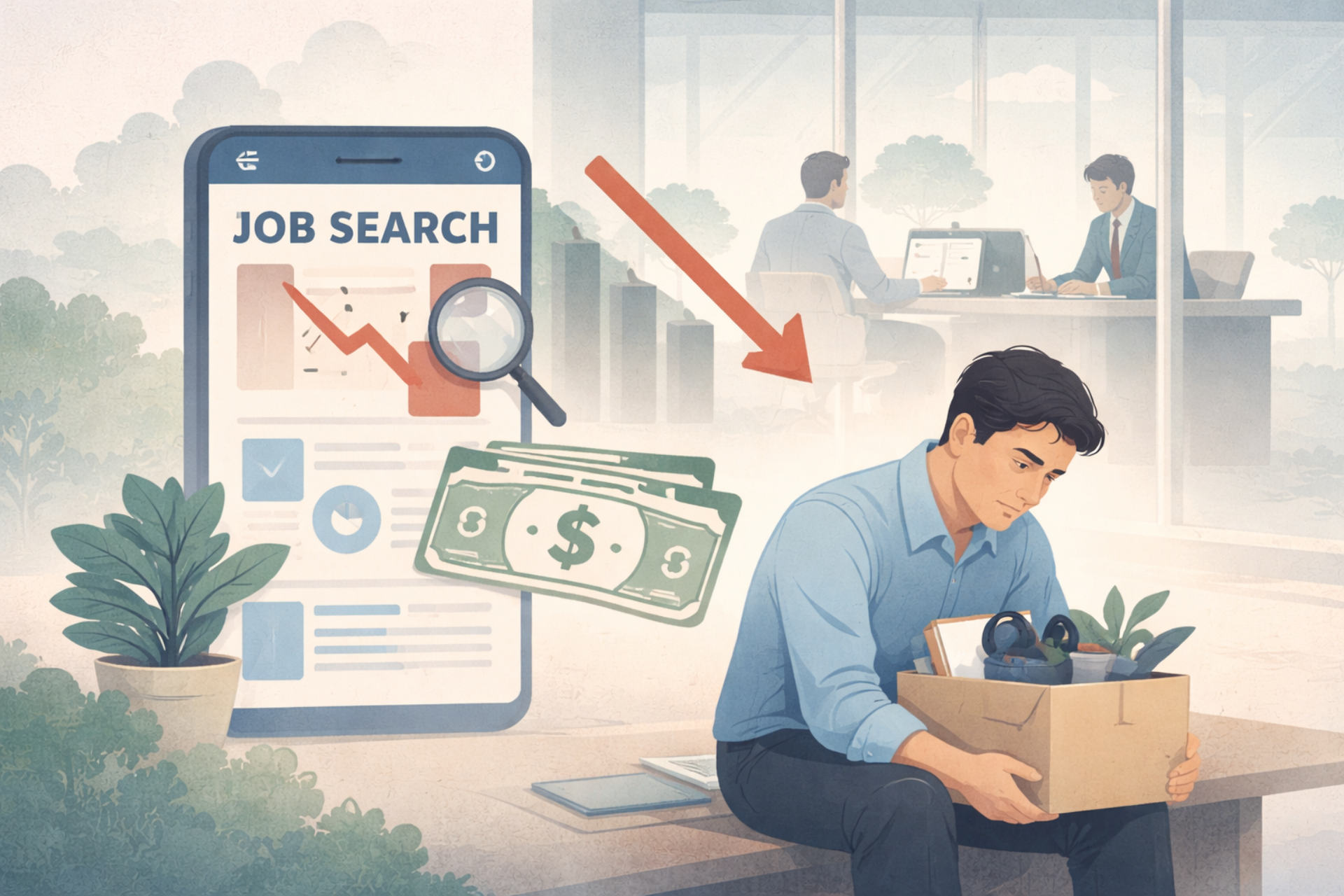
April 8, 2026 Workers losing jobs to AI are not just struggling to find new roles; they are also earning less when they do, according to a new analysis from Goldman Sachs. On average, displaced workers take about one month longer to get reemployed and see their earnings fall by more than 3 per cent.
The report, led by strategist Pierfrancesco Mei, points to a clear pattern behind this: many workers are moving into lower-skilled, more routine roles after displacement. The same technologies that eliminate their previous jobs are also reducing the value of the skills they already have, making it harder to land equivalent positions.
That shift is already playing out across the tech industry. More than 52,000 U.S. tech workers were laid off in the first three months of 2026, according to Challenger, Gray & Christmas. In March alone, the sector recorded 18,720 job cuts, up 40 per cent year over year – the highest year-to-date total since 2023.
Some of the cuts have been significant. Block reduced its workforce by 40% in an AI-related restructuring, while Oracle reportedly laid off up to 30,000 employees across the U.S., Mexico, and other regions. Amazon and Meta have also carried out job reductions tied to AI adoption this year.
Behind these decisions is a broader reallocation of spending. Companies are directing more capital toward AI infrastructure and automation, often at the expense of headcount. “Companies are shifting budgets toward AI investments at the expense of jobs,” said Andy Challenger, chief revenue officer at Challenger, Gray & Christmas.
“The actual replacing of roles can be seen in technology companies, where AI can replace coding functions. Other industries are testing the limits of this new technology, and while it can’t replace jobs completely, it is costing jobs,” he added.
Executives argue the trade-off is tied to productivity gains. Block CFO Amrita Ahuja said automation can compress work that once took days into hours. JPMorgan Chase CEO Jamie Dimon similarly acknowledged that AI will eliminate some roles while creating others, particularly in areas like cybersecurity and AI development.
But in the near term, the transition is uneven. Goldman Sachs’ findings suggest that displaced workers are not simply moving sideways into similar roles, as many are stepping down into positions that require fewer skills and pay less. That gap between job loss and job recovery is becoming a defining feature of the AI transition.
The result is a labour market that is still absorbing the impact of AI, even as companies push forward with adoption. For workers, the challenge is no longer just staying employed, but staying in roles that match their experience and earning power.