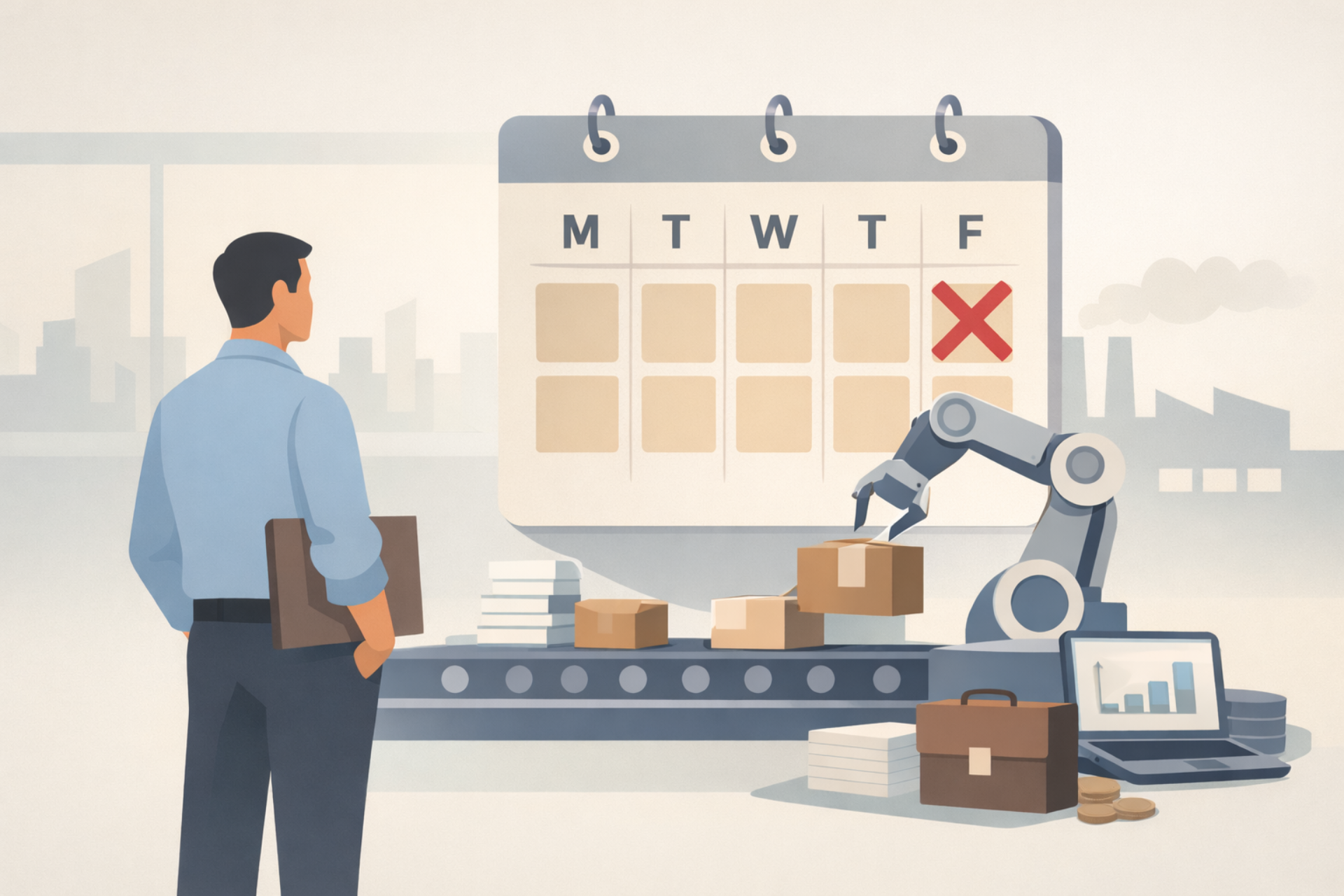
January 23, 2026 Predictions that artificial intelligence will soon usher in shorter workweeks are colliding with economic reality, according to the CEO of one of the world’s largest workplace providers. Mark Dixon, founder and chief executive of International Workplace Group, said the growing belief that automation will rapidly reduce working hours is disconnected from how businesses are actually responding to rising costs.
Despite claims from tech leaders that AI will free up employee time, Dixon said companies are more likely to use automation to extract additional productivity rather than cut hours. “Everyone is focused on productivity, so no time soon,” Dixon said in an interview with Fortune.
Dixon’s view runs counter to recent comments from figures including Bill Gates, JPMorgan CEO Jamie Dimon, Nvidia CEO Jensen Huang and Elon Musk, who have argued that AI-driven efficiency could push a four-day workweek or even shorter into the mainstream. Gates has suggested a two-day workweek could eventually become possible, while Musk has said work may become “optional” within a decade.
But Dixon said economic pressures are pushing companies in the opposite direction. He pointed to rising labor, energy and operating costs in the U.S. and U.K., combined with resistance from customers to higher prices.
He further said, “It’s about the cost of labor. Everyone’s having to control their labor costs because all costs have gone up so much, and you can’t get any more money from customers, so therefore you have to get more out of people.”
In that environment, Dixon said any time saved through automation is likely to be absorbed by new tasks rather than returned to workers as reduced hours. Companies, he added, cannot afford to pay the same wages for fewer hours without cutting margins.
International Workplace Group operates flexible office brands including Regus and Spaces and serves more than 8 million users across 122 countries, with roughly 85% of Fortune 500 companies among its customers. Dixon said that vantage point gives him a broad view of how employers are adjusting to AI.
Rather than reducing workloads, Dixon expects AI to accelerate business activity and expand the volume of work, albeit in different forms.
Dixon compared today’s AI debate to past technological shifts, including the Industrial Revolution and the introduction of personal computers. In each case, fears of job losses were eventually followed by new roles, industries, and ways of working. The same pattern is likely to repeat, he believes, with AI reshaping jobs instead of eliminating them outright.