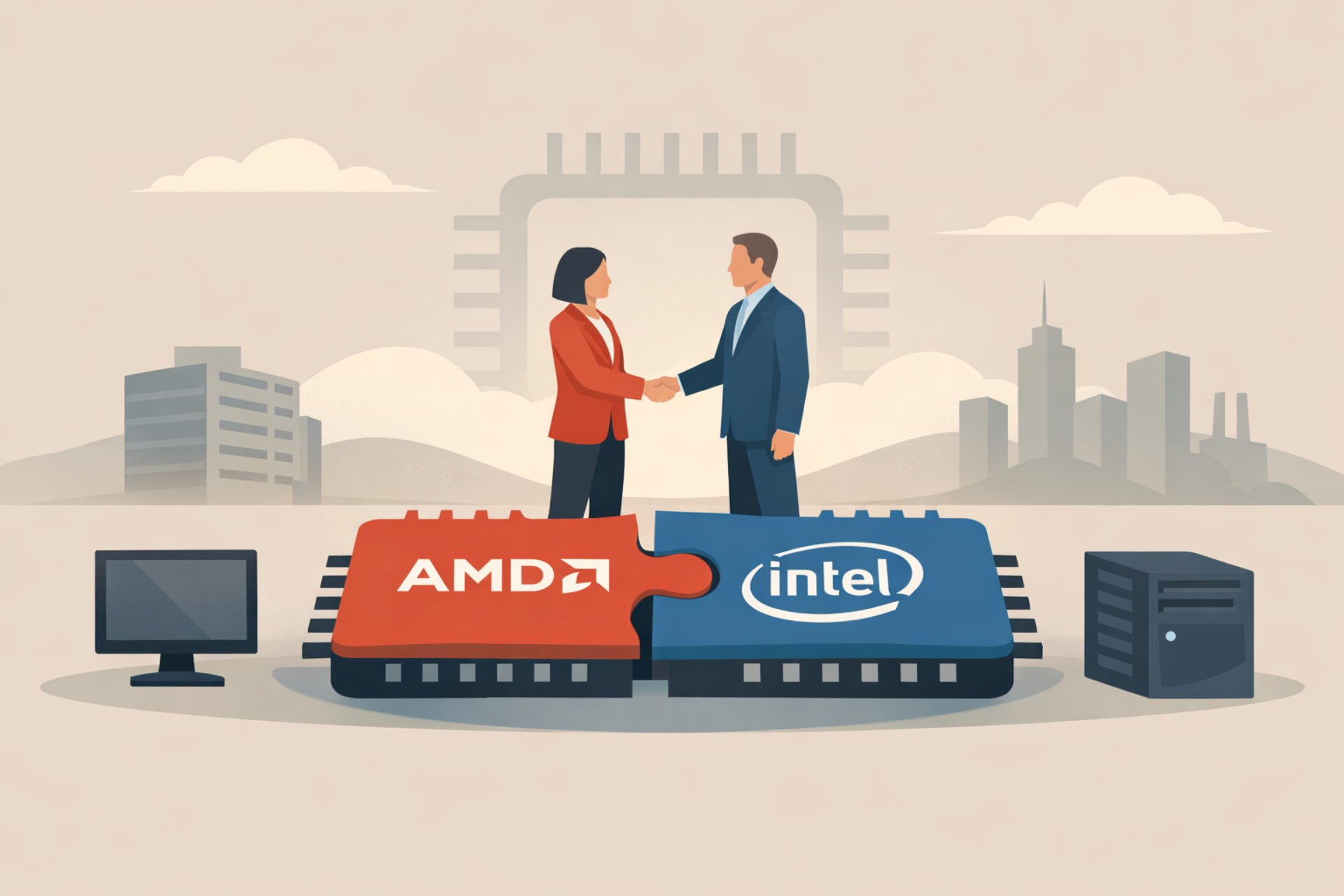
April 2, 2026 AMD has agreed to acquire Intel in an all-stock transaction that would combine the two long-time x86 rivals under one company. If completed, the deal would reshape the core of the PC and server chip market by bringing together the two dominant players in the x86 ecosystem.
AMD described the agreement as a “once-in-a-generation opportunity to unify x86 innovation,” signalling a strategic shift after years of direct competition between the companies. On its end, Intel said the transaction would help unlock shareholder value and give its engineering teams greater focus to build new products.
The proposed merger follows a period of diverging momentum. AMD has gained ground across servers, desktops, and notebooks in recent years, while Intel has faced manufacturing delays, product setbacks, and an extended turnaround effort. That shift has altered both market perception and competitive balance in the semiconductor industry.
Lisa Su, AMD’s chief executive, said the combined company would “accelerate roadmaps” and “simplify the customer experience,” while also aiming to preserve internal competition. Intel, in its statement, pointed to the need for structural support to return to consistent product execution.
Details on integration remain limited. People familiar with the discussions said AMD is considering a holding structure that would retain both brands, at least in the near term. One internal concept reportedly frames Intel as a “heritage performance division,” suggesting a transitional approach rather than immediate consolidation.
The deal raises immediate regulatory and market structure questions. A combined AMD-Intel entity would control the vast majority of x86 processor development, a segment that underpins most personal computing and enterprise workloads. Approval from antitrust regulators will likely be a key factor in whether the transaction proceeds.
For decades, the industry operated on a competitive dynamic between the two companies, with Intel holding scale advantages and AMD acting as a challenger. That balance has shifted in recent years, and this deal formalises that change at an organisational level.
The proposed acquisition signals a consolidation moment in the semiconductor industry, where competition, manufacturing scale and product roadmaps are increasingly tied to a smaller number of players. For customers and partners, the outcome will depend less on branding and more on whether the combined company can deliver consistent performance and innovation across its product lines.