December 19, 2025 Americans believe online spaces are far more hostile than they actually are, according to new research that finds people dramatically overestimate how common abusive behaviour and misinformation are on major social platforms. The mismatch between perception and reality, researchers say, may be quietly fueling broader pessimism about society itself.
The study, conducted by researchers Angela Y. Lee, Eric Neumann and colleagues, surveyed 1,090 U.S. adults and compared their beliefs about online behaviour with existing large-scale data from social media platforms. Participants were asked to estimate how frequently users engage in highly toxic posting or share false information.
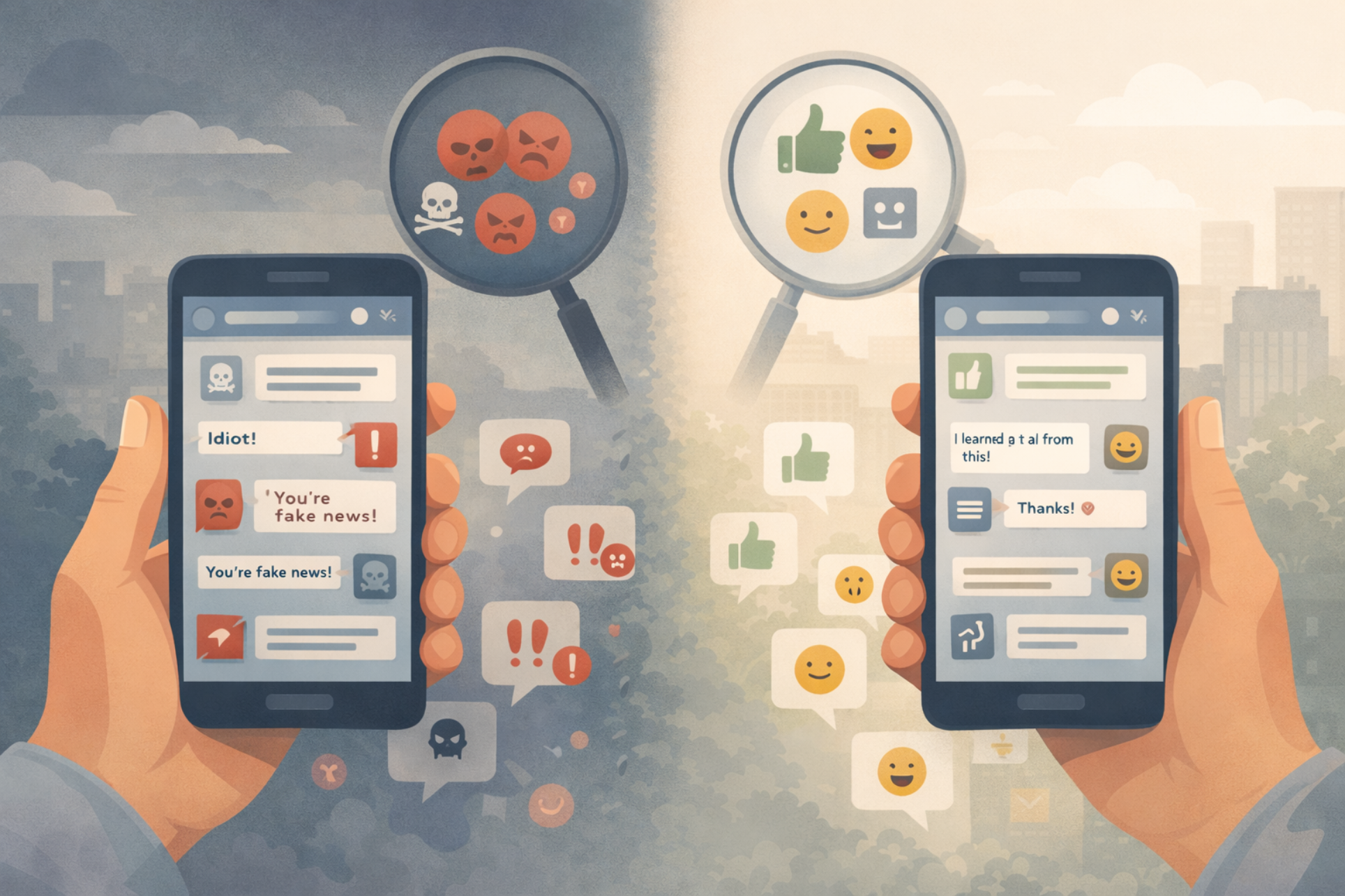
On Reddit, respondents estimated that 43 per cent of users regularly post highly toxic comments. Prior research puts the actual figure closer to 3 per cent. Participants also believed that nearly half of Facebook users share false or misleading news, even though existing data suggests the real number is roughly 8.5 per cent. In effect, Americans assumed harmful behaviour was five to 13 times more common than it actually is.
The researchers found that this misperception is not driven by an inability to recognize toxic content. In a separate signal-detection task, participants were generally accurate at identifying abusive or harmful posts when shown examples. Despite that, they still believed such behaviour dominated online spaces.
According to the authors, this suggests the problem lies in how people generalize what they see. Highly offensive or sensational posts tend to stand out, are remembered more clearly, and are often amplified by social media algorithms. Over time, that exposure can lead users to mistake visibility for prevalence.
The study also tested whether correcting the misconception could change attitudes. Participants who were shown accurate statistics about how rare severe online toxicity actually is reported feeling less pessimistic about other people and less concerned that society is in moral decline. They were also less likely to believe that most Americans tolerate or support aggressive online behaviour.
The researchers argue that a relatively small group of highly active accounts generates a disproportionate share of toxic content, creating the illusion that such behaviour reflects mainstream attitudes. Confusing that vocal minority with the broader public, they say, may contribute to social cynicism and declining trust.
The findings add to a growing body of research suggesting that perceptions of online behaviour, not just the behaviour itself, shape public mood and social cohesion.