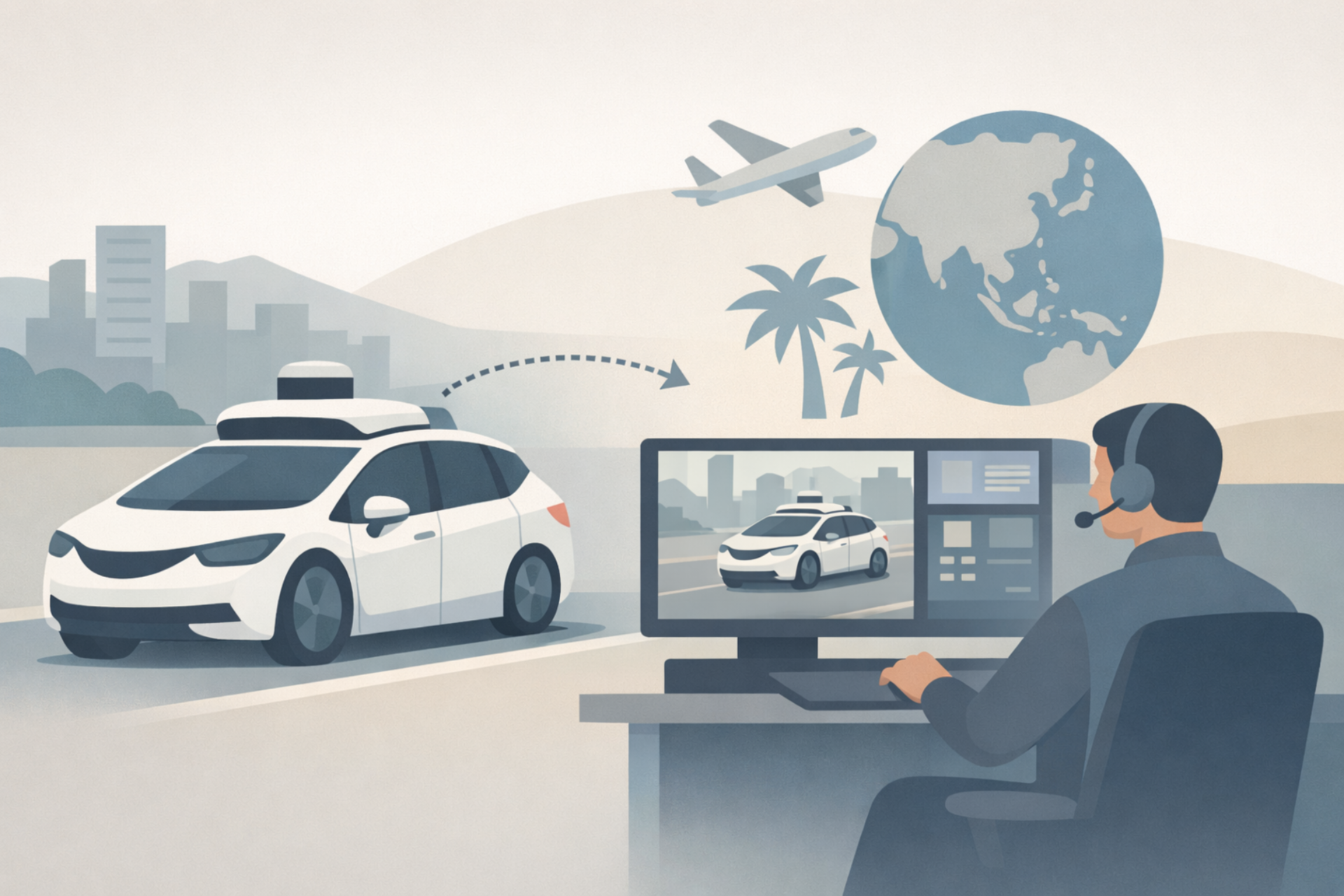
February 9, 2026 Waymo acknowledged recently that human workers, including contractors operating from overseas, still play a direct role in keeping robotaxis on the road. The issue surfaced during a recent Senate hearing on autonomous vehicle safety, where Waymo’s chief safety officer Mauricio Peña acknowledged that when the company’s robotaxis encounter unusual or complex situations, control can be handed off to remote drivers.
The disclosure undercuts the perception that modern AI systems operate independently. Instead, it highlights how automation often depends on hidden layers of human intervention.
While the company employs some U.S.-based staff, Peña reveals it also relies on contractors in countries including the Philippines. Waymo, owned by Alphabet, is not alone on this. Tesla’s robotaxi efforts still rely on human monitors riding inside vehicles, despite years of promises of full autonomy.
Contract labour has been woven into modern AI systems since the sector’s recent boom. Early versions of ChatGPT, developed by OpenAI, were trained with extensive help from global contract workers who reviewed and labelled data. Similar arrangements have surfaced across industries, from fast-food automation to retail.
Filipino workers, for example, were found to be overseeing large portions of orders processed by Presto Automation’s AI-driven drive-thru systems. Amazon’s now-abandoned “Just Walk Out” checkout technology also relied on teams in India to monitor shoppers and correct errors, despite being marketed as fully automated.
Tesla became a particularly visible example of the limits of autonomy in late 2024, when its humanoid robots admitted during a public event that they still required human guidance. Footage of one robot collapsing after mirroring the movements of a remote operator quickly went viral, undercutting the company’s futuristic claims.
At the Senate hearing, however, lawmakers focused less on the existence of remote workers and more on where those workers are located. Ed Markey called Waymo’s reliance on foreign contractors “completely unacceptable,” citing both safety risks from latency and broader national security concerns.
Senators also pressed Peña on Waymo’s use of vehicles manufactured in multiple countries, including China. Some lawmakers suggested the company could be attempting to sidestep U.S. restrictions on Chinese-made vehicles. Peña responded that while some vehicles are sourced internationally, all autonomous driving systems are installed and operated within the United States.