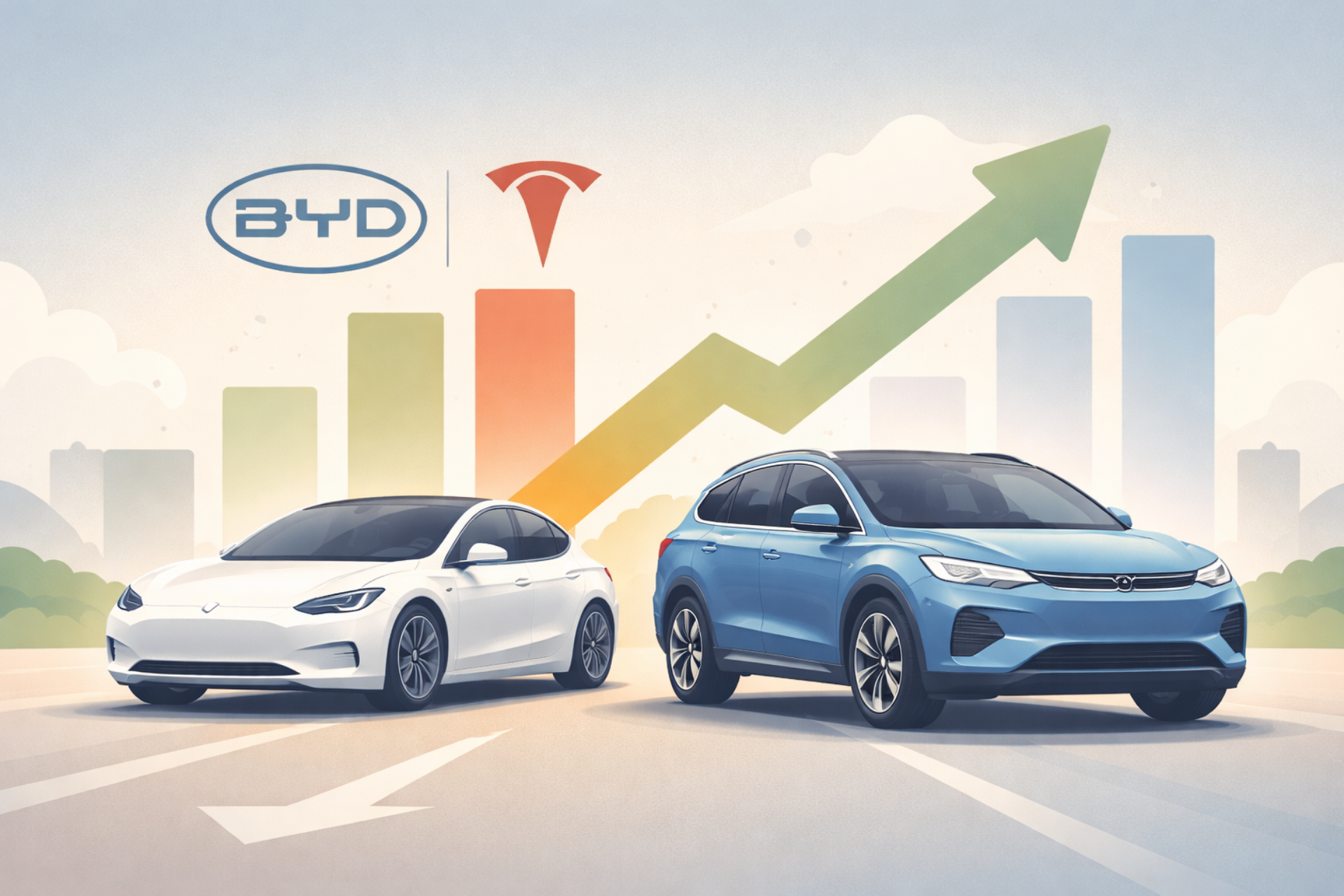
January 6, 2026 Chinese automaker BYD sold more electric vehicles than Tesla in 2025, marking the first time in more than a decade that Elon Musk’s company has been overtaken in pure EV sales. Preliminary 2025 sales figures show BYD delivered 2.26 million EVs, surpassing Tesla’s 1.64 million and ending more than a decade of Tesla dominance in pure electric sales.
The numbers represent a sharp reversal for Tesla. Its 2025 deliveries fell 9 per cent year over year, down from 1.79 million vehicles in 2024, as demand softened across several key markets. BYD, by contrast, edged ahead by more than 600,000 vehicles. While the Chinese automaker has previously outsold Tesla in total vehicle sales by including plug-in hybrids, this is the first time it has taken the lead in battery-electric vehicles alone since the early days of the modern EV era.
BYD’s rise has been driven by scale, product breadth and aggressive international expansion. Founded as a battery manufacturer, the Shenzhen-based company has rapidly expanded its electric and hybrid lineup since the early 2020s, while also moving upmarket with new luxury brands such as Yangwang and Denza. In Europe, BYD has been outselling Tesla for months, tailoring models to local preferences and preparing to launch a five-minute fast-charging platform later this year.
The company is preparing to open new plants in Turkey and southern Hungary, with Spain under consideration for another facility. It is also pushing beyond Europe into Latin America, Japan and the Middle East. That global footprint has helped offset slowing growth in China, where a fierce price war has weighed on margins and volumes.
Tesla’s challenges have been more strategic than geographic. While the Model Y remains one of the world’s best-selling cars, the rest of Tesla’s lineup has seen little change in recent years. Sales of the Cybertruck have declined sharply, and other long-promised models have been delayed. The company has also been clear that its long-term focus is shifting away from conventional car sales toward autonomous robotaxis, artificial intelligence and robotics.
That pivot has come with reputational and political headwinds. Tesla’s brand has become closely tied to Elon Musk, whose political activity in 2025 sparked protests and boycotts in parts of Europe and North America. In the United States, the end of federal EV tax credits further dampened demand.