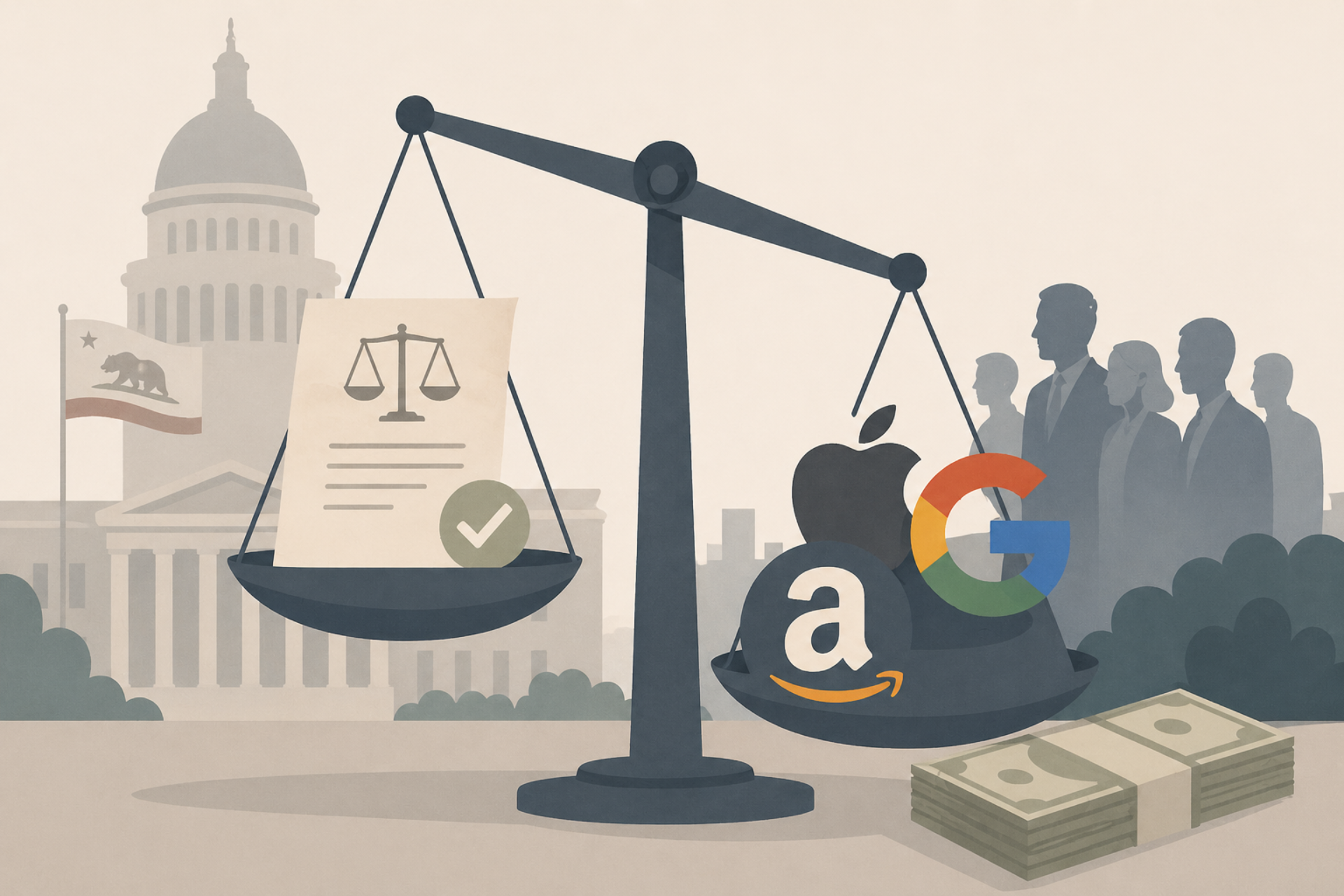
April 28, 2026 A California bill aimed at limiting how large technology platforms prioritise their own products has failed after a rapid and coordinated lobbying push from major tech companies and industry groups. The collapse of the “Based Act” underscores the difficulty of advancing platform regulation in a state where the tech sector holds significant economic and political influence.
Introduced by state Senator Scott Wiener, the proposal sought to prevent companies such as Apple and Google from favouring their own services in digital marketplaces, including app stores and search results. Wiener said the opposition effort began almost immediately, describing it as “a tidal wave lobbying effort” that left supporters at a disadvantage.
The bill emerged from an unusual coalition of smaller technology firms, consumer advocates, and startup backers including Y Combinator. Supporters argued that dominant platforms use control over distribution channels to prioritise their own offerings, limiting visibility and growth opportunities for smaller competitors.
Opposition was led by industry groups such as the Chamber of Progress and the California Chamber of Commerce, which identified defeating the bill as a top priority. The campaign included direct lobbying at the state Capitol, public messaging, and outreach encouraging constituents to contact lawmakers.
Materials circulated by opponents warned the legislation could degrade widely used services, claiming it might make search results “less useful,” deliveries “slower,” and devices “less secure.”
The companies themselves also took a more direct role than is typical for early-stage state legislation. Google’s president of global affairs, Kent Walker, described the proposal as “even worse” than similar regulations adopted in the European Union. Industry advocates also mobilised allied voices, including small business representatives connected to tech-funded groups, to testify against the bill in committee hearings.
Supporters of the legislation pushed back on those claims, arguing that the potential impacts were overstated and that the bill was designed to address competitive imbalances rather than degrade products. However, they struggled to match the scale and speed of the opposition campaign.
The bill’s trajectory reflects a broader pattern. Major technology companies, including Amazon and Meta, have previously coordinated to block similar proposals, including a bipartisan U.S. bill in 2022 that aimed to restrict self-preferencing practices. In Europe, where comparable regulations have been implemented, authorities have issued more than $7 billion in fines to large platforms over the past two years.
The California measure ultimately failed on April 20 after losing a vote in a key privacy-focused legislative committee, despite passing an earlier stage. State Senator Christopher Cabaldon, who chairs the committee, pointed to the broader economic role of the technology sector, noting its importance to jobs, tax revenue, and regional economies.
The outcome highlights the challenge of regulating platform behaviour at the state level. California’s position as both a regulatory leader and the home base for many of the world’s largest tech companies creates inherent tension, particularly when proposed rules could force changes to widely used products and business models.
The debate is likely to continue. Wiener indicated he may pursue alternative legislative paths, signalling that efforts to address platform competition issues are not settled. For now, the defeat of the Based Act reinforces how difficult it remains to translate antitrust concerns into enforceable rules in the U.S., even as similar policies gain traction in other jurisdictions.