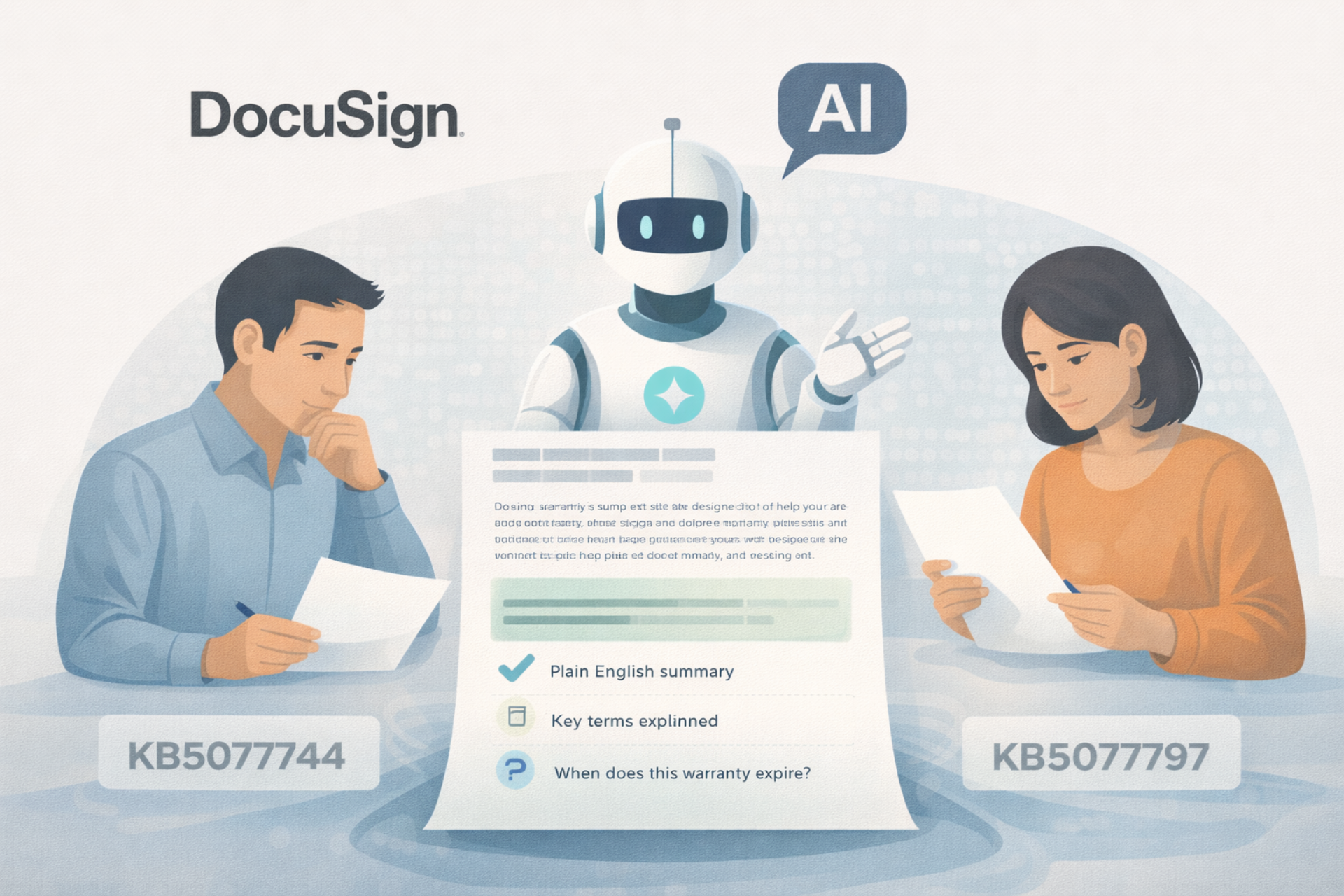
January 20, 2026 DocuSign is rolling out a new AI-powered feature designed to tackle one of the most persistent problems in digital agreements: most people sign contracts they don’t fully understand. The goal is to help users understand what they are signing without having to wade through pages of legal jargon.
The San Francisco–based document management company says its latest tool can summarize dense legal documents in plain English, explain key terms and conditions, and answer questions about agreements in a conversational format. The feature is built into DocuSign’s Intelligent Agreement Management platform and uses an AI engine called Iris, which the company says was trained specifically on contract language rather than general-purpose data. That distinction matters, DocuSign says, because legal documents rely on precise terminology that generic AI models often misinterpret.
Beyond summarization, the system can identify the type of agreement, verify recipient information and automatically place signature and data fields where they belong. Users can also ask practical questions such as “What happens if I need to cancel?” or “When does this warranty expire?” and receive responses based on the document’s contents.
DocuSign’s move comes as surveys continue to show widespread discomfort with legal agreements. In a OnePulse poll of 1,000 Americans conducted last month, nearly 60 per cent admitted they have signed contracts without fully understanding them. Almost three-quarters said they would feel more confident signing a legally binding agreement if they could first review an AI-generated summary written in plain language.
That confusion carries an emotional cost, with nearly half of respondents saying being asked to sign complex agreements triggered negative feelings. 29 per cent reported frustration and 19 per cent said they felt anxious about overlooking important details.
Still, DocuSign and industry observers caution that AI summaries are not a substitute for legal advice. Even contract-focused models can hallucinate or oversimplify, making blind reliance risky, especially for agreements with serious financial or personal consequences. AI may be sufficient for low-stakes documents, but it cannot replace a qualified lawyer when the fine print truly matters.
The new AI-powered eSignature features are now available in the US, UK, and Australia. Automated field placement for agreement creation is expected to launch in the US “in the coming weeks,” according to the company.