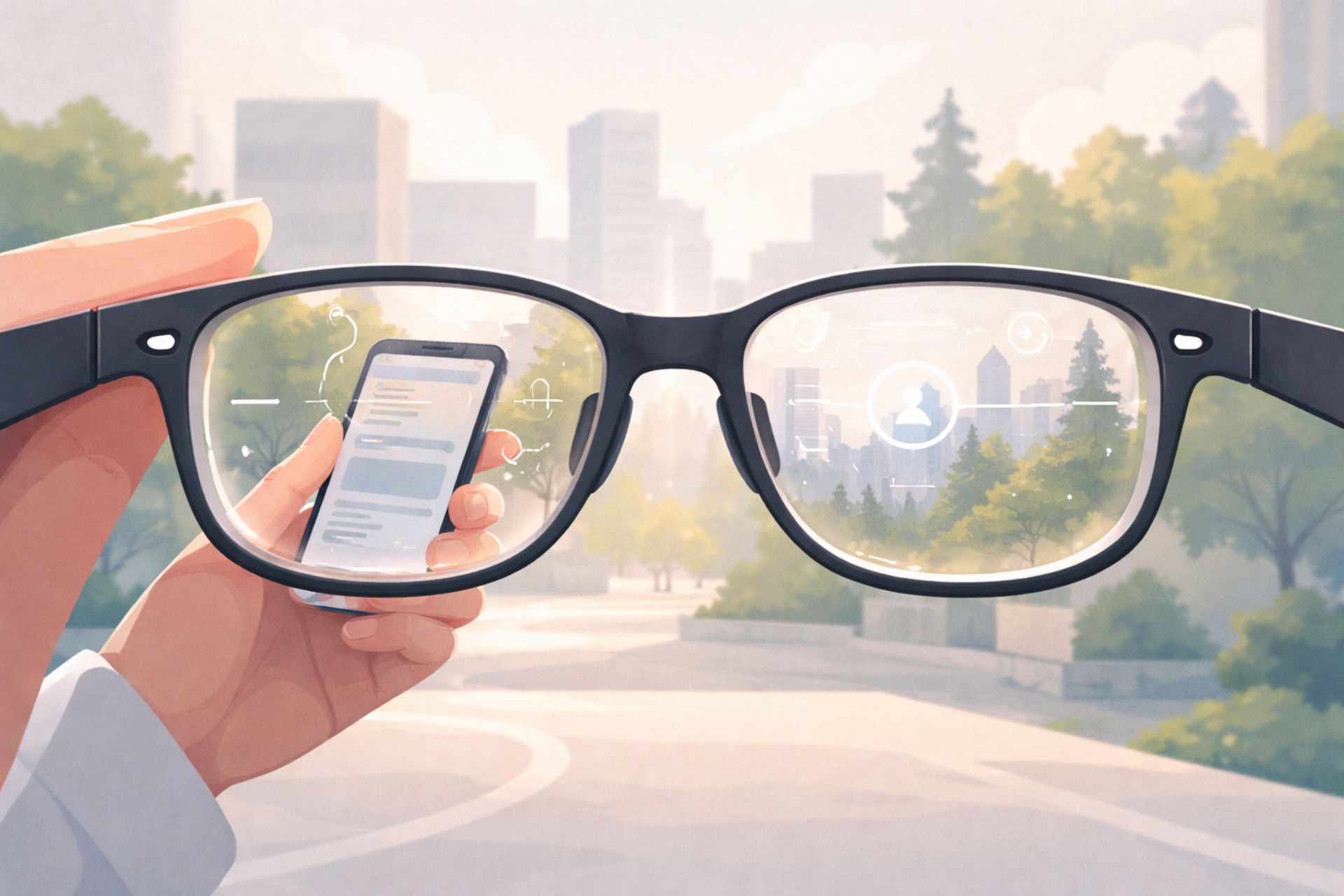
January 8, 2026 Finnish eyewear startup IXI says it is preparing to launch smart glasses that automatically adjust focus in real time, aiming to replace traditional bifocal and varifocal lenses with what it calls a more natural way to see both near and far. The glasses look like ordinary spectacles but use eye-tracking sensors and liquid-crystal lenses to change prescription instantly based on where the wearer is looking.
If successful, the product could mark one of the biggest changes to prescription eyewear in decades though it will debut as a premium, high-end device with clear limitations.
Unlike bifocals or varifocals, which force wearers to look through specific parts of a lens to see clearly, IXI’s glasses rely on dynamic lenses that shift focus automatically. The system tracks the user’s eyes using infrared light, photodiodes and LEDs. Then, it adjusts the liquid crystals embedded in the lenses to match viewing distance.
“Modern varifocals have this narrow viewing channel because they’re mixing basically three different lenses,” said Niko Eiden, CEO of IXI. “There is far sight, intermediate and short distance, and you can’t seamlessly blend these lenses.”
Eiden said the company’s approach allows most of the lens to remain optimized for distance vision, with a reading area that appears only when needed and is positioned based on the user’s eye exam. “For seeing far, the difference is really striking, because with varifocals you have to look at the top part of the lens in order to see far. With ours, you have the full lens area to see far — as you were used to when you were slightly younger,” he explained.
IXI employs 75 people and has raised just over $40 million in funding. The glasses are expected to launch in Europe within the next year, pending regulatory approval, with U.S. availability to follow after FDA clearance. Pricing has not been announced, but Eiden said the product will sit “in the really high end of existing eyewear.”
The design is intended to resemble normal glasses, weighing about 22 grams in recent prototypes. However, the device must be charged daily using a hidden magnetic port in the frame.
The company acknowledges trade-offs. The lenses still introduce some distortion at the edges of the liquid-crystal area, and further testing is needed before the glasses are cleared for driving. A built-in failsafe shuts the lenses down to a standard distance prescription if the electronics malfunction.
IXI is not alone in pursuing adaptive eyewear. Companies like Japan’s Elcyo and ViXion already have or are developing their own autofocus glasses. But IXI is betting that making autofocus glasses look and feel ordinary will be the key to broader adoption.