February 5, 2026 Google has released an open-source preview of Conductor, a new extension for Gemini CLI designed to turn AI code generation from an ad hoc chat experience into a repeatable, context-driven workflow.
The tool, developed by Google, tackles a growing complaint among developers using AI assistants: code suggestions often depend on fragile, session-based prompts that vanish once a terminal window closes. Conductor replaces that model with persistent, version-controlled context stored directly in a project’s repository.
Instead of relying on one-off instructions, Conductor creates a dedicated context directory that captures product goals, technical decisions, workflow rules and coding standards as Markdown files. Gemini reads those files on every run, giving teams consistent AI behaviour across machines, shells and contributors.
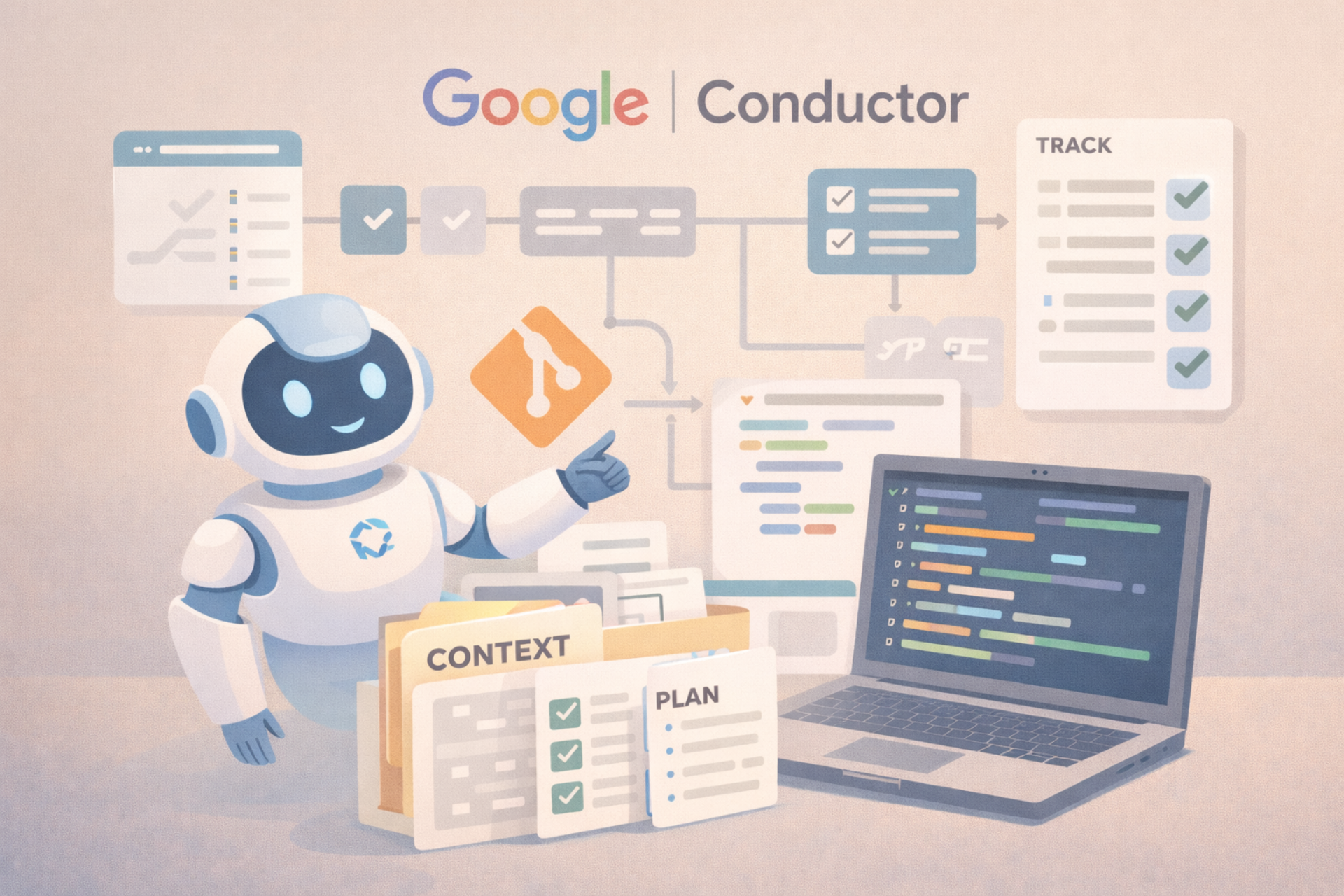
At the core of Conductor is a staged development lifecycle. Requests move from context, to a written specification and plan and then to implementation. The extension will not jump straight from a natural language request to code edits. It first generates a track for the work, drafts a spec and execution plan and waits for human approval before proceeding.
Installation is handled through Gemini CLI with a single command, after which developers can initialize a project using an interactive setup flow. That process generates a set of files — covering product definition, technology choices, workflows and style guides — that live alongside source code and are subject to normal Git review.
Work is organized into “tracks,” each representing a feature or fix. Every track contains a spec outlining requirements and constraints, a step-by-step plan broken into tasks, and metadata tracking progress. When implementation begins, Conductor executes tasks sequentially, runs tests based on project rules, updates status files and pauses at defined checkpoints for verification.
The approach is aimed not only at new projects but also at existing codebases. In mature repositories, the setup process can be used to extract implicit knowledge from teams and turn it into explicit documentation the AI can follow. Over time, the context directory becomes a compact, auditable map of a system’s architecture and constraints.
Because all context, plans and progress are stored as Markdown in Git, teams can review, debate and revise AI instructions the same way they do code. Conductor also includes track-aware commands to inspect status, validate work against guidelines and roll back changes using Git, without forcing developers to reason about raw commit hashes.
Google said the extension is licensed under Apache 2.0 and available as an open-source preview.