April 27, 2026 Intel reported stronger-than-expected first-quarter results, with revenue of $13.6 billion and non-GAAP gross margins reaching 41 per cent, significantly above its own guidance. The company has since indicated that part of the margin improvement came from selling lower-grade or previously unsellable chips as demand for processors surged.
The clarification followed questions from analysts about the scale of the earnings beat. Industry analyst Ben Bajarin said Intel’s investor relations team confirmed that customers are purchasing “what may have been scrap or low-expectation output” CPUs, turning what would typically be waste into revenue.
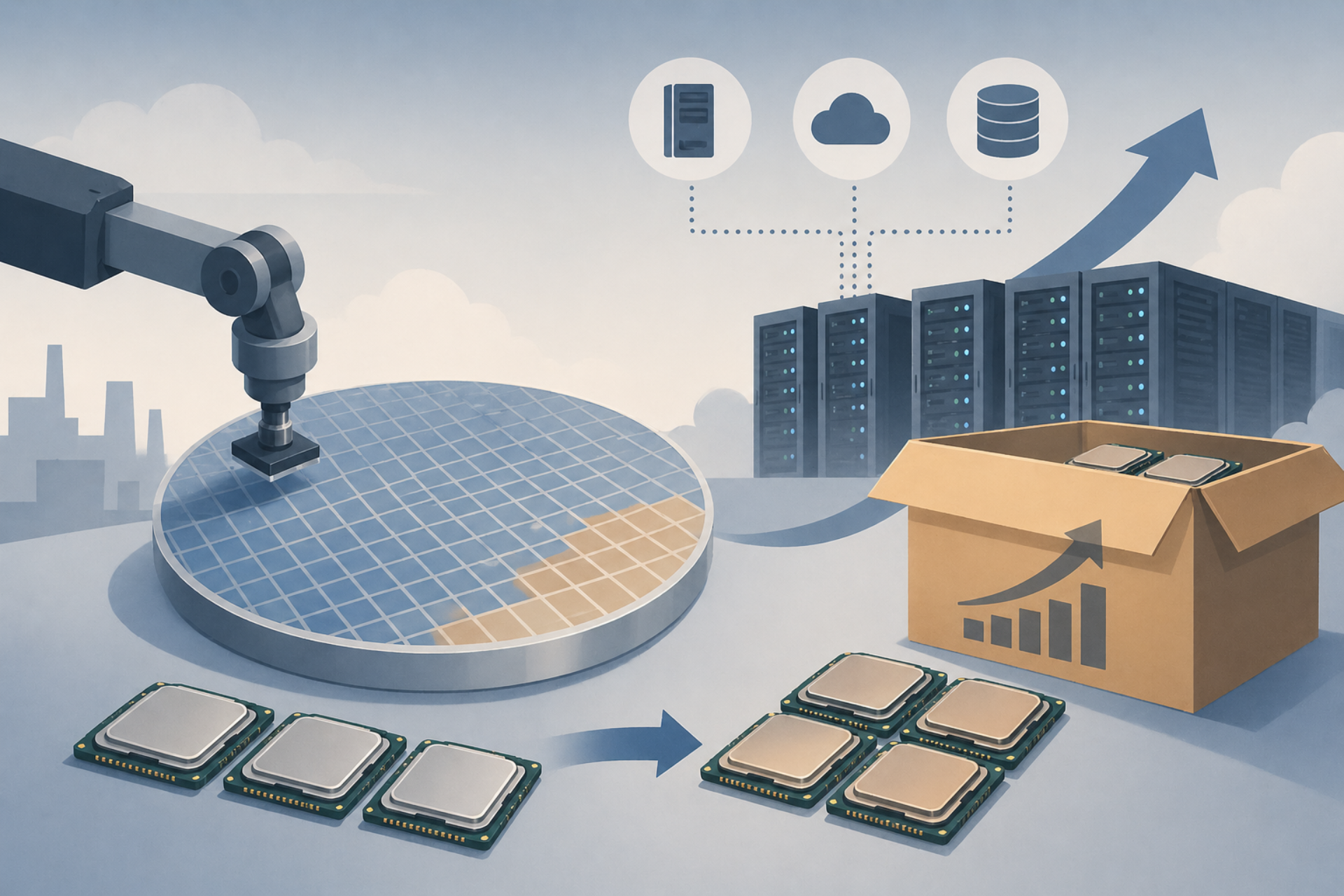
In semiconductor manufacturing, not all chips produced on a wafer meet the same performance standards. Chips from the edges of wafers often have defects or lower performance characteristics and are typically downgraded or discarded. Intel has been able to “bin” these chips (relabel them as lower-tier products) and sell them into the market, rather than writing them off entirely.
The shift reflects unusually strong demand conditions across the CPU market. According to Bajarin, customers are effectively buying all available supply, including chips that might not have met commercial thresholds under normal conditions. This dynamic has allowed Intel to extract additional value from production output that would otherwise have contributed little or no revenue.
The demand is being driven largely by infrastructure build-outs tied to artificial intelligence workloads. Intel’s Xeon processors, widely used in data centre environments, continue to see sustained demand from major original equipment manufacturers such as Dell, HP and Lenovo, as well as hyperscale cloud providers including Microsoft, Google and Amazon.
The result is a supply environment where even lower-spec silicon retains commercial value. Rather than improvements in manufacturing efficiency or cost reductions, the margin expansion appears to be driven in part by the ability to monetize a broader portion of chip output.