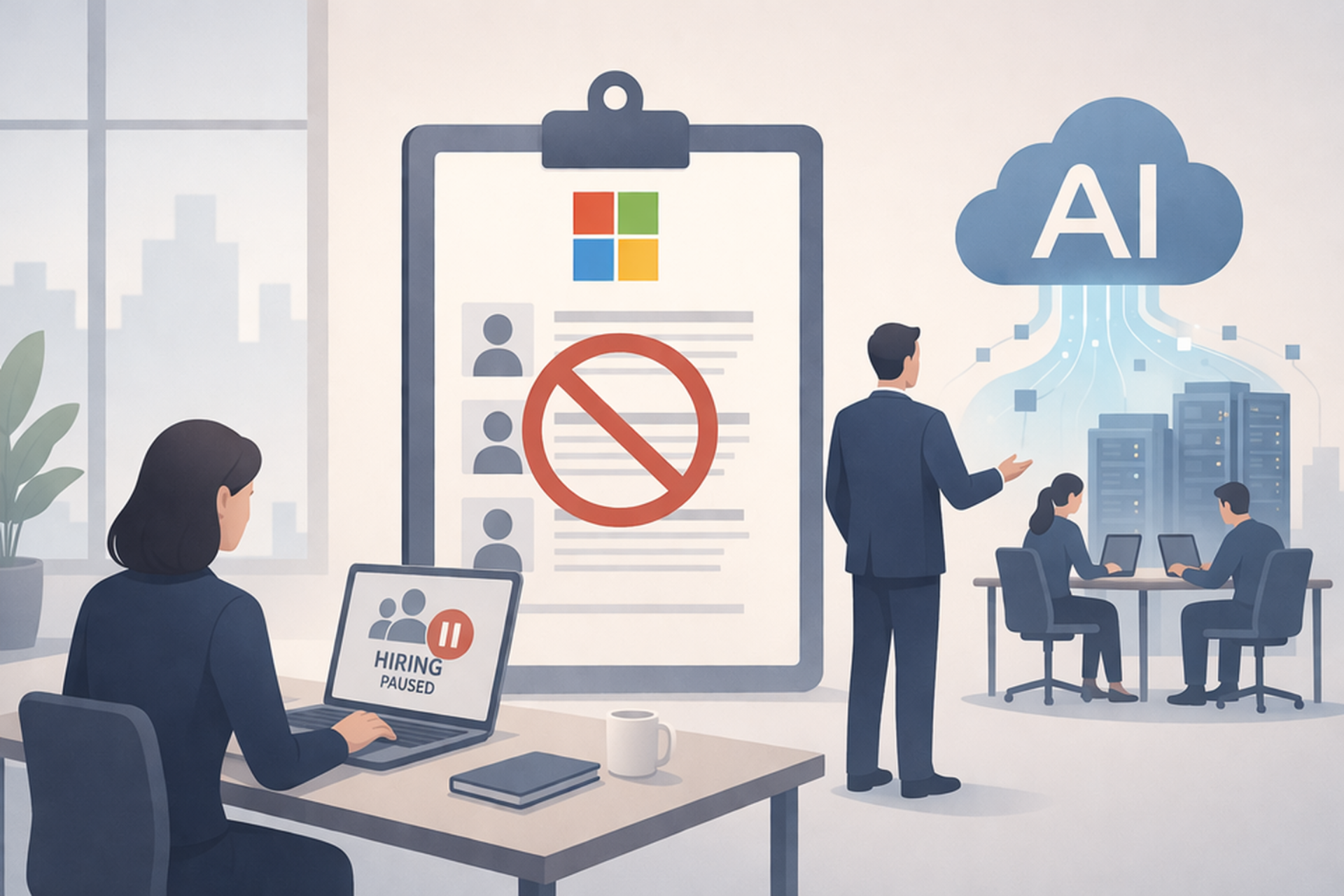
March 30, 2026 Microsoft has instructed managers in several major divisions, including its cloud and North American sales teams, to halt new hiring for roles without existing offers. The move reflects growing pressure to control costs as the company ramps up spending on AI infrastructure and faces investor scrutiny over margins.
The hiring pause is not company-wide, with teams working on Copilot AI tools continuing to recruit, according to reports. Executives reportedly framed the decision as a way to “cut costs and boost margins” ahead of Microsoft’s fiscal year-end in June.
The shift comes at a time when Microsoft is balancing record capital expenditure on AI with signs of slowing growth in its cloud business. The company has been investing heavily in data centres and AI capabilities, while investors increasingly expect clearer returns from those investments. Microsoft last reported slower cloud growth in the October–December quarter, alongside elevated spending tied to AI.
The hiring slowdown also aligns with broader workforce adjustments across the tech sector. Meta is reportedly conducting layoffs affecting hundreds of employees, following earlier plans for deeper cuts. Amazon has reduced roughly 30,000 corporate roles over the past six months, citing efficiency gains from AI and a pullback from pandemic-era hiring levels.
Within Microsoft, the selective nature of the freeze highlights a reallocation rather than a full contraction. Core AI initiatives, particularly those tied to Copilot, remain a priority, while more traditional sales and operational functions face tighter controls. This suggests a shift in how resources are being distributed internally as AI becomes central to product and revenue strategy.
The decision also follows previous workforce reductions. Microsoft cut about 4 per cent of its workforce in mid-2025 and has since been adjusting hiring and spending in response to changing market conditions and internal priorities.
For enterprise customers and partners, the move may signal near-term operational discipline rather than a slowdown in AI development. However, it also underscores the cost intensity of current AI strategies, where investment in infrastructure and model capabilities is being offset by tighter control over headcount.
The pattern across major tech firms points to a recalibration phase: continued investment in AI paired with stricter cost management elsewhere. As companies shift resources toward AI-driven growth, hiring decisions are increasingly becoming a lever to manage margins without slowing core innovation.