April 3, 2026 OpenAI has signed Smartly as its first dedicated adtech partner to refine how advertising appears in ChatGPT. The partnership builds on an early ads rollout that already involves more than 600 advertisers and is generating about $100 million in annualised revenue.
The move follows OpenAI’s gradual introduction of ads earlier this year across its free and lower-cost tiers, along with a separate partnership with Criteo to help brands place ads. Smartly’s role is different, as it focuses on what happens after the ad is live, helping companies adjust and improve performance in real time.
In the short term, that means practical optimisation. Smartly will allow advertisers to tweak campaigns based on how users interact with them, similar to how it already supports brands like Spotify and Uber. A pilot programme is already underway with clients across entertainment, retail and sports.
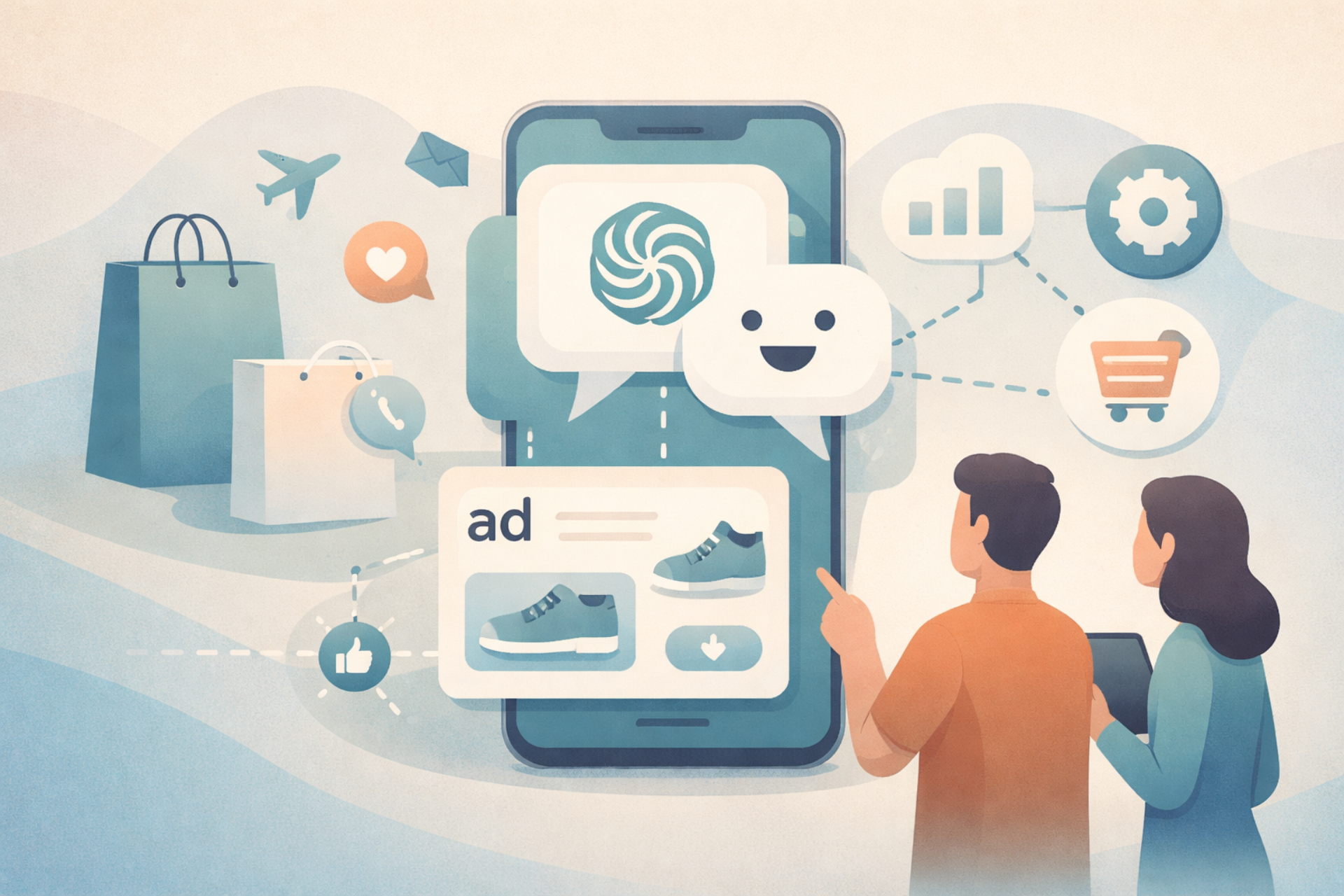
But the longer-term direction is more structural. The goal is to move beyond static ads and experiment with formats that feel native to ChatGPT – ads that behave more like conversations than banners.
Smartly has already tested similar formats on Meta platforms, where users interact with a chatbot that asks questions and recommends products. In one example involving UK retailer Boots, the company said this format drove nearly five times more sales than standard ads.
For now, OpenAI is keeping things simple. Ads are contextual and separate from core responses. For instance, a user researching phones might see a Best Buy promotion, while someone planning a trip could be shown Expedia. According to Sensor Tower, more than 100 brands joined early tests, with retail making up 44 per cent of advertisers.
The company is also setting clear boundaries. Ads do not influence ChatGPT’s answers, user conversations are not shared with advertisers, and certain categories like politics and health are excluded. Users under 18 do not see ads at all. These guardrails reflect how cautious OpenAI is about introducing advertising into a product built around trust.
At the same time, the financial stakes are clear. Analysts estimate OpenAI could scale this into a multi-billion-dollar revenue stream, potentially reaching $25 billion annually by 2030. Even so, the path is constrained. ChatGPT does not have the same surface area for ads as search or social platforms, and pushing too hard risks undermining the experience that draws users in the first place.
That tension is already shaping how competitors respond. Anthropic has chosen not to run ads in Claude, arguing it would conflict with its product goals, while Google keeps ads out of its Gemini chatbot but includes them in AI-powered search summaries.
OpenAI is effectively testing whether advertising can adapt to a conversational interface without feeling intrusive. The outcome will determine not just how ChatGPT makes money, but whether ads can fit naturally into the next generation of user interfaces.