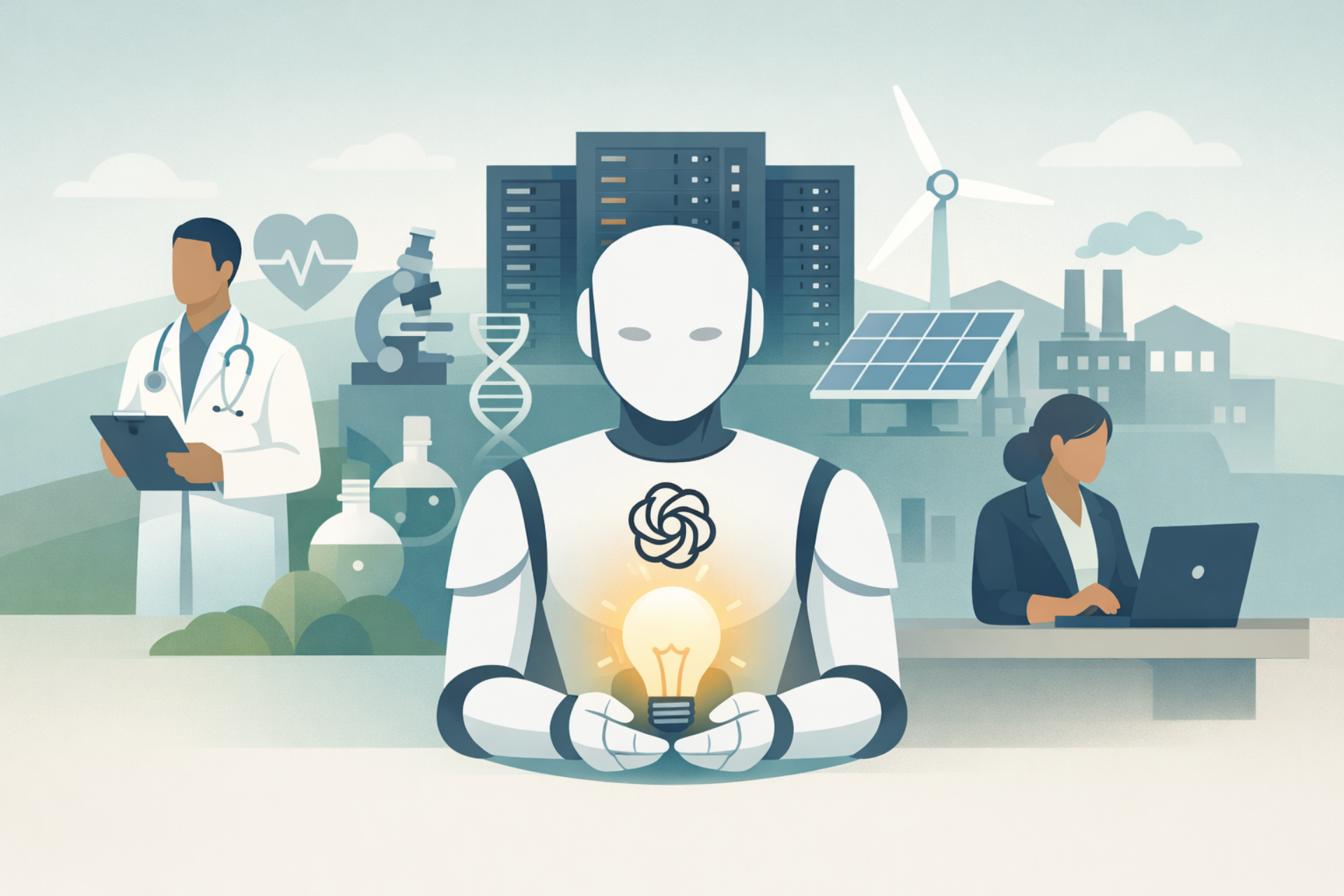
January 21, 2026 After years of rapid growth fueled by infrastructure spending and experimental use cases, OpenAI says 2026 will be the year it focuses on turning AI potential into everyday usage. In a blog post published Sunday, OpenAI chief financial officer Sarah Friar said the company is shifting its priorities toward widespread, practical adoption across sectors like healthcare, science and enterprise software.
“The priority is closing the gap between what AI now makes possible and how people, companies, and countries are using it day to day. The opportunity is large and immediate, especially in health, science, and enterprise, where better intelligence translates directly into better outcomes,” Friar wrote.
Friar revealed that OpenAI’s annualized revenue surpassed $20 billion in 2025, up from roughly $2 billion just two years earlier. That growth, she said, closely mirrors the company’s expansion of computing capacity, which increased nearly tenfold over the same period—from 0.2 gigawatts in 2023 to about 1.9 gigawatts last year.
The numbers underscore the capital intensity of OpenAI’s strategy. Building and powering AI systems at this scale requires vast data centers, long-term energy commitments and access to cutting-edge chips.
Among OpenAI’s most ambitious infrastructure moves is a September announcement with Nvidia, under which the chipmaker said it would commit up to $100 billion to support OpenAI’s deployment of at least 10 gigawatts of Nvidia-powered systems. For context, 10 gigawatts is roughly equivalent to the annual electricity consumption of about 8 million U.S. households.
That deal, however, has not yet been finalized. Nvidia told investors in November that there was “no assurance” the agreement would progress beyond the announcement stage.
“Securing world-class compute requires commitments made years in advance, and growth does not move in a perfectly smooth line,” Friar wrote, adding that scaling responsibly requires discipline. She further noted that OpenAI has reduced its reliance on any single infrastructure partner over the past three years, moving instead to a diversified compute ecosystem.
Beyond software, OpenAI is preparing to enter the hardware market. Speaking at the World Economic Forum in Davos on Monday, the company’s chief global affairs officer said the company is on track to unveil its first consumer device in the second half of 2026. The product, developed in collaboration with Jony Ive following OpenAI’s acquisition of his startup last year, is expected to be a compact, screenless device designed around voice interaction rather than a traditional display.