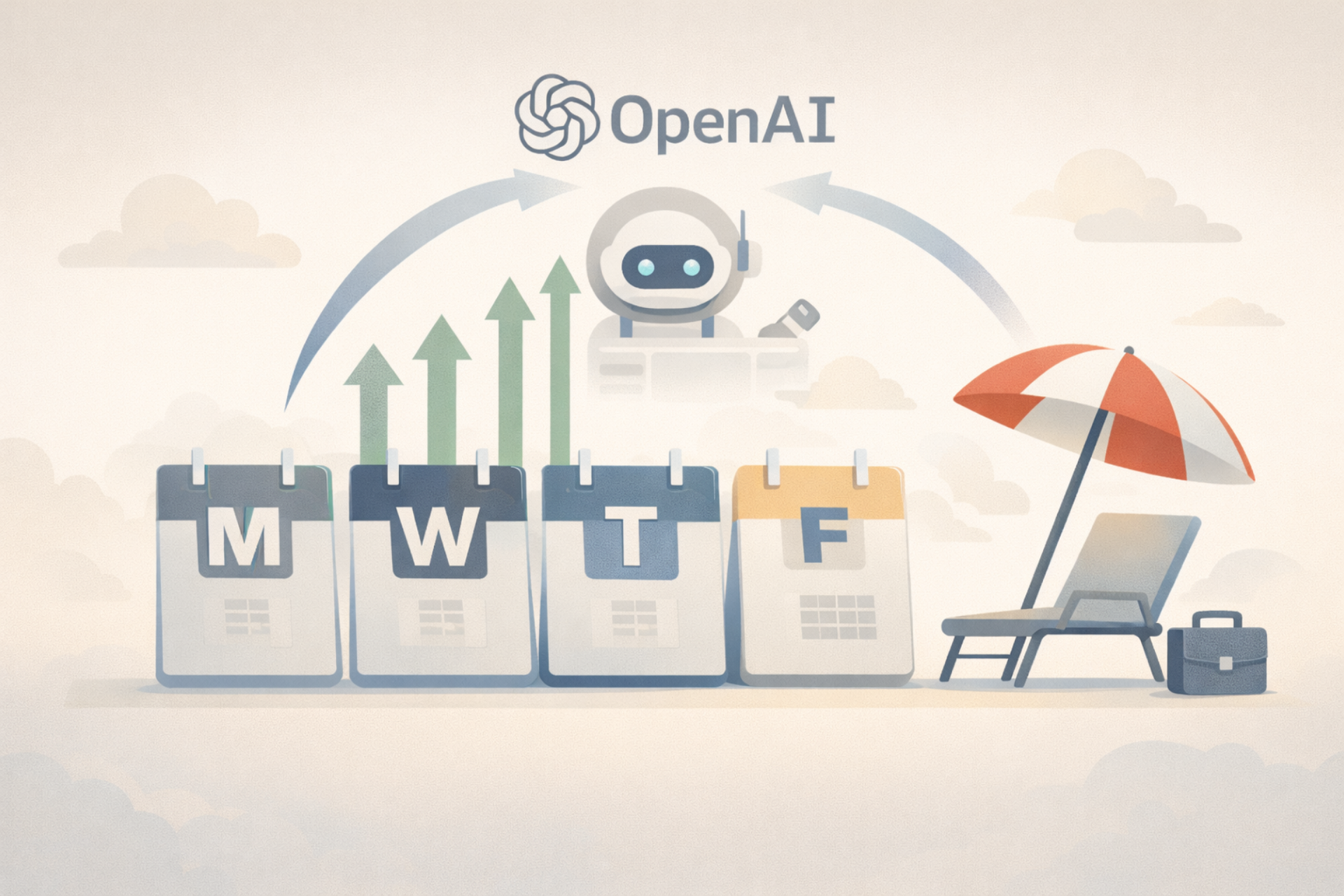
April 9, 2026 OpenAI is proposing a four-day, 32-hour workweek as part of a broader policy plan to ensure workers benefit from AI-driven productivity gains. The company suggests running pilot programmes with no loss in pay, allowing reduced hours while maintaining output levels.
The proposal appears in a 13-page report titled Industrial Policy for the Intelligence Age: Ideas to Keep People First, which outlines how governments and companies can adapt as AI reduces the time required to complete routine and complex tasks.
OpenAI argues that AI systems are already shifting how work gets done. Tasks that once took hours can now be completed in significantly less time, and the company expects future systems to handle projects that currently take months. This, it says, will fundamentally change how organisations operate, how knowledge is created, and how work is structured.
To balance those gains, the report recommends that productivity improvements be shared more directly with workers. One approach is “benefits bonuses,” where employees receive a portion of efficiency gains through increased pay, financial security, or additional personal time.
The company also proposes the creation of a “public wealth fund” tied to AI-driven economic growth. The idea is to allow broader participation in the financial upside of AI by investing in companies building or deploying the technology, with returns distributed directly to citizens.
Together, the proposals reflect a shift in how AI’s economic impact is being framed. Rather than focusing only on efficiency and cost reduction, the report centres on how gains are distributed as workloads shrink and automation expands.
The recommendations come at a time when AI tools are moving beyond simple task support into handling more complex workflows. OpenAI’s position is that current policy frameworks may not be sufficient to manage that transition, particularly as the pace of change accelerates.