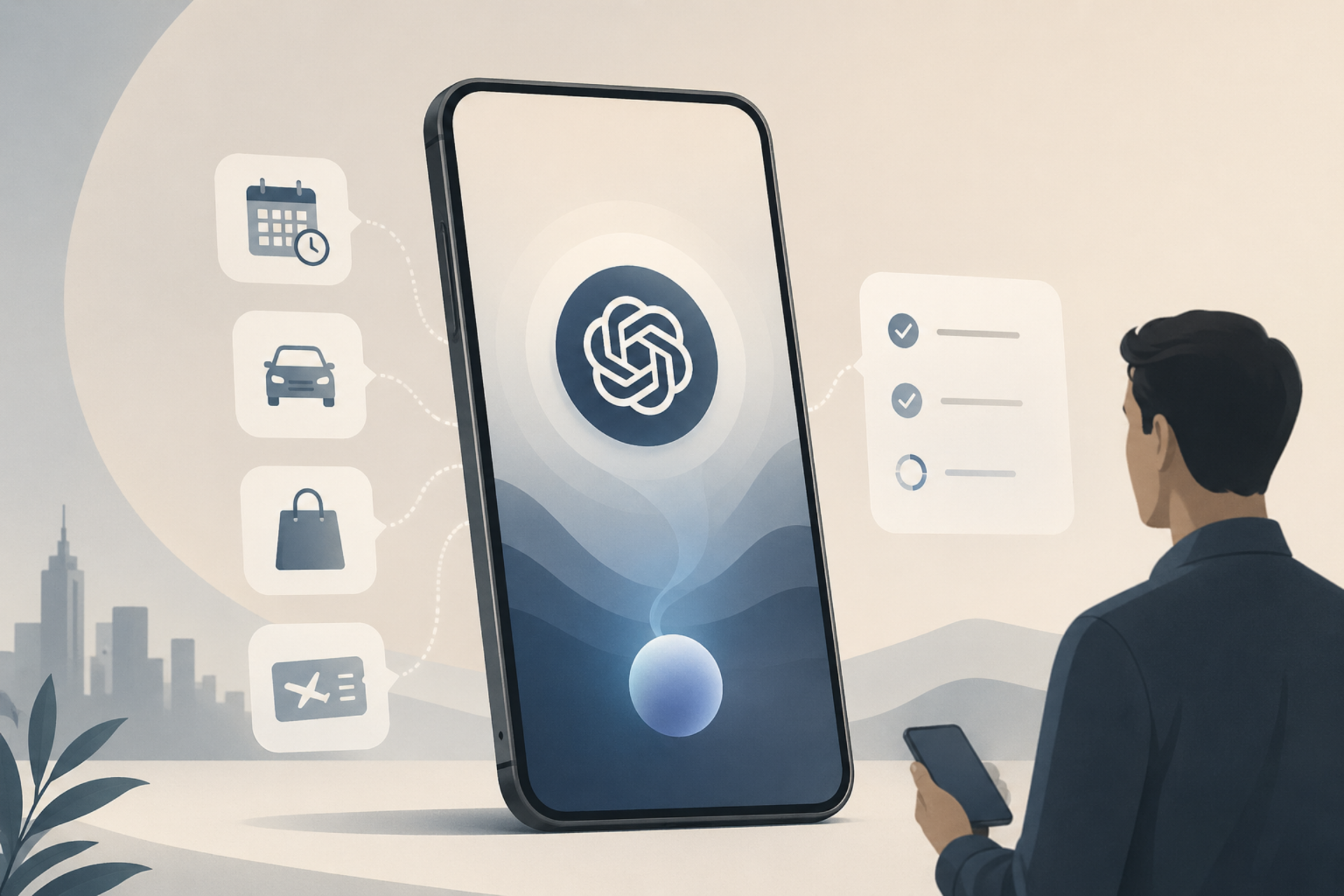
April 29, 2026 OpenAI is reportedly developing a smartphone centred on an AI “agent” interface designed to replace traditional app-based interactions. The device would allow users to complete tasks through a single AI system rather than navigating multiple apps, signalling a potential redesign of how mobile software is structured.
According to analyst Ming-Chi Kuo, the device is being developed in collaboration with Qualcomm and MediaTek, which are expected to supply custom processors. Kuo said users are “not trying to use a pile of apps” but instead want to “get tasks done and fulfil needs through the phone,” describing the approach as a fundamental shift in how smartphones are used.
The proposed “AI agent phone” would replace the familiar grid of apps with an assistant capable of executing actions directly. Instead of opening an app and manually completing steps, users would issue commands, with the system handling workflows such as booking services, retrieving information or completing transactions across multiple services.
OpenAI CEO Sam Altman has hinted at this direction, writing that it “feels like a good time to seriously rethink how operating systems and user interfaces are designed,” including how systems can serve both humans and AI agents. The company is also exploring a broader category of AI hardware, including wearable devices such as pins, pens and earbuds, but the reported phone would represent its most direct move into mainstream consumer hardware.
Analysts say full control over hardware and software is critical to enabling this model. AI systems require deep access to user data, system functions and default apps to operate effectively across tasks. Without that integration, AI assistants remain limited by platform permissions. Earlier attempts at standalone AI hardware struggled with these constraints, reinforcing the importance of system-level control.
The broader industry is already moving in this direction. Devices from Google and Samsung are introducing features that automate multi-step actions across apps. Google’s Pixel devices have begun surfacing contextual information across services, while Samsung’s systems can execute actions, such as ride-hailing through voice commands by navigating apps in the background.
The smartphone remains central to these developments. Analysts note that it consolidates personal data, communications, sensors and computing power in a single device, making it a practical hub for AI systems.
“The smartphone is just the perfect product,” said analyst Max Weinbach, citing its access to user data, cameras, and applications as key advantages for AI-driven workflows.
Other approaches are also emerging. Meta is investing in smart glasses as an alternative interface, while companies in China have introduced devices that more aggressively integrate AI agents across apps. However, current industry thinking suggests these devices are more likely to complement smartphones rather than replace them.
The reported OpenAI device may rely on existing operating system frameworks rather than building a new one from scratch. Analysts suggest that using Android could provide access to core telephony, networking and hardware drivers, reducing development complexity compared to building a fully custom system.
The timeline for the device remains long-term. Kuo indicated that mass production is unlikely before 2028, reflecting both the technical complexity and the broader transition required to shift user behaviour from app-based interaction to agent-driven workflows.