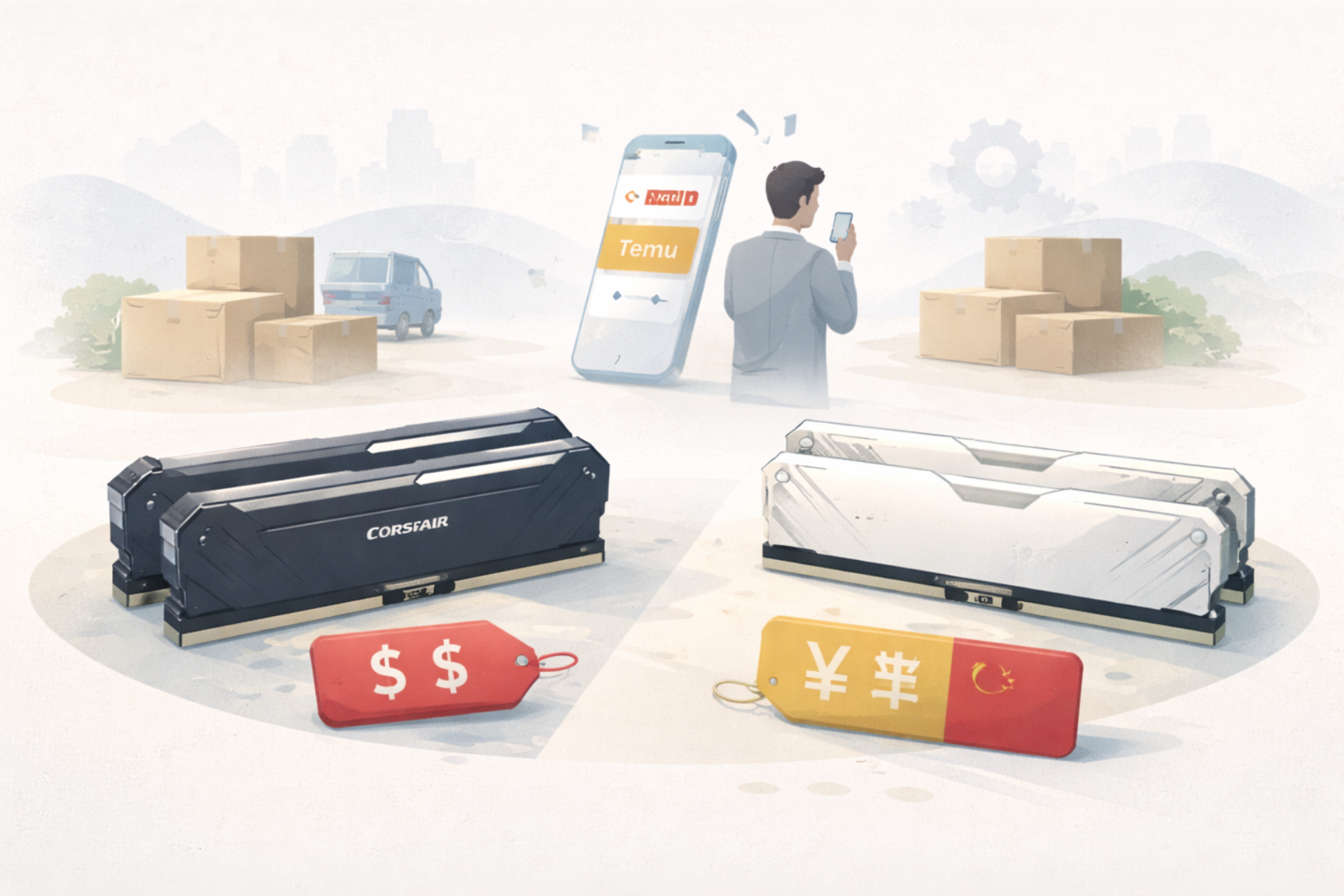
February 25, 2026 The RAM shortage continues to squeeze PC buyers, with memory kits from major brands selling at sharply elevated prices across many markets. Some consumers are now turning to lesser-known Chinese manufacturers on platforms like AliExpress and Temu as a temporary workaround — though experts warn the savings may come with trade-offs.
Mainstream 16GB DDR4 kits from brands such as Corsair and Kingston have climbed well above previous norms, prompting buyers to hunt for alternatives. Comparable kits from unfamiliar names such as Cusu and Dudga are appearing online at lower price points, sometimes undercutting Western brands by a noticeable margin.
A 16GB (2x8GB) DDR4 3200MHz kit from Cusu, for example, has been listed for around $120 during promotional sales, lower than similarly specced kits from established brands that can cost significantly more. However, pricing varies widely, and not all imported modules are cheaper. In some cases, they are priced similarly to mainstream products.
The appeal lies in timing. With memory costs spiking, importing modules built for the Chinese domestic market has become more attractive for budget-conscious buyers. But lower upfront cost does not necessarily guarantee equal performance or reliability.
Industry watchers caution that purchasing memory from third-party marketplaces introduces uncertainty. Warranty support may be limited, return policies inconsistent, and long-term durability harder to verify compared to established manufacturers or major retailers.
There is also no guarantee that modules will perform identically to premium brands despite sharing similar listed specifications. Memory compatibility, stability and quality control can vary, particularly when sourcing from unfamiliar suppliers.
That said, for experienced users willing to assume some risk, imported kits may offer short-term relief while waiting for broader pricing trends to stabilize. Some analysts suggest there are early signs that memory prices could ease, though whether that translates into sustained retail reductions remains unclear.
For now, the RAM crunch shows little sign of fully abating. Consumers weighing imported alternatives will need to balance cost savings against potential compromises in support and reliability.