January 6, 2026 SaaStr founder Jason Lemkin says he is done hiring humans for sales. After replacing his entire go-to-market team with artificial intelligence agents, Lemkin says the company now runs its sales operation with software. According to him, he has no plans to reverse course.
Speaking recently on Lenny’s Podcast, Lemkin said SaaStr has deployed 20 AI agents to automate work previously handled by 10 sales development representatives and account executives. The shift marks one of the clearest real-world examples yet of AI agents fully replacing white-collar roles, not as an experiment, but as a business decision.
The turning point came earlier this year. In May, SaaStr had just one AI agent in production, Lemkin said. During that same month, two of the company’s highest-paid sales representatives quit abruptly, just ahead of the SaaStr Annual conference, which draws more than 10,000 founders, executives and investors.
From Lemkin’s perspective, the economics no longer made sense. Hiring a junior sales representative at roughly $150,000 per year only to see them leave after a short tenure is becoming harder to justify when AI agents could be deployed, trained, and scaled without attrition.
By June, SaaStr began ramping up its agent rollout. Amelia Lerutte, the company’s chief AI officer, told Business Insider by email: “We had only 1 non-core agent at the time with Delphi, but didn’t go deep on 2 to 20+ until the beginning of June. It was a conscious choice after their departure to reallocate some (but not all) head count spend to agents.”
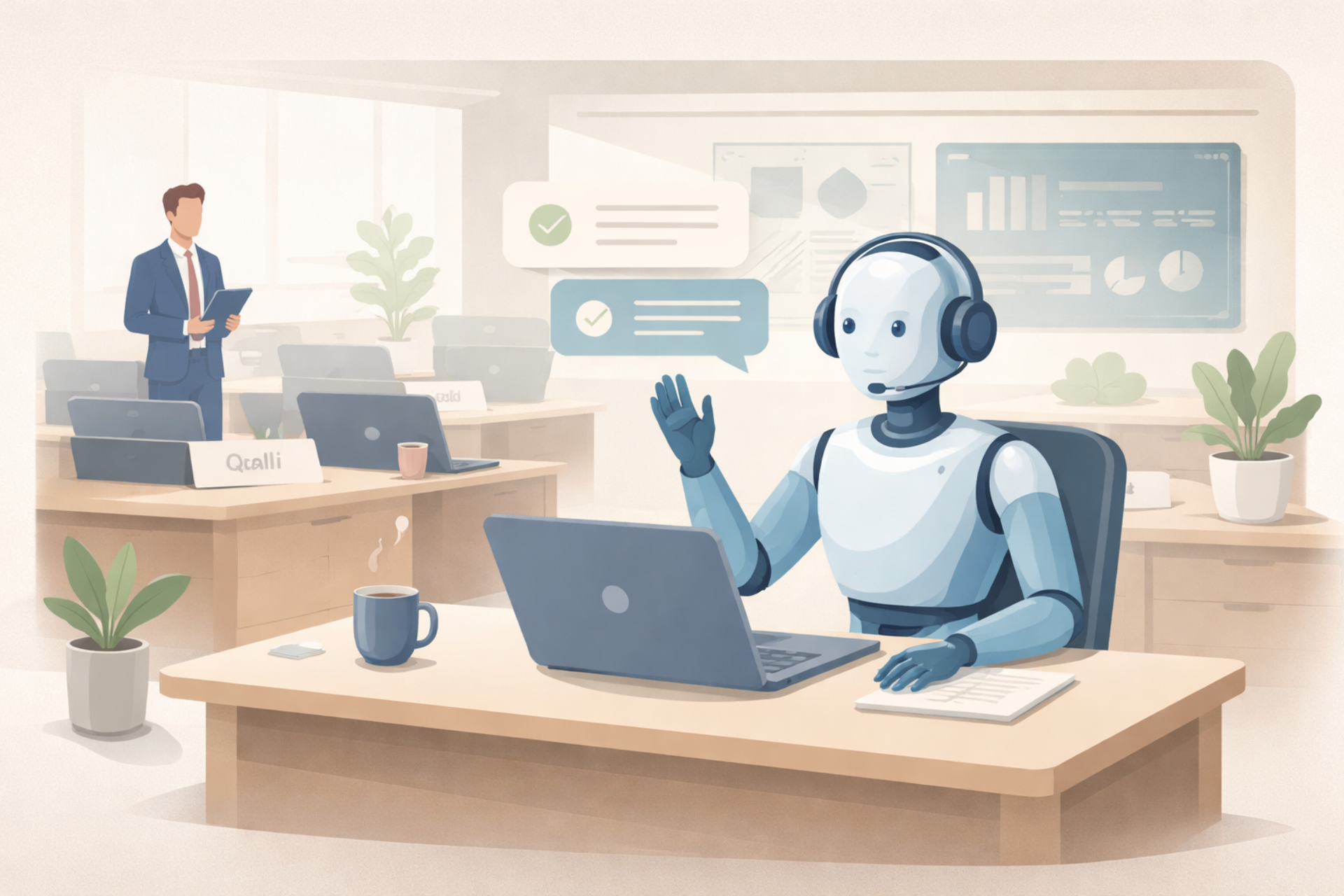
At SaaStr’s office, the desks once occupied by human sales staff are now labeled with agent names such as “Quali,” “Arty” and “Repli,” according to Lemkin. The agents are trained directly on top-performing employees. “Train an agent with your best person, and best script, then that agent can start to become a version of your best salesperson,” Lemkin said.
The approach mirrors similar experiments at companies like Vercel, which trained a sales agent by documenting every step of its best salesperson’s workflow before automating it.
Despite the gains, risks remain. AI agents often require deep system access to function effectively, raising security concerns. Lemkin acknowledged that agents are not dramatically more productive than humans on a one-to-one basis. The advantage, he said, is efficiency and scale, as agents do not quit, do not burn out and can be replicated instantly.