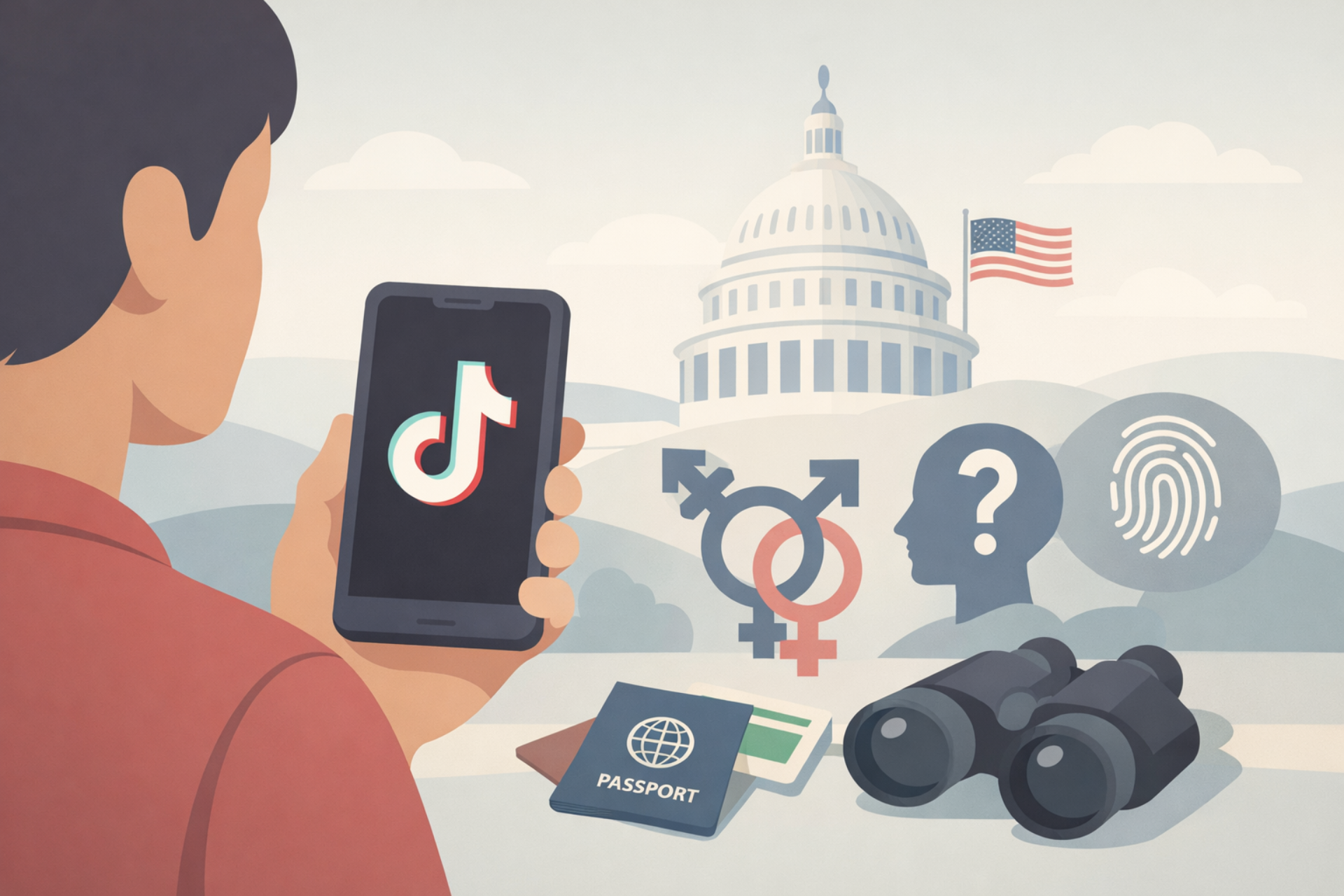
January 26, 2026 TikTok’s updated privacy policy has set off anxiety among U.S. users, many of whom say they were blindsided by language describing the collection of highly sensitive personal data. The concern erupted after an in-app notification alerted users to revised terms tied to TikTok’s new U.S. ownership structure, prompting many to read the company’s privacy disclosures closely for the first time.
What they found quickly spread across social media. The policy states that TikTok may collect sensitive information, including a user’s “sexual life or sexual orientation, status as transgender or nonbinary, citizenship or immigration status.” In the current political climate, that wording has landed with particular force. With immigration enforcement escalating under the Trump administration and protests breaking out nationwide — including in Minnesota, where clashes with Immigration and Customs Enforcement have led to mass arrests and the killing of U.S. citizen Renée Good — some users fear that such data could expose them to government scrutiny. Calls to delete the app have followed.
But privacy lawyers say the language driving the panic is not new, nor is it unique to TikTok. Nearly identical disclosures appeared in TikTok’s previous U.S. privacy policy, last updated on August 19, 2024. The reason, they argue, is legal compliance rather than a sudden expansion of data collection.
State privacy laws, particularly in California, require companies to explicitly disclose when they collect “sensitive personal information.” Under the California Consumer Privacy Act and its successor, the California Privacy Rights Act, that category is broadly defined to include precise geolocation, biometric identifiers, health data and personal information related to sex life or sexual orientation. Citizenship and immigration status were explicitly added to the definition in 2023 when California Governor Gavin Newsom signed AB-947 into law.
Because TikTok now operates through a U.S. joint venture, it was required to issue a fresh in-app notice when the new legal entity took effect. That timing, combined with heightened political tensions, appears to have amplified the reaction.
“TikTok is required under those laws to notify users in the privacy policy that the sensitive personal information is being collected, how it is being used, and with whom it is being shared,” explains Jennifer Daniels, a partner at the law firm Blank Rome.
The policy itself stated that TikTok processes such information “in accordance with applicable law” and even referencing the CCPA directly. In practice, this means that if a user discloses sensitive details – say, in a video, caption, or message – that information becomes part of the content the platform technically handles.
“TikTok is essentially saying that if you disclose something sensitive, that information becomes part of the content the platform technically ‘collects,’” says Ashlee Difuntorum, an associate at Kinsella Holley Iser Kump Steinsapir.