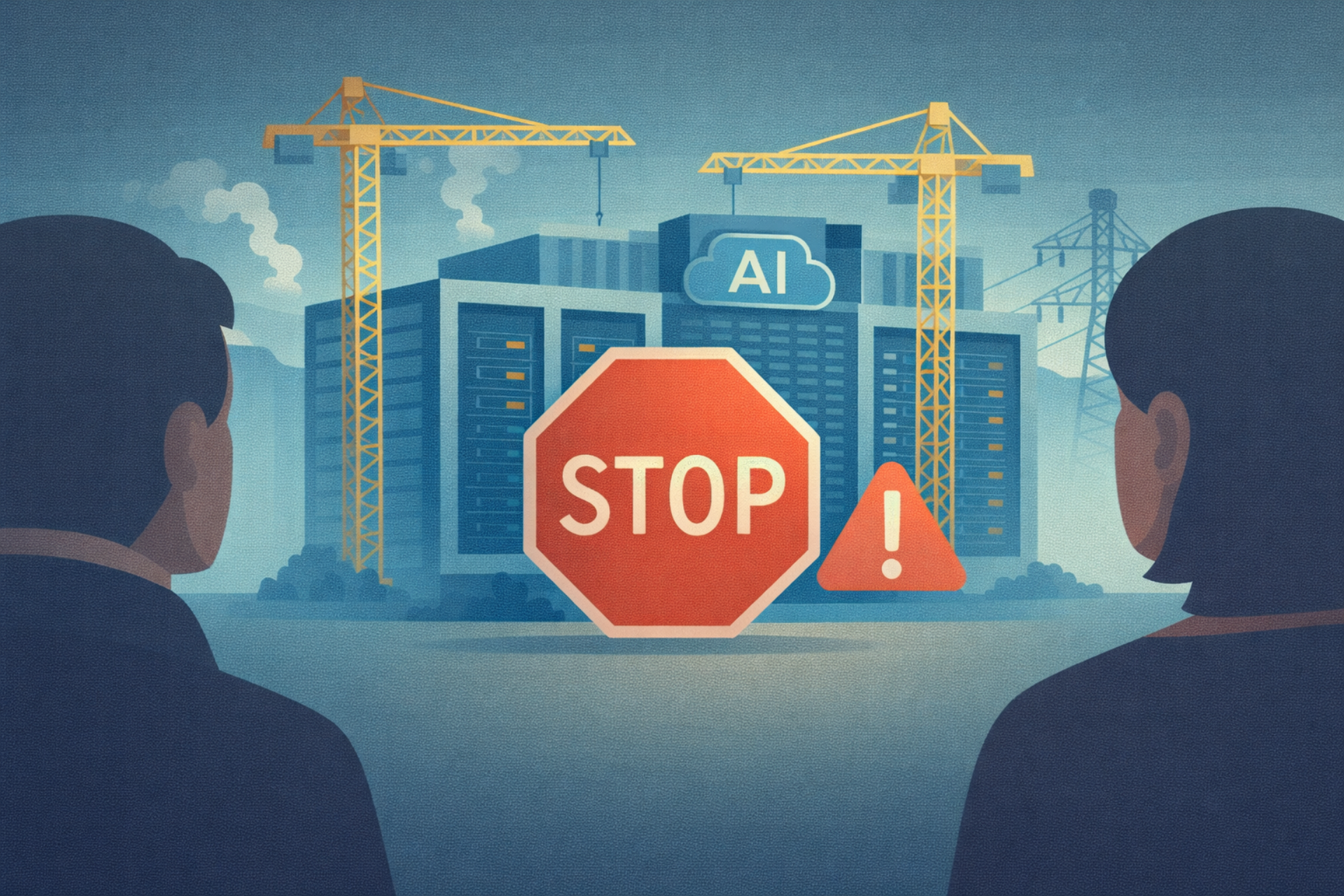
March 26, 2026 U.S. lawmakers have introduced a proposal to halt new AI datacentre construction nationwide until federal safeguards are in place. The plan would immediately pause development of facilities critical to AI infrastructure, citing rising energy demand, environmental impact and societal risks tied to the technology.
The proposal, led by Vermont Sen. Bernie Sanders and New York Rep. Alexandria Ocasio-Cortez, is framed as a temporary measure to allow regulators to establish rules governing AI’s economic, environmental and social effects. “AI and robotics are creating the most sweeping technological revolution in the history of humanity,” Sanders said, adding that the scale and speed of change that has ensued are unprecedented.
The bill would suspend construction or expansion of AI-focused datacentres until legislation addresses several concerns, including climate impact, rising electricity costs, water usage and job displacement. It also proposes restrictions on exporting AI hardware, such as specialised chips, to countries without similar protections.
The push follows growing local resistance to datacentre expansion. Since mid-2025, multiple U.S. towns and counties have introduced temporary bans, while at least 11 states are considering similar measures. Advocacy groups have also called for federal action, citing pressure on power grids and environmental risks tied to large-scale infrastructure projects.
Energy demand is a central issue here. Datacentres require significant electricity and water for cooling, and some regions with high concentrations of facilities have already seen power costs rise sharply. One analysis cited increases of up to 267 per cent over five years in certain areas. Environmental groups have also warned that, if current trends continue, datacentres could account for a substantial share of emissions allowed under US climate targets.
Public concern appears to be rising alongside these developments. Surveys show a growing share of Americans are worried about AI’s broader impact, including its effect on jobs, energy consumption and costs of living. Lawmakers also pointed to AI-related layoffs and concerns about privacy, misinformation and mental health as part of the rationale for intervention.
The proposal goes beyond environmental considerations to address AI governance more broadly. Lawmakers argue that a pause would provide time to establish safeguards around labour impacts, consumer protections and the distribution of economic benefits generated by AI systems.
Industry groups have pushed back, warning that a moratorium could disrupt infrastructure growth, limit capacity and increase costs for businesses and consumers. The proposal is also unlikely to pass in the current political climate, as the administration continues to support rapid AI expansion and investment.