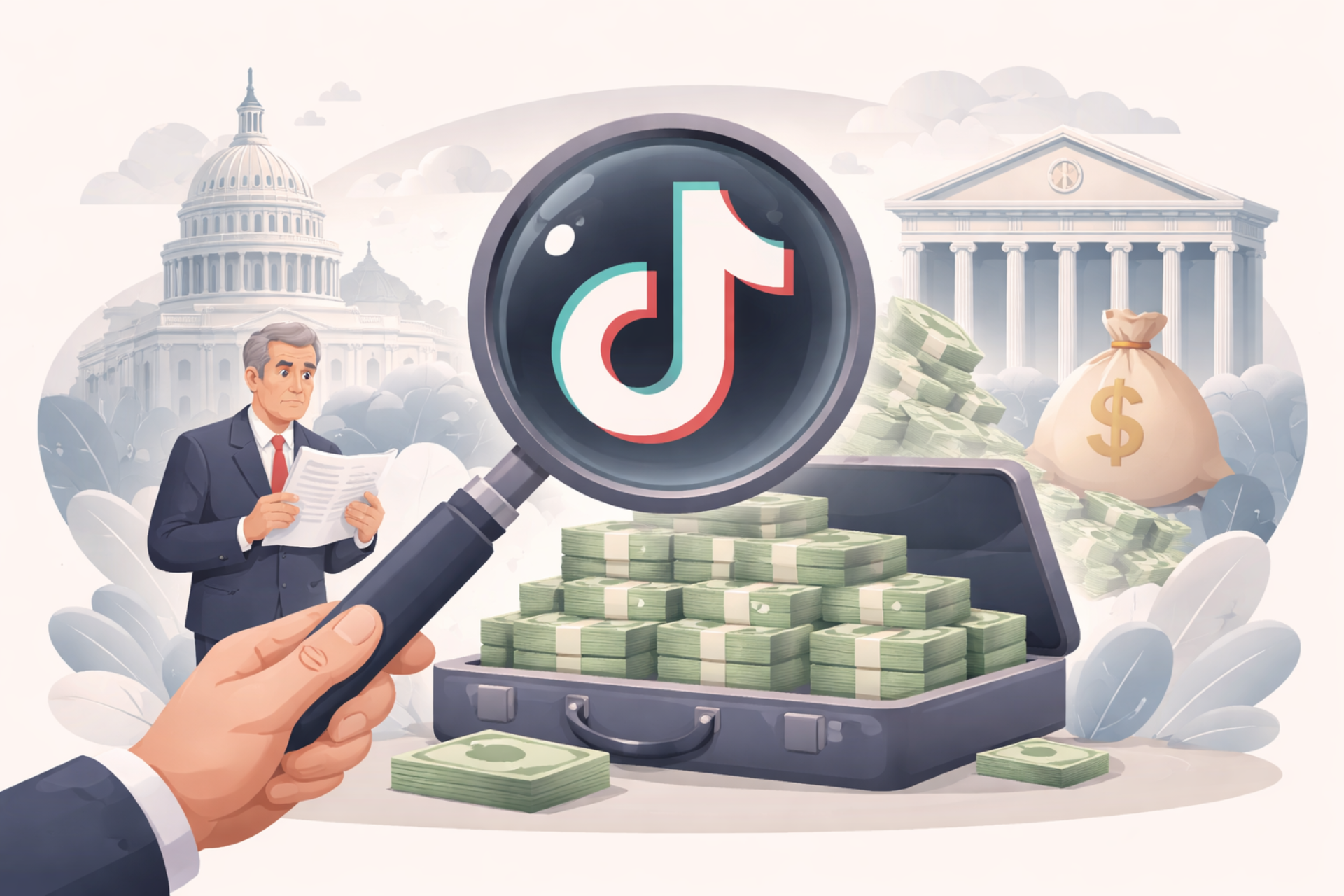
March 18, 2026 U.S. Senator Mark Warner is seeking answers about a reported $10 billion payment to the Treasury Department tied to the TikTok divestiture, raising concerns about how the fee was structured and authorised. The disclosure effectively increases the deal’s total value from $14 billion to $24 billion, introducing scrutiny over an unprecedented government role in a private transaction.
In a letter to Treasury Secretary Scott Bessent, Warner asked how the fee was determined, approved and spent, including whether it complies with the Anti-Deficiency Act, which limits federal spending without congressional appropriation. His inquiry follows reports that the Treasury collected a fee far exceeding typical M&A advisory rates.
The structure of the deal is unusual. Standard transaction fees typically range between one and two per cent, but in this case, the Treasury’s share represents a majority of the transaction’s economic value. The payment appears to have been required as part of U.S. approval for ByteDance to divest TikTok’s U.S. operations under national security pressure.
Key stakeholders have not provided clarification as at press time. The Treasury Department did not respond to requests for comment. TikTok U.S. and the office of Vice President JD Vance, who reportedly led negotiations, also declined to comment. Oracle and Silver Lake, which each hold roughly 15 per cent stakes in TikTok U.S., confirmed their investments but did not address the reported fee. Oracle’s latest earnings report referenced its equity position without mentioning any payment, while it remains unclear whether Silver Lake’s share of the fee would be borne by its limited partners or general partner.
The lack of disclosure extends beyond official channels. Sources previously active in discussing the multi-year deal process have declined to comment on the fee, with one source suggesting the matter may require formal public records requests to surface further details.
The revised economics may have big implications for stakeholders. ByteDance investors, including U.S. venture capital firms, retained roughly a 20 per cent stake in the spun-out entity, but the higher total cost could affect perceived deal value. Competing bidders may also question whether the process was structured in a way that influenced the outcome.
The absence of formal disclosure has become a central issue. Warner’s letter highlights concerns about transparency, oversight and whether the funds were directed toward deficit reduction or other uses without explicit approval from Congress.