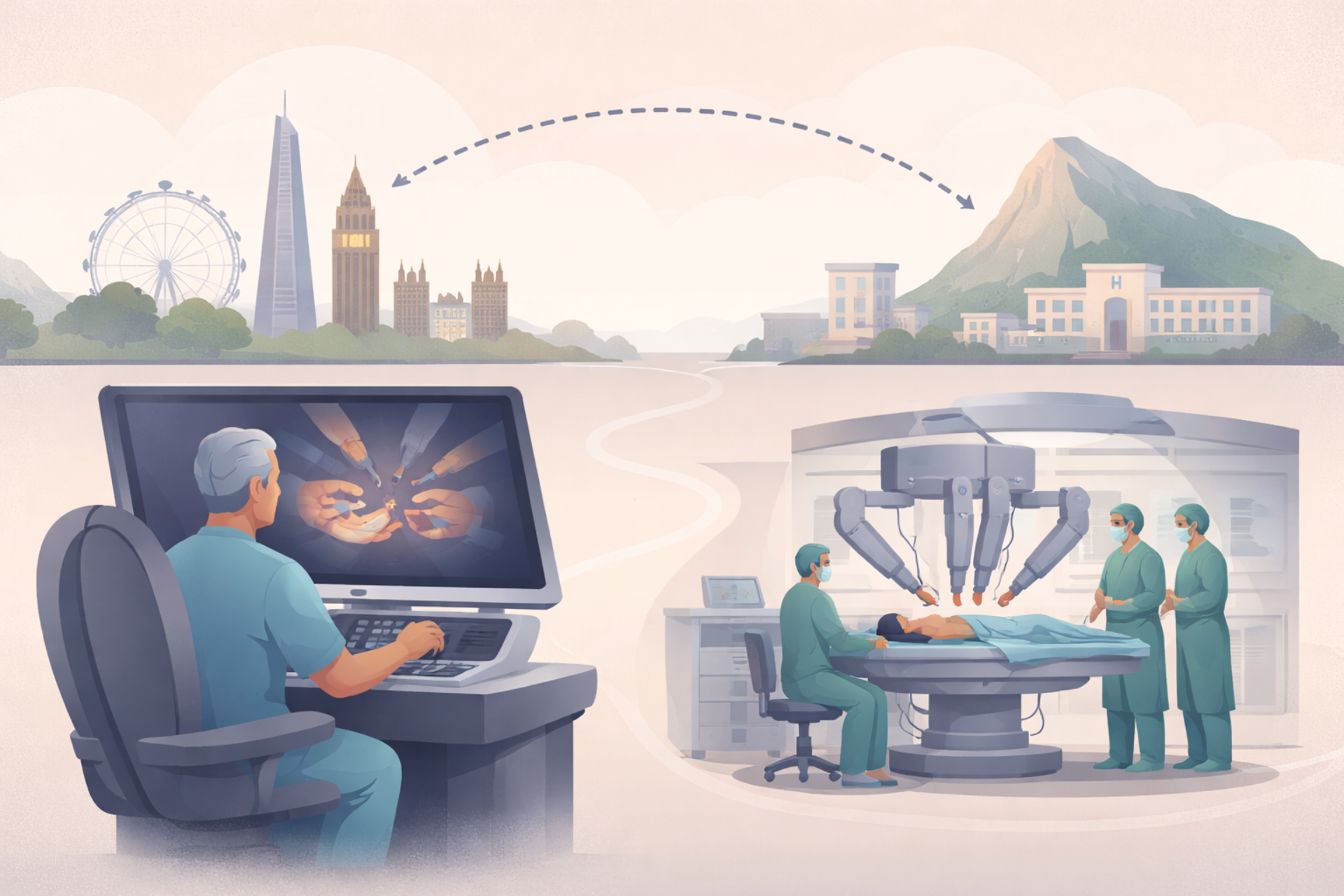
March 10, 2026 A London surgeon has remotely guided a robot to remove a patient’s cancerous prostate at a hospital 1,500 miles away in Gibraltar, marking the first successful remote robot-assisted telesurgery conducted by a UK hospital. The operation was performed with about 60 milliseconds of latency between the surgeon’s movements in London and the robot’s response in Gibraltar.
The procedure was carried out by Professor Prokar Dasgupta at The London Clinic’s robotic surgery centre on Harley Street, while 62-year-old patient Paul Buxton was treated at St Bernard’s Hospital in Gibraltar. The surgery used the Toumai robotic system, which allowed Dasgupta to control four robotic arms and a 3D high-definition camera from a remote console.
A surgical team in Gibraltar was present in the operating room to assist and intervene if the network connection failed, though the prostatectomy was completed without reported complications. The arrangement allowed the patient to receive the specialist procedure locally rather than travelling to the United Kingdom or mainland Europe for treatment.
Remote robotic surgery across long distances has been explored for more than two decades. One of the earliest demonstrations occurred in 2001 when surgeons in New York remotely removed a patient’s gallbladder in Strasbourg, France in a procedure known as the “Lindbergh Operation.”
More recent developments suggest growing experimentation with the approach. In 2024, surgeons carried out a transcontinental robotic prostate surgery linking Rome and Beijing, and additional long-distance procedures using the Toumai platform have been reported in Africa.
The Gibraltar operation relied on high-speed network infrastructure to transmit commands and video feeds in near real time, a requirement for precise surgical work. Local teams also remain essential to manage equipment, monitor the patient and respond if the remote link fails.
While still relatively uncommon in routine healthcare, remote robotic procedures are increasingly being tested as hospitals explore ways to extend specialised surgical expertise across geographic distances.