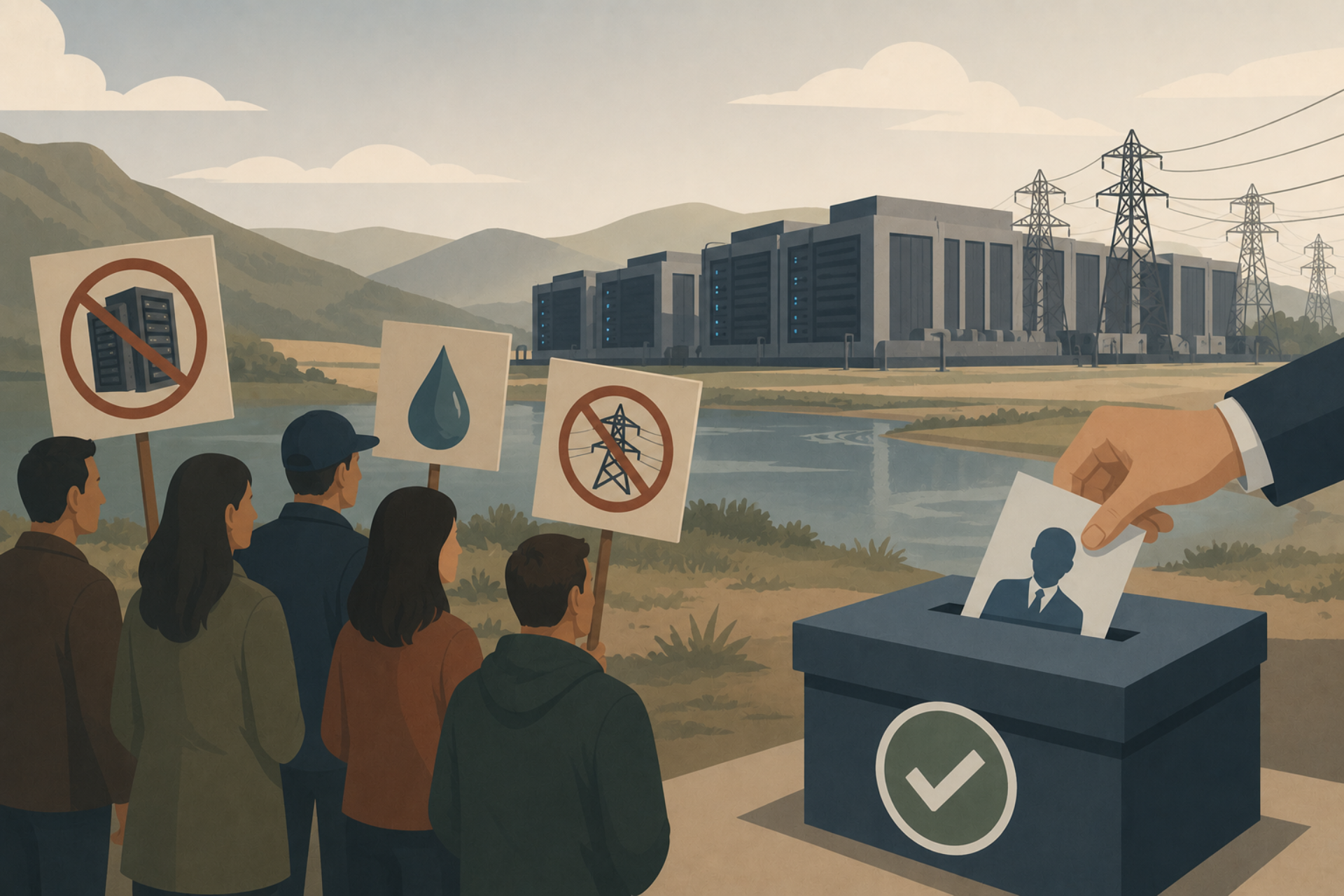
June 26, 2026 Opposition to large-scale data centre developments tied to the artificial intelligence boom is beginning to influence U.S. elections, with several elected officials losing races after backing controversial projects. In Utah, State Senate President J. Stuart Adams lost his primary election after supporting a massive proposed data centre development near the Great Salt Lake.
The defeat of Adams, one of the state’s most powerful Republicans, came alongside losses by multiple local officials who supported the same project, suggesting voter opposition to data centres is emerging as a significant political issue. The controversy centres on the proposed Stratos project, a planned data centre campus in Box Elder County’s Hansel Valley.
Backed by investor Kevin O’Leary, the project has been described as one of the largest data centre developments in the world. According to reports, the facility could eventually require as much as nine gigawatts of electricity, more power than the entire state of Utah currently consumes. O’Leary later said he would be willing to reduce the size of the project.
Adams became a focal point for opposition because of his role leading a state authority that approved early plans for the development. Critics argued that local concerns were ignored during the approval process.
Adams, who had previously won reelection comfortably, was defeated by a challenger who campaigned in part against the project. At the local level, former Box Elder County commissioner Lee Perry, who voted to advance the proposal, also lost his primary race. “Do I think that the data centre vote cost me the election? Yes I do,” Perry said after conceding.
Dan Cassino, a professor of government and politics at Fairleigh Dickinson University and executive director of the FDU Poll, said rising concerns over affordability have helped turn data centres into a political issue.
“Since the pandemic, affordability has become a key issue in U.S. politics, and energy prices are the current face of affordability,” Cassino told Newsweek. According to him, voters generally support measures that could lower energy costs and that opposition to data centres appeals to people concerned about rising utility bills.
While data centres are only one factor affecting electricity prices, Cassino said arguments that AI facilities are driving up power costs provide candidates with a straightforward message that resonates with voters. He added that opposition to data centres cuts across party lines.
Democrats are facing pressure from environmental advocates, while Republicans who traditionally favour development are increasingly confronting voters worried about the local impacts of large infrastructure projects.
“None of this would matter if voters liked what they were getting from the data centres, but they don’t see the benefit,” Cassino said.