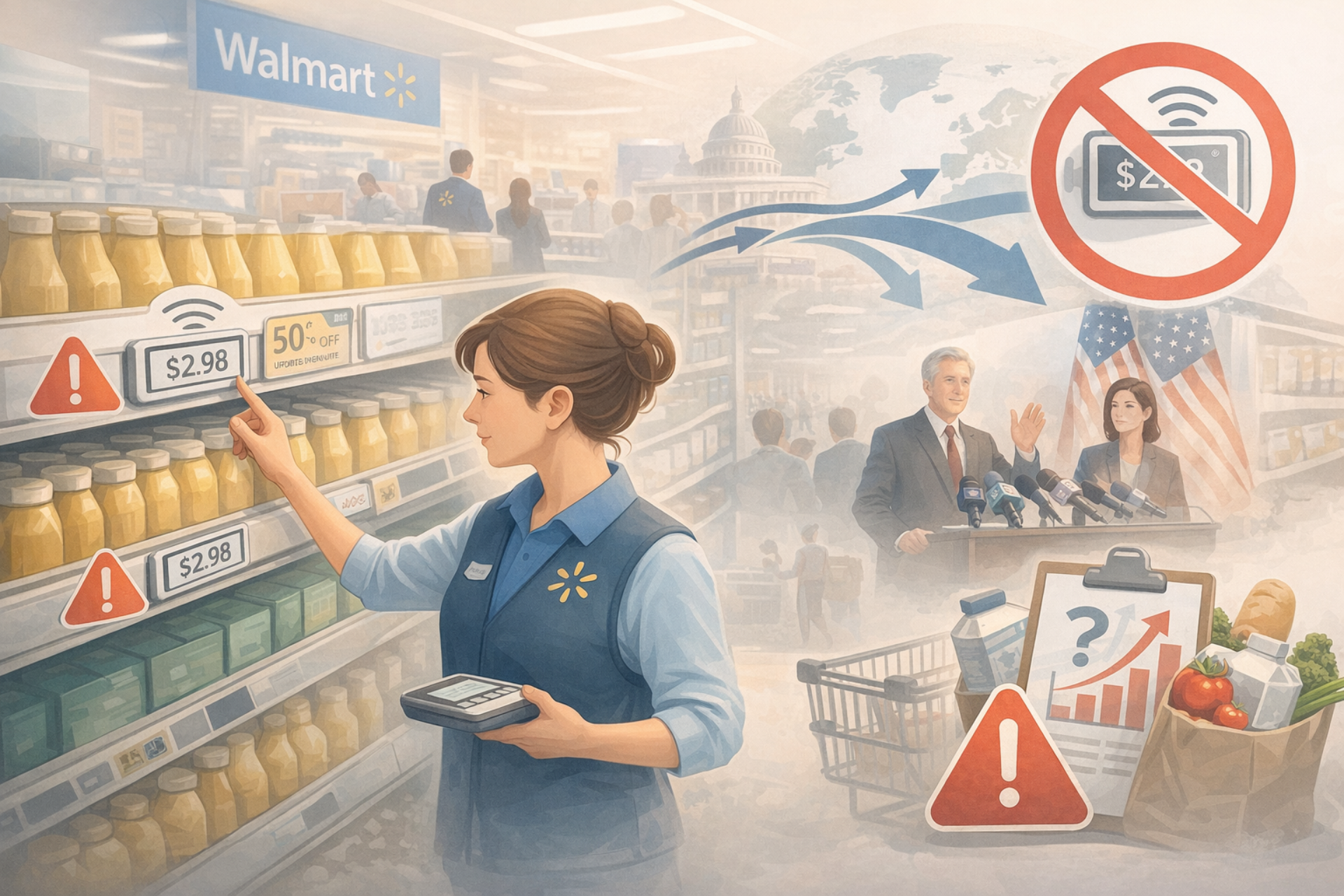
March 30, 2026 Walmart is rolling out digital shelf labels across all of its US stores by the end of 2026, replacing paper price tags with electronic displays. The expansion has already triggered political scrutiny, with lawmakers proposing legislation that would ban the labels in large grocery stores over fears they could enable surge pricing.
The technology is moving beyond pilot status. Grocery rival Kroger has also begun experimenting with digital shelf labels, while Walmart says the tags are meant to improve store operations and customer service rather than change how prices are set. A Walmart spokeswoman said the labels are “just a modern tool to help our associates do their jobs better” and that “the price you see is the same for everyone in any given store.”
On the ground, Walmart employees describe clear operational gains. Amanda Bailey, a team leader in electronics at a Walmart in West Chester, Ohio, said the labels have cut the time she spends on pricing duties by 75 per cent. She also said the system helps Walmart’s Spark delivery drivers find products faster because a digital label can flash to highlight an item’s location.
Retailers and industry consultants say that is the core business case. Digital tags reduce the labour involved in changing prices by hand, help stores keep shelf prices aligned with websites and weekly promotions, and reduce mismatches at checkout. Kroger said the labels help provide “clear, accurate pricing right at the shelf” and let employees spend more time helping customers.
Still, the reaction from some lawmakers has been blunt. Senator Ben Ray Luján said he introduced the Stop Price Gouging in Grocery Stores Act as a “preventative measure” to put guardrails in place and protect consumers. One provision would ban digital shelf labels in grocery stores larger than 10,000 square feet, which would capture most Walmart grocery formats and many other chains. Representative Val Hoyle is sponsoring related legislation in the House and said she would like the labels banned outright until stronger rules exist.
The concern is not based on documented grocery surge pricing tied to the labels so far. Instead, critics argue the technology creates the infrastructure for rapid price changes, and they worry retailers could eventually use that flexibility more aggressively. Economist Roger White said there is “no doubt” dynamic pricing is expanding across industries, and argued that if a retailer invests in this capability, it will expect the system to add profit as well as recover its cost.
Retail groups and some experts push back on that interpretation. Scott Benedict, a retail consultant and former Walmart and Sam’s Club executive, said shoppers’ concerns are understandable but likely overstated. He said most dynamic pricing programs in retail focus on markdowns, overstocks and aligning prices across channels, “not sudden spikes that differ between customers.”