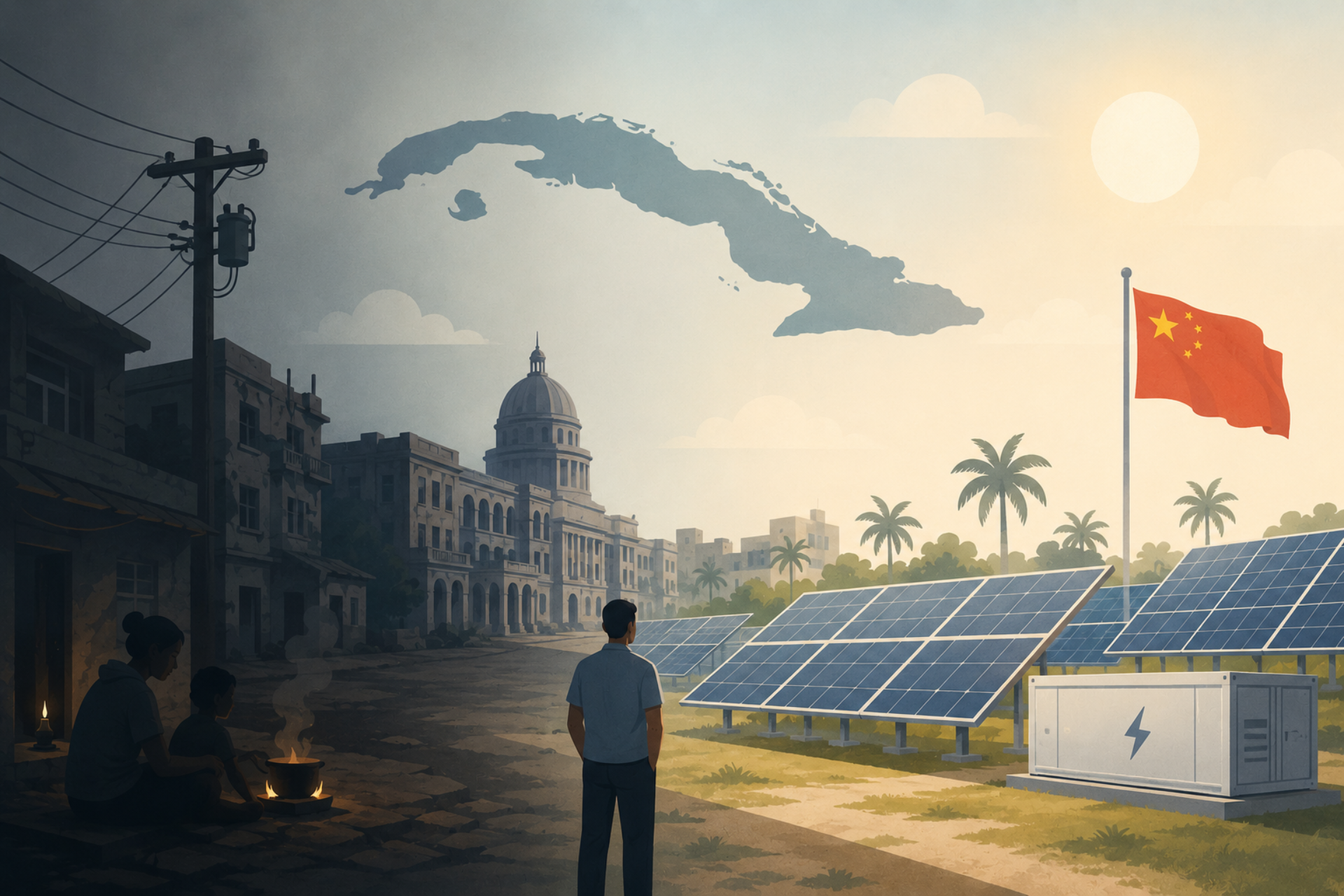
May 14, 2026 Cuba is facing widespread and prolonged blackouts as fuel shortages linked to U.S. pressure disrupt its electricity supply. At the same time, the country is undergoing one of the fastest solar expansions globally, driven by surging imports of Chinese panels and investment in new solar parks.
The energy crisis has exposed the fragility of Cuba’s fossil fuel–dependent grid. Oil remains the backbone of electricity generation, most of it imported, and supply disruptions have had immediate effects. In March, the country experienced three nationwide blackouts affecting roughly 10 million people, with hospitals limiting surgeries, waste collection disrupted, and households forced to cook with wood.
The current situation stems from a sharp contraction in oil imports. Historically reliant on external partners, from the Soviet Union to Venezuela, Cuba lost a key supply channel earlier this year, while shipments from other countries also declined amid U.S. pressure. The result is the country’s most severe energy crisis in decades, layered on top of an already aging and strained electricity infrastructure.
Against that backdrop, solar energy deployment has accelerated rapidly. Data from energy think tank Ember shows Chinese solar exports to Cuba rose from about $3 million in 2023 to $117 million in 2025. In parallel, the country has installed roughly 1 gigawatt of solar capacity in the past year alone, with about 50 solar parks now operational.
This expansion is part of a broader plan supported by China to build 92 solar parks by 2028, delivering around 2 gigawatts of capacity, enough to power more than 1.5 million homes. Renewable energy now accounts for roughly 10 per cent of Cuba’s electricity mix, up from about 3 per cent in 2024, with a government target of at least 24 per cent by 2030.
The shift offers a clear strategic advantage. Solar infrastructure reduces reliance on imported fuel, insulating the country from external supply shocks. Analysts note that increasing domestic generation capacity could limit the impact of geopolitical pressure tied to energy imports.
However, the transition faces structural constraints. Cuba’s solar capacity remains fragmented across small installations, and generation is limited to daylight hours. While battery imports have increased, the country lacks utility-scale storage needed to stabilize supply during peak demand periods.
Cost is another major barrier. Estimates suggest it would take about $8 billion to generate 93% of Cuba’s electricity from renewables, and up to $19 billion for a fully renewable system. Financing such a transition presents challenges for a country already under economic strain, with limited state resources and constrained consumer capacity.
There are early signs of localized impact. Solar-powered charging stations have begun operating in cities like Santa Clara, allowing residents to charge devices and electric vehicles. But for most Cubans, the benefits remain limited, as blackouts continue and access to distributed solar technology remains out of reach.