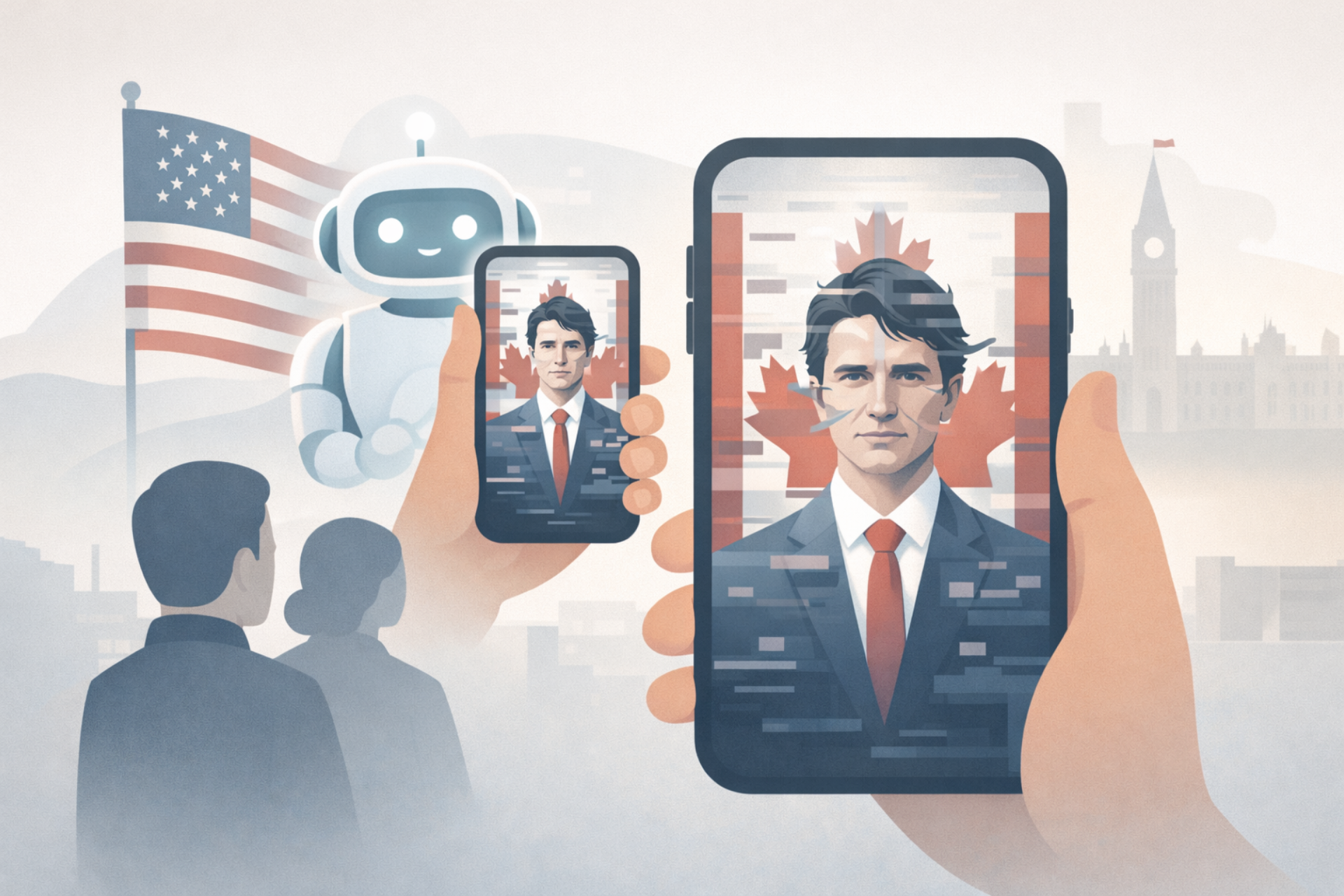
February 10, 2026 Canada’s worst-case scenario on artificial intelligence and disinformation may no longer be hypothetical. Researchers say the country has entered an era where deepfakes and AI-generated propaganda are already distorting online discourse, with foreign interference, especially from the United States, increasingly in focus.
Government officials acknowledged the urgency this week during a House of Commons committee on foreign interference, where senior advisors said they are “very concerned” about the destabilizing impact of generative AI on elections. New research, coupled with recent behaviour from U.S. government-linked figures and platforms, suggests Canada’s next political crisis may be artificially rendered and cross-border in origin.
Less than two years after a federal report warned it would soon become “almost impossible to know what is fake or real,” experts are saying that line has been crossed. In 2024, Canadian researchers now warn that AI-generated misinformation is not only rampant but evolving in sophistication and scale, often without detection.
Brian McQuinn, co-director of the Centre for Artificial Intelligence, Data and Conflict, says deepfakes and AI-powered content are now circulating widely in Canada, frequently amplified by U.S.-based platforms and creators. His concern is that the next federal election could be manipulated not just by bots or trolls, but by state-linked actors operating through cultural and political proxies, including some aligned with the current U.S. administration.
Canada’s intelligence agencies, including the Communications Security Establishment, have warned that generative AI will be weaponized against “voters, politicians, public figures, and electoral institutions” within the next two years. But the threat is no longer speculative. According to McQuinn and other researchers, AI-generated memes, videos and altered images are already being shared by official U.S. channels.
Some of the content has been overtly ridiculous, such as AI fabrications of Trump walking with penguins or flying jets over protesters. However, others have been more insidious, such as manipulated images used in political crackdowns or faked visuals depicting Canadian figures in compromising situations. The challenge lies in what these tactics are normalizing: an erosion of truth as a political standard.
“The present U.S. administration is the only western country that we know of (that) on a regular basis is publishing or sharing or promoting obvious fakes and deepfakes, at a level that has never been seen by a western government before,” McQuinn stated.
Canada’s vulnerability isn’t just theoretical. Experts note that disinformation narratives related to Alberta independence and Quebec sovereignty are already being exploited by foreign actors. Trump-aligned figures have shared AI content that imagines Canada as the “51st state,” stoking separatist sentiment under the guise of humour. Such campaigns may not be state-sponsored yet. But analysts like Marcus Kolga of DisinfoWatch say it’s only a matter of time before they escalate into formal interference.
Despite growing concern, Canada’s legislative response remains incomplete. Ottawa is drafting laws to address online harms and AI safety even though no clear plans have been announced for labelling or flagging AI-generated content.