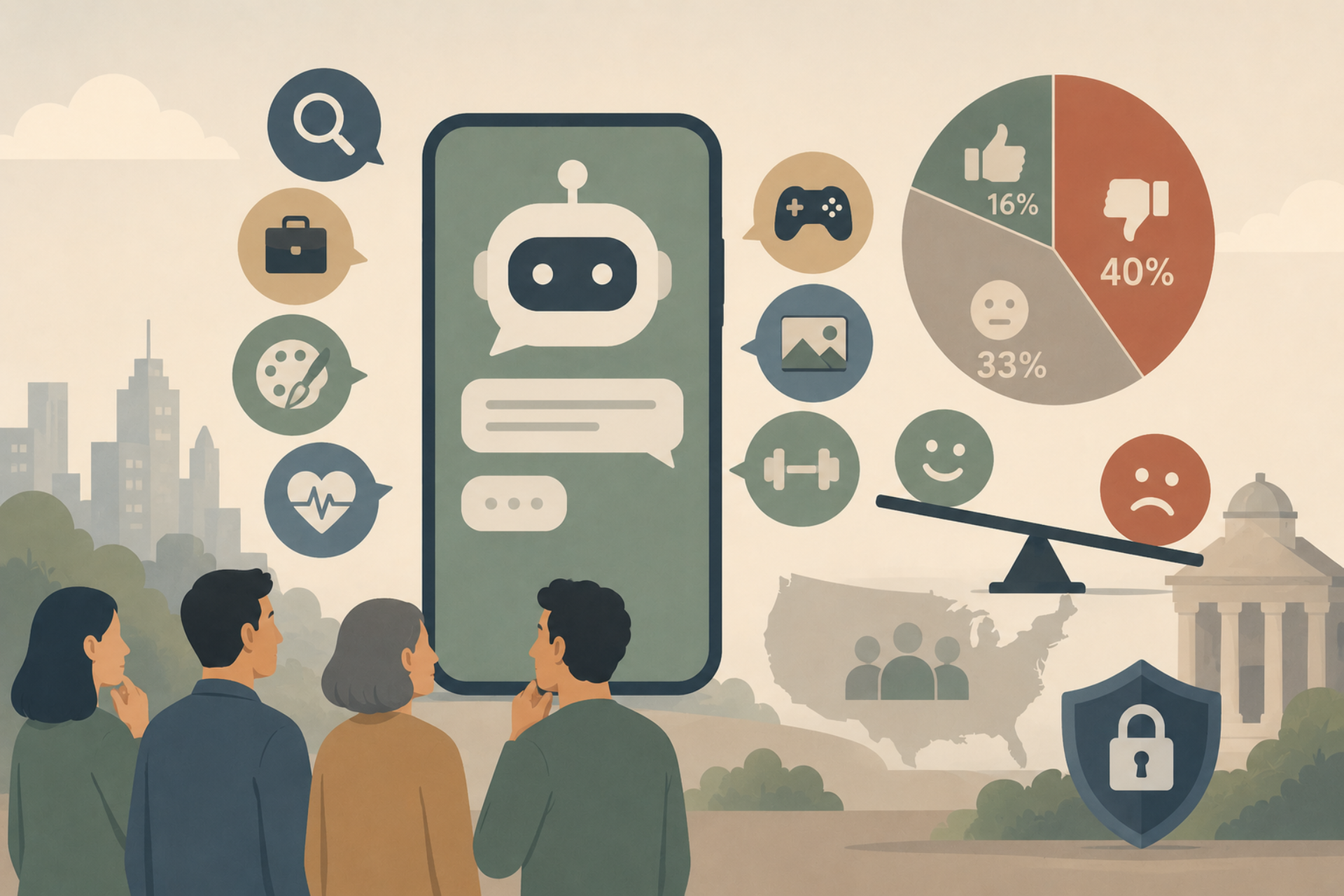
June 19, 2026 Nearly half of U.S. adults now use artificial intelligence chatbots, according to a new survey from Pew Research Center. Yet only 16 per cent believe the technology will have a positive impact on society over the next 20 years, while 40 per cent expect it will have a negative effect.
The survey found that 49 per cent of Americans use chatbots, up from 33 per cent two years ago. About one in four users said they rely on the tools daily. At the same time, 51 per cent of respondents said they do not use chatbots at all, with most non-users aged 50 and older.
People primarily use chatbots to search for information, reflecting a growing shift toward AI-powered tools instead of traditional websites. Other common uses include work-related tasks, entertainment, and creating or editing images.
The survey also found that some users turn to chatbots for medical, diet and fitness advice, despite warnings from AI companies that the tools should not be relied on for medical diagnoses, treatment recommendations or professional health advice.
Among chatbot platforms, ChatGPT remains the most widely used. Pew found that 44 per cent of respondents had used ChatGPT, followed by Gemini at 24 per cent, Copilot at 17 per cent and Meta AI at 14 per cent.
Public attitudes toward artificial intelligence remain cautious despite rising adoption. Forty per cent of respondents said they expect AI to have a negative impact on society, compared with 16 per cent who believe the impact will be positive. About one-third said the effects would be equally positive and negative.
More respondents also said they expect AI to negatively affect their own lives than positively affect them, by a margin of 31 per cent to 23 per cent.
Adults aged 18 to 29 were identified as the group most concerned about AI’s impact on both society and their personal lives.
The survey found that roughly two-thirds of Americans believe AI technology is advancing too quickly. Concerns about privacy and oversight were also common. Most respondents said they expect AI to make their personal information less secure, while 67 per cent expressed little or no confidence in the government’s ability to regulate AI effectively. About six in 10 adults said they are not confident that companies will develop and use AI responsibly.
The findings come as AI adoption continues to accelerate. Market intelligence firm Sensor Tower recently reported that ChatGPT became the fastest app ever to reach one billion monthly users, surpassing the previous record held by Google Maps.