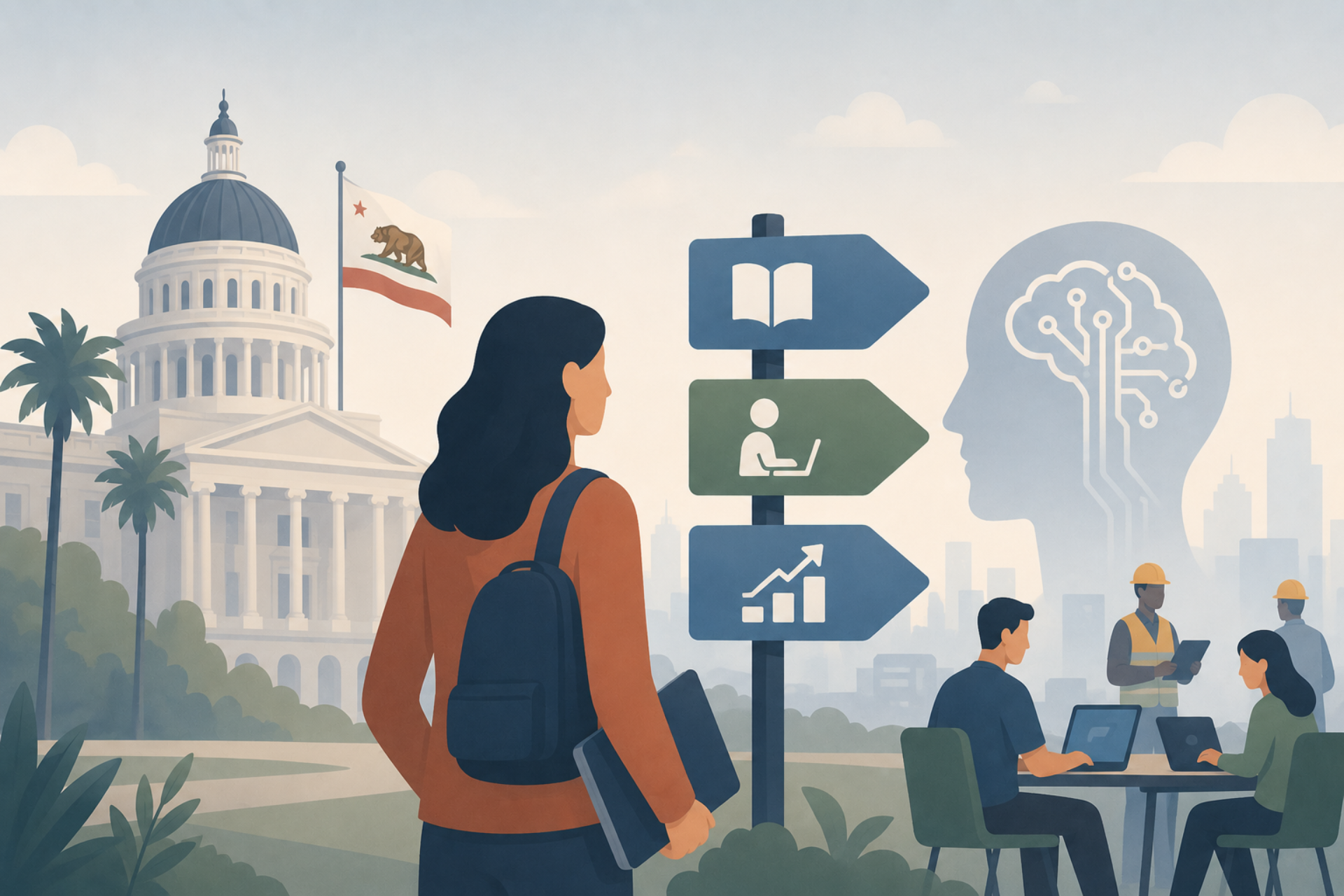
May 25, 2026 Gavin Newsom has signed a new executive order aimed at preparing workers for the potential job losses tied to artificial intelligence. The order directs state agencies to evaluate and recommend support systems for displaced workers, including compensation programs, subsidized employment opportunities and expanded workforce training.
The move comes as uncertainty around AI’s impact on jobs continues to grow, with both policymakers and industry leaders acknowledging that the technology could reshape the labor market in significant ways. Newsom framed the initiative as part of California’s broader approach to staying ahead of technological change rather than reacting to it after the fact.
“California has never sat back and watched as the future happened to us — and we won’t start now,” Newsom said in a statement. He added that the moment requires a deeper rethink of how people work, how governments operate and how workers are prepared for emerging industries.
The executive order does not introduce immediate policy changes but instead focuses on building a roadmap. State agencies are tasked with examining existing systems and proposing ways to support workers who may be displaced as AI adoption accelerates across industries.
The debate over AI’s impact on employment remains unsettled. Dario Amodei has warned that artificial intelligence could eliminate up to half of entry-level white-collar jobs in the coming years, highlighting the scale of potential disruption. At the same time, other industry leaders have pushed back on more pessimistic projections.
Sam Altman has suggested that while disruption is inevitable, the long-term outcome may not be as negative as feared. In a recent post, he argued that people could ultimately become “busier and more fulfilled,” even as the nature of jobs changes. Similarly, Jensen Huang has pointed to new opportunities that could emerge alongside automation.
Despite these differing views, there is still limited economic data showing large-scale job displacement directly caused by AI. However, some companies have already cited AI as a contributing factor in recent layoffs, adding to concerns among workers and policymakers.
California has been one of the most active states in attempting to shape AI policy. Last year, Newsom signed legislation requiring companies developing advanced AI systems to disclose safety-related information, positioning the state as a leader in regulating emerging technologies.
These state-level efforts are unfolding alongside broader national discussions about how AI should be governed. The Trump administration has signaled a preference for a lighter-touch federal regulatory approach, creating potential tension between state and federal strategies.