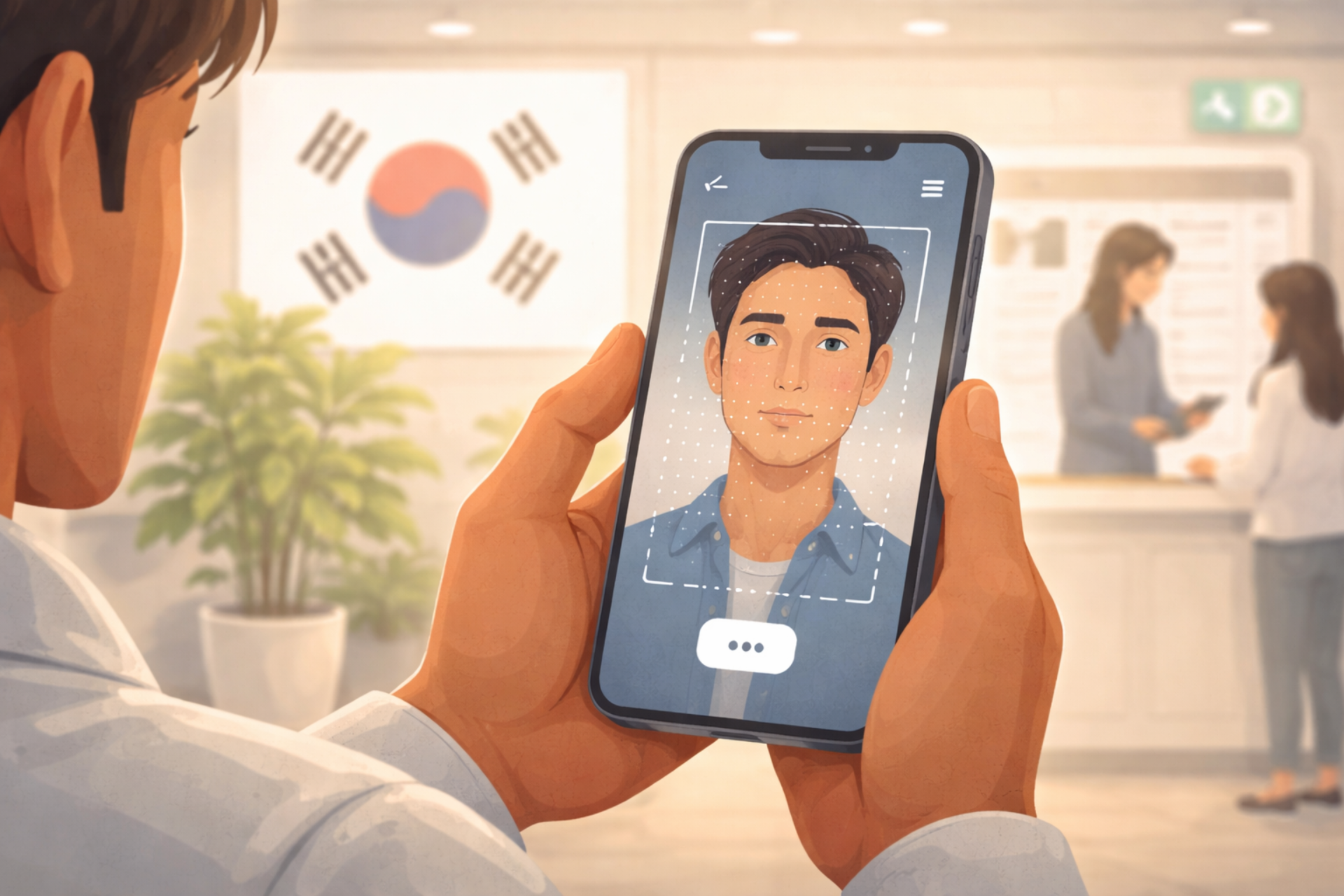
December 23, 2025 South Korea will require facial recognition scans to open new mobile phone accounts. The new rule is aimed at stopping phone-based scams after massive data breaches exposed how easily criminals can register numbers using stolen identities.
The new rule, announced on Dec. 19 by the Ministry of Science and ICT, expands existing customer verification requirements by adding biometric authentication to the process of registering a mobile phone account. Authorities say criminals have been exploiting stolen personal data to sign up for phone numbers that are then used for voice phishing and other scams, a problem that has become increasingly acute.
Under the policy, South Korea’s three major carriers — SK Telecom, KT, and LG Uplus — will use facial recognition through their existing “PASS” apps, which already store customers’ digital identity credentials. When a new account is opened, a facial scan will be matched against verified identity records, making it harder to register a line using stolen or fabricated information.
The government said the move is designed to close a gap exposed by recent breaches. South Korea, home to roughly 52 million people, has seen two major data theft incidents this year alone that together affected more than half the population. Online retailer Coupang disclosed a breach involving more than 30 million records, an incident that ultimately led to the departure of its chief executive.
Telecom data has also been compromised. SK Telecom, which serves about 23 million customers, suffered a breach that revealed serious security failures, including the exposure of plaintext credentials on an internet-facing server and the storage of millions of user records without encryption. Regulators have already fined the carrier roughly $100 million for the lapses. But the consequences are still mounting. On Sunday, South Korea’s Consumer Dispute Mediation Commission ordered the company to compensate all 23 million customers ₩100,000 ($67) each, split between bill credits and loyalty points. The ruling is expected to cost the company around $1.55 billion.
While SK Telecom has borne the brunt of public criticism, the ministry noted that mobile virtual network operators accounted for 92 percent of counterfeit phones detected in South Korea in 2024, pointing to systemic weaknesses in how new accounts are approved.
Officials say facial verification is now unavoidable. With stolen personal data widely available, document checks alone are no longer enough to stop abuse. By tying new mobile accounts to biometric identity, the government hopes to significantly reduce fraud and restore trust in a system shaken by repeated security failures.