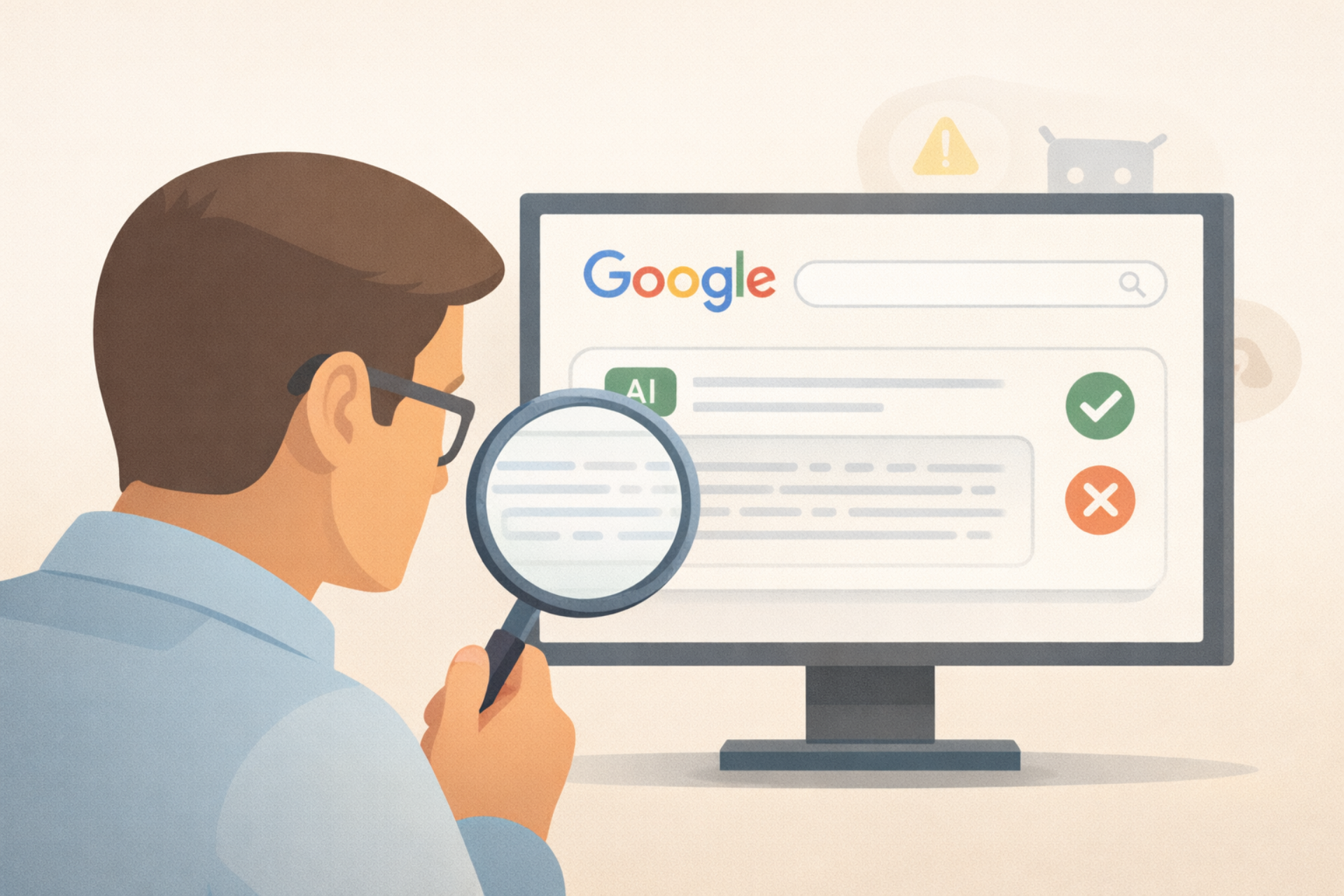
January 9, 2026 Google is conceding that its AI-generated search answers still aren’t reliable enough even as it pushes them more aggressively onto users. A newly posted job listing shows the company is hiring engineers specifically to verify AI responses and improve their accuracy.
In the job listing, Google frames the role as part of a broader reinvention of search. “In Google Search, we’re reimagining what it means to search for information – any way and anywhere. To do that, we need to solve complex engineering challenges and expand our infrastructure while maintaining a universally accessible and useful experience that people around the world rely on,” the company wrote.
While Google has never formally labeled AI Overviews as unreliable, this is the clearest signal yet that internal teams recognize quality gaps. The timing is notable. Over recent months, Google has made AI answers harder to avoid, nudging users into AI Mode and embedding AI-generated summaries directly into standard search results. The Discover feed has also begun surfacing AI Overviews for news stories, in some cases rewriting publishers’ headlines using machine-generated text.
The problem is consistency. AI Overviews can still hallucinate facts or return wildly different answers to the same question when phrased slightly differently. In one recent example, Google returned a $4 million valuation for a startup, then cited a valuation of more than $70 million for the same company in a separate query, despite neither figure appearing in the linked sources. Even when citations are present, the numbers and claims do not always exist in the referenced material.
These issues carry real risk because of how users interact with search. Most people implicitly trust Google’s answers, especially when they are presented prominently at the top of the page. Recent reporting has shown AI Overviews offering health advice that is misleading or outright wrong.
Google says AI Overviews have improved over the past several months, and there is evidence that responses are more coherent and less obviously flawed than earlier versions. And the underlying problem remains, as the system can still confidently present incorrect information and users have limited visibility into when that is happening.