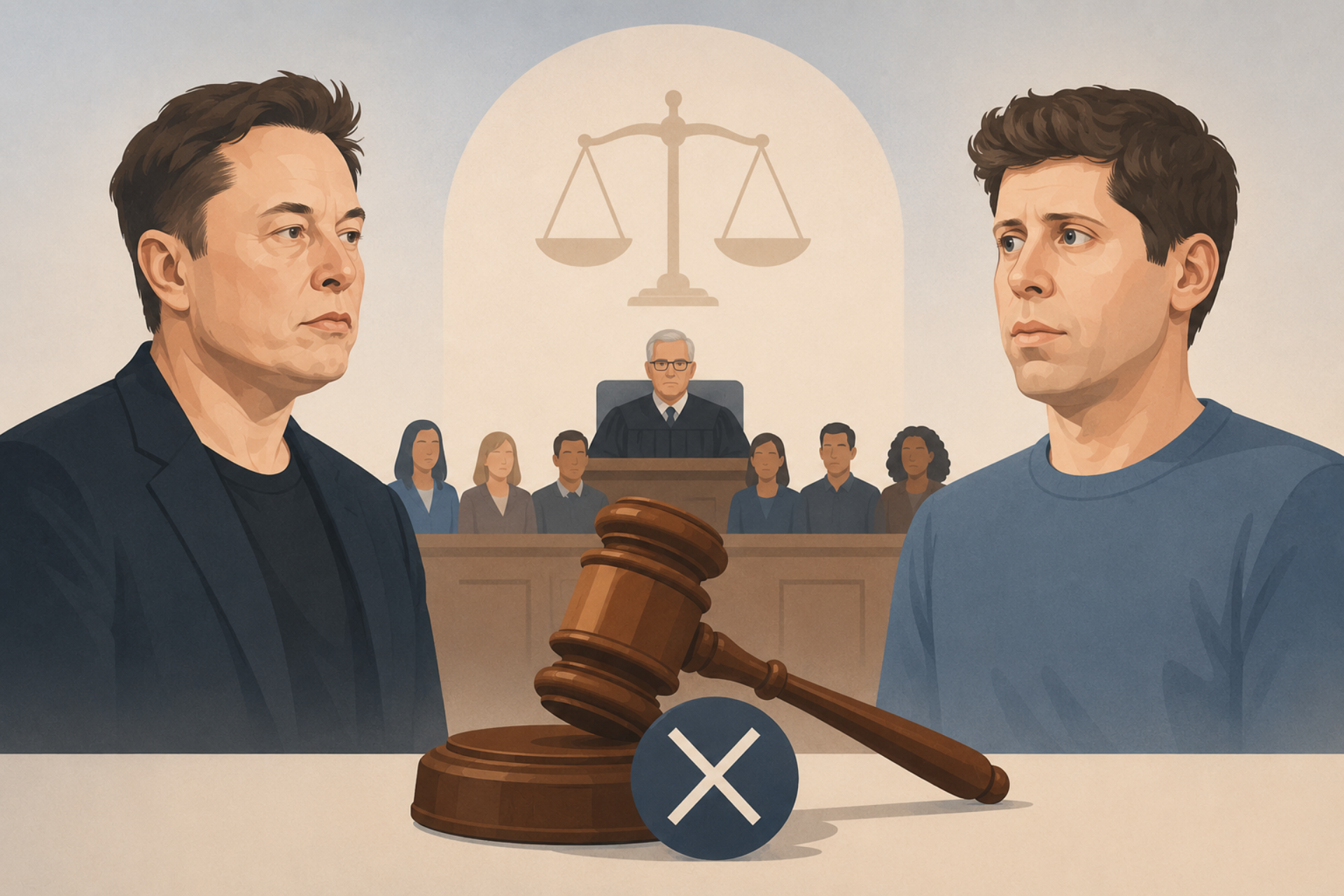
May 20, 2026 A California jury has dismissed a high-profile lawsuit brought by Elon Musk against OpenAI and its CEO, Sam Altman. The jurors unanimously ruled that Musk filed the case too late, as his claims had expired under the statute of limitations.
The decision effectively ended the case without the jury needing to evaluate whether Musk’s allegations were valid. His lawsuit is built on claims that OpenAI violated its original non-profit mission after transitioning into a for-profit structure, despite early financial support from Musk, who contributed $38 million during the company’s early years.
Musk argued that Altman misled him by accepting funding under the premise of building AI for the benefit of humanity, only to later pivot the organization toward commercial goals. He also accused Microsoft of supporting that transition, alleging it aided OpenAI’s shift into a for-profit model.
However, because the jury concluded that Musk’s claims were filed outside the allowable timeframe, those allegations were never tested in full. The ruling also led to the dismissal of Musk’s related claims against Microsoft.
The case moved quickly once it reached the jury. After three weeks of testimony and evidence, including internal communications and appearances from key figures such as Altman and Microsoft CEO Satya Nadella, jurors deliberated for only about two hours before reaching a verdict.
Legal experts described the outcome as a straightforward procedural decision. The statute of limitations sets strict deadlines for bringing claims to court, and once that window closes, cases can be dismissed regardless of their underlying merits.
Following the verdict, Musk sharply criticized the outcome. In posts on X, he argued that the ruling allowed organizations to misuse charitable structures if they could avoid scrutiny long enough. He also accused the presiding judge of bias, though one of those posts was later deleted.
The X owner has said he plans to appeal, claiming the decision was based on a technicality rather than a full examination of the facts. His legal team indicated that the dispute is not over, though legal analysts suggest appeals of jury verdicts, especially those grounded in factual determinations, are difficult to overturn.
OpenAI, for its part, sees the decision as a clear victory. A spokesperson described the lawsuit as an attempt to slow down a competitor, while the company’s legal team argued during the trial that Musk’s claims did not align with the organization’s actual history.
The dispute comes amid a long-running rift between Musk and Altman. Both were involved in founding OpenAI in 2015, but Musk left the organization in 2018 after disagreements over control and direction. During the trial, Altman testified that Musk had at one point supported the idea of transitioning to a for-profit model and had even sought greater control over the company.
Since then, tensions between the two have escalated, particularly as OpenAI’s prominence grew with the success of ChatGPT. Musk has repeatedly criticized the company’s direction, while OpenAI has publicly defended its decisions, including releasing timelines and documentation addressing those claims.