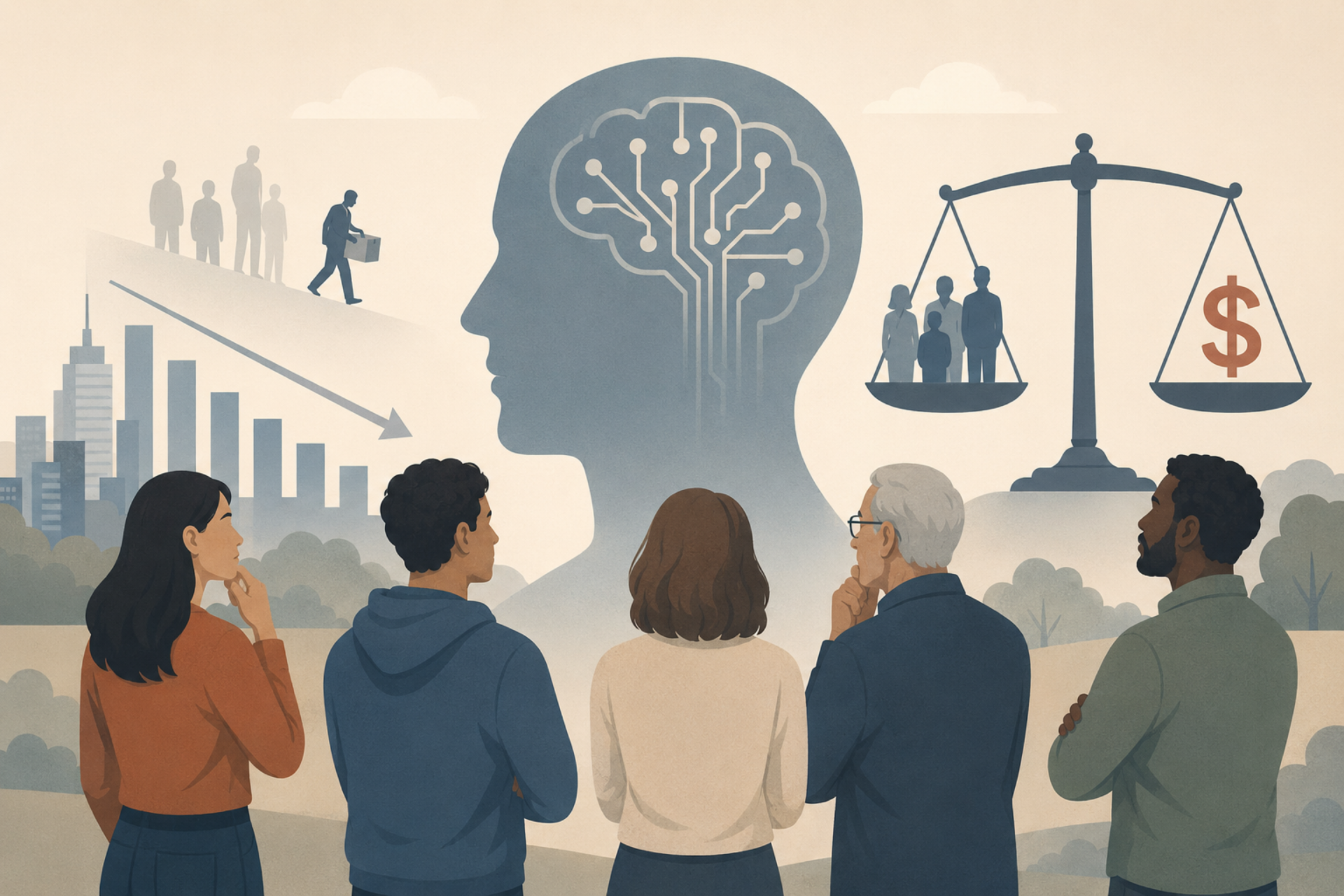
May 14, 2026 Most Americans are concerned about how artificial intelligence will affect the economy and jobs, according to a new Economist/YouGov poll. A majority of 71 per cent say the pace of AI development is moving too fast, reflecting unease about how quickly the technology is advancing.
The survey shows that pessimism outweighs optimism when it comes to AI’s long-term impact. About 51 per cent of Americans say they feel pessimistic about AI’s effects on society, compared with 25 per cent who say they are optimistic. That sentiment cuts across political and demographic groups, although the reasons behind it vary.
Concerns about economic fairness are central to that outlook. Nearly two-thirds of respondents (64 per cent) say it is unlikely that AI will create economic gains that benefit everyone, while only 8 per cent believe it is very likely. Democrats are the most skeptical on this point, though majorities across all political affiliations share similar doubts.
At the same time, attitudes toward AI differ significantly by age. Younger Americans are more likely than older adults to believe AI could generate broad economic benefits, with 45 per cent of those under 30 saying such gains are somewhat or very likely. However, that same group also reports higher anxiety about job displacement, with 60 per cent saying they are somewhat or very worried that AI will replace jobs they rely on.
Across the population, concern about job loss is evenly distributed. Roughly one-quarter of Americans fall into each category of worry – very worried (25 per cent), somewhat worried (26 per cent), slightly worried (25 per cent), and not worried at all (24 per cent). This suggests a fragmented public response, even as earlier polling indicates that about two-thirds of Americans expect AI to reduce the number of jobs overall.
Income levels also shape perceptions. Americans with lower household incomes are more likely to worry about job displacement, with 56 per cent of those earning under $50,000 annually expressing concern, compared with 47 per cent among higher-income groups.
Older Americans are more focused on the speed of AI development. Among those aged 65 and older, 79 per cent say AI is advancing too quickly, the highest of any age group. Younger adults are more divided, with one-third saying the pace is about right, even though a majority still consider it too fast.
The data also highlights a strong link between economic expectations and overall sentiment toward AI. Among those who believe AI will benefit everyone economically, 55 per cent report feeling optimistic about its long-term impact. In contrast, 69 per cent of those who doubt widespread benefits say they are pessimistic.
A similar pattern appears in job-related concerns. Three-quarters of Americans who are very worried about job loss also express pessimism about AI’s future impact, compared with about one-third of those who are not worried at all.