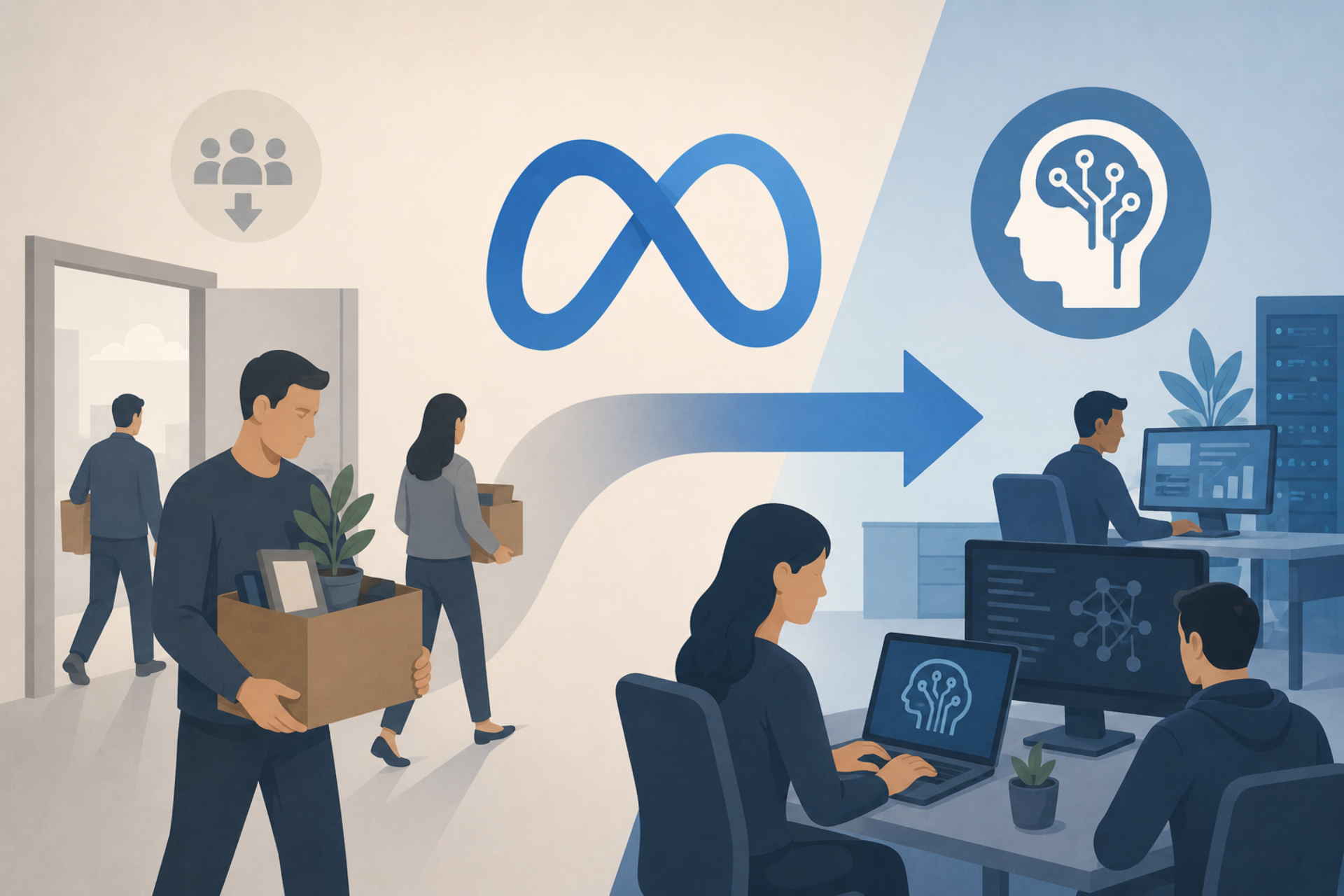
May 26, 2026 Meta has cut 10 per cent of its workforce as part of a sweeping restructuring effort tied to its long-term push into artificial intelligence. At the same time, the company is redirecting 7,000 employees into AI-focused roles as it reshapes its workforce around what it sees as the next defining technology wave.
The layoffs, which had been anticipated for weeks, affect roughly 8,000 employees, alongside a decision not to fill about 6,000 open roles. Employees impacted by the cuts were informed on Wednesday, marking one of the most significant workforce shifts at the company in recent years.
In a companywide memo, CEO Mark Zuckerberg addressed the changes directly, thanking departing employees while making it clear that the restructuring is part of a broader transformation. He emphasized that artificial intelligence is now central to Meta’s future and warned that leadership in the space is far from guaranteed.
“But success isn’t a given,” Zuckerberg wrote. “AI is the most consequential technology of our lifetimes. The companies that lead the way will define the next generation.”
The memo also included reassurance that there should not be additional layoffs in 2026, even as Meta continues to reorganize internally. Zuckerberg acknowledged that the company could have handled communication better and said improving transparency is a priority moving forward.
Meta had already signaled this shift earlier in the year. In April, executives confirmed plans to reduce headcount and restructure teams, aligning resources more aggressively toward AI development. The company’s financial strategy reflects that pivot: capital expenditures for 2026 are expected to rise to between $125 billion and $145 billion, driven in part by higher component costs and increased investment in data center capacity.
The restructuring highlights a broader industry pattern, where companies are reallocating talent and capital toward AI while trimming roles in other areas. Meta’s decision to move thousands of employees into AI roles underscores how central the technology has become to its roadmap.
For affected workers in the United States, the company is offering severance packages that include four months of pay, with additional compensation based on tenure. Support related to healthcare and immigration is also expected to be provided.
Zuckerberg framed the changes as necessary to position Meta for the future, describing the current moment as one of rapid transformation across the tech industry. He expressed optimism about the company’s direction, saying Meta is evolving to remain a place where employees can have meaningful impact at scale.
“This is the most dynamic I have seen our industry,” he said. “We’re transforming our company to make sure it will always be the best place for talented people to have the greatest impact.”