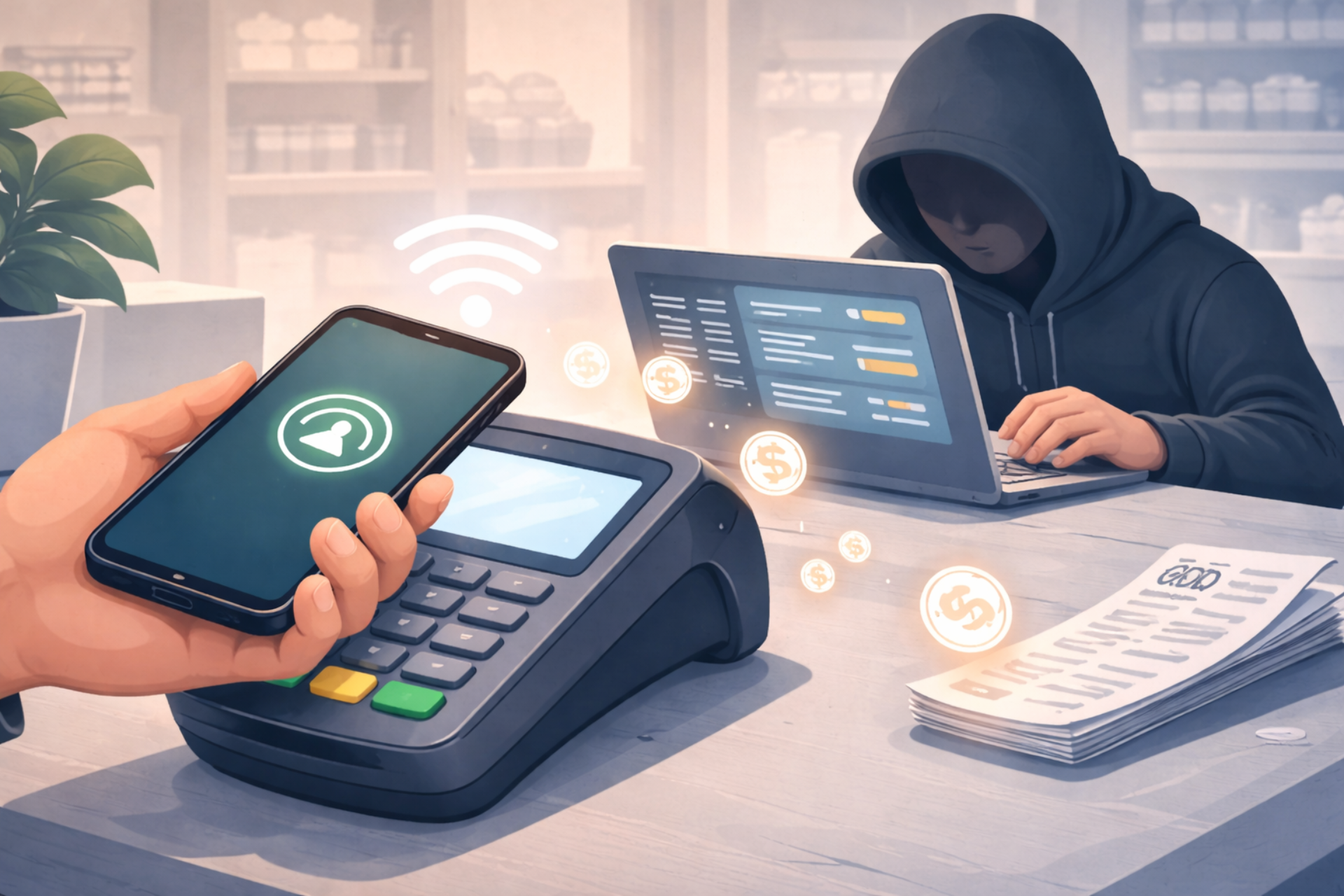
February 15, 2026 Ghost tapping scams are emerging as a new threat as tap-to-pay technology becomes more widespread. Unlike traditional skimming attacks that target cards directly, the scheme focuses on compromising the point-of-sale terminals where customers tap to pay.
Security experts say the tactic reflects a shift in how payment fraud is evolving alongside contactless adoption. Rather than harvesting full card details in a single attack, criminals are increasingly targeting the systems behind transactions and extracting value in smaller, harder-to-detect increments.
In a ghost tapping scenario, attackers infiltrate payment terminals and manipulate transactions at the merchant side. Instead of immediately draining accounts, they may siphon off small amounts or collect payment data for resale before the breach is detected.
Analysts say the method can be difficult for consumers to spot because the fraudulent activity often appears as minor discrepancies rather than obvious charges. Some attacks involve splitting legitimate payments, redirecting small fragments of the transaction while leaving the main purchase intact. The compromise typically lies in the retailer’s device rather than the customer’s card.
Regulators have flagged the growing threat. Data from the U.S. Consumer Financial Protection Bureau indicates incidents linked to this type of fraud have risen sharply over the past year.
For consumers, the most practical defence remains vigilance. Monitoring statements for unexplained microtransactions is one of the clearest early warning signs. Experts advise reporting suspicious charges quickly so banks can cancel cards, issue refunds and help investigators identify broader fraud patterns.
Security specialists note that while individual losses are often relatively small, widespread underreporting can make it harder to track organized campaigns. Aggregated across thousands of victims, even modest charges can generate substantial illicit revenue.
Preventive measures vary in practicality. Mobile wallet systems that rely on tokenization, such as device-based payments, may offer additional layers of protection compared with physical cards. Some experts also point to cash as the most fraud-resistant option in certain scenarios, though that comes with trade-offs in convenience.
The rise of ghost tapping highlights a broader reality of digital payments: convenience frequently creates new attack surfaces. As tap-to-pay adoption continues to accelerate across retail, transit and hospitality sectors, both consumers and businesses may face growing pressure to balance speed with stronger security controls.