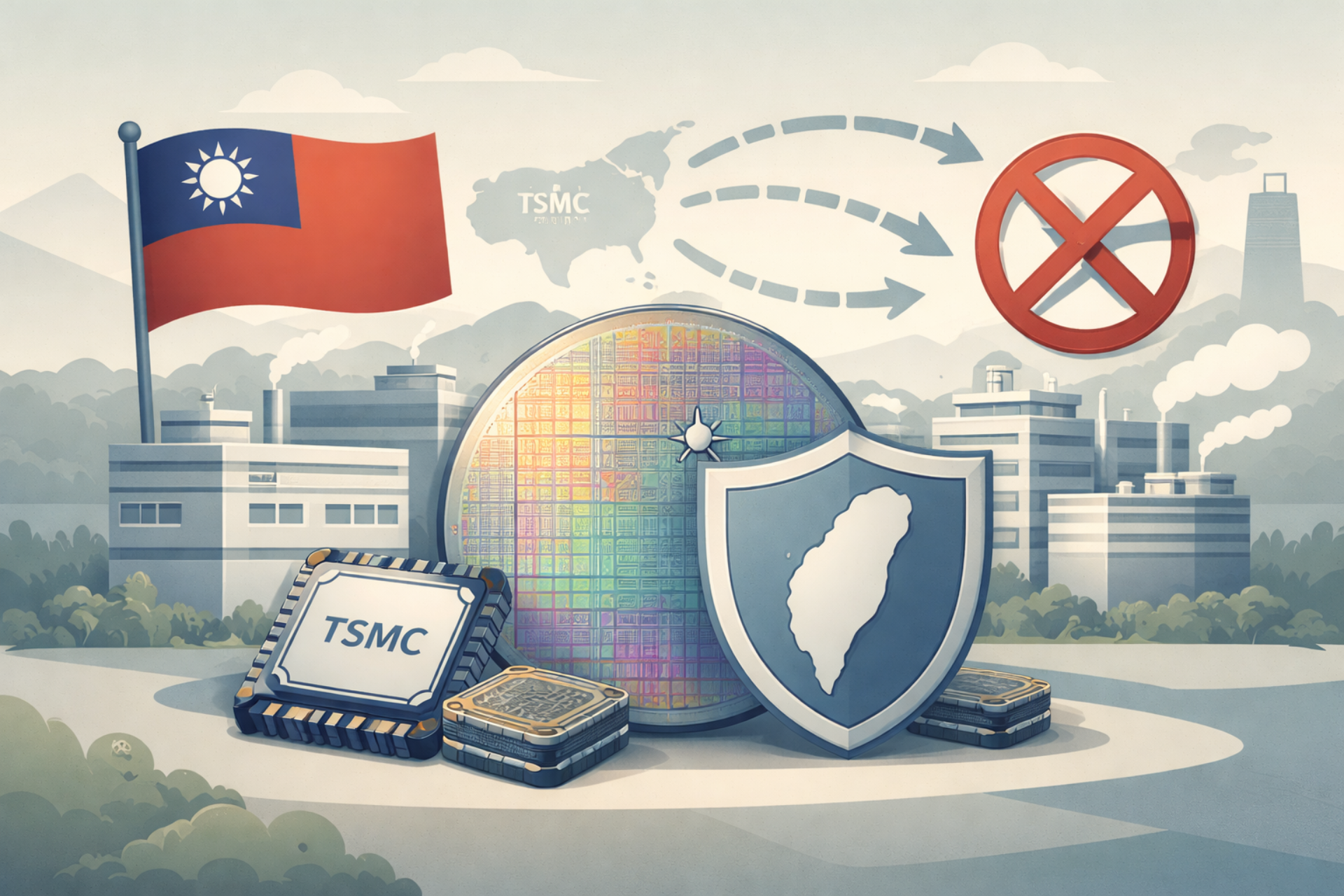
February 10, 2026 Taiwan has flatly rejected U.S. efforts to shift a significant share of its semiconductor manufacturing to American soil, saying that relocating 40 per cent of its chip production is neither realistic nor strategic. Despite global pressure and a new wave of overseas expansion by TSMC, the country expects its semiconductor giants to grow domestically first.
The development come as U.S. Commerce officials ramp up efforts to localize advanced chip production. Making the country’s position known in an interview with CTS, Vice Premier Cheng Li-chiun was unambiguous in clarifying that Taiwan’s tightly integrated semiconductor ecosystem — home to foundries like TSMC and UMC — cannot simply be copied and pasted into another country.
Taiwan’s science parks, which form the industrial core of its chip manufacturing might, are not going anywhere. Even as countries like the U.S. incentivize onshore fabrication, Taiwan’s leadership has drawn a red line: advanced R&D and bleeding-edge technology will remain on the island.
TSMC’s overseas facilities, including its Arizona fabs, are viewed not as replacements but as strategic extensions. Any foreign investment, Cheng emphasized, must be paralleled by robust capacity expansion within Taiwan.
From a pure numbers perspective, Taiwan still expects its total fab capacity to eclipse those of any other country, including the United States.
The U.S. has signalled growing impatience with the concentration of global chip supply near China. U.S. Commerce Secretary Howard Lutnick recently floated an ambitious idea of increasing the American share of leading-edge semiconductor manufacturing to 40 per cent by the end of President Trump’s current term.
The feasibility of that timeline has been questioned, with critics noting that it takes at least three years to build a new fab, and another to bring it online. Lutnick didn’t offer specifics, but suggested that if the target isn’t met, the U.S. could slap tariffs as high as 100 per cent on Taiwan-made chips.
He has also hinted at a “split model,” in which Taiwan and the U.S. each host half of the world’s advanced chip capacity.
What Taiwan is offering instead is a controlled, collaborative expansion. TSMC can build fabs in the U.S., Japan, and Europe, but not at the expense of its home base. The most advanced process nodes will stay local.