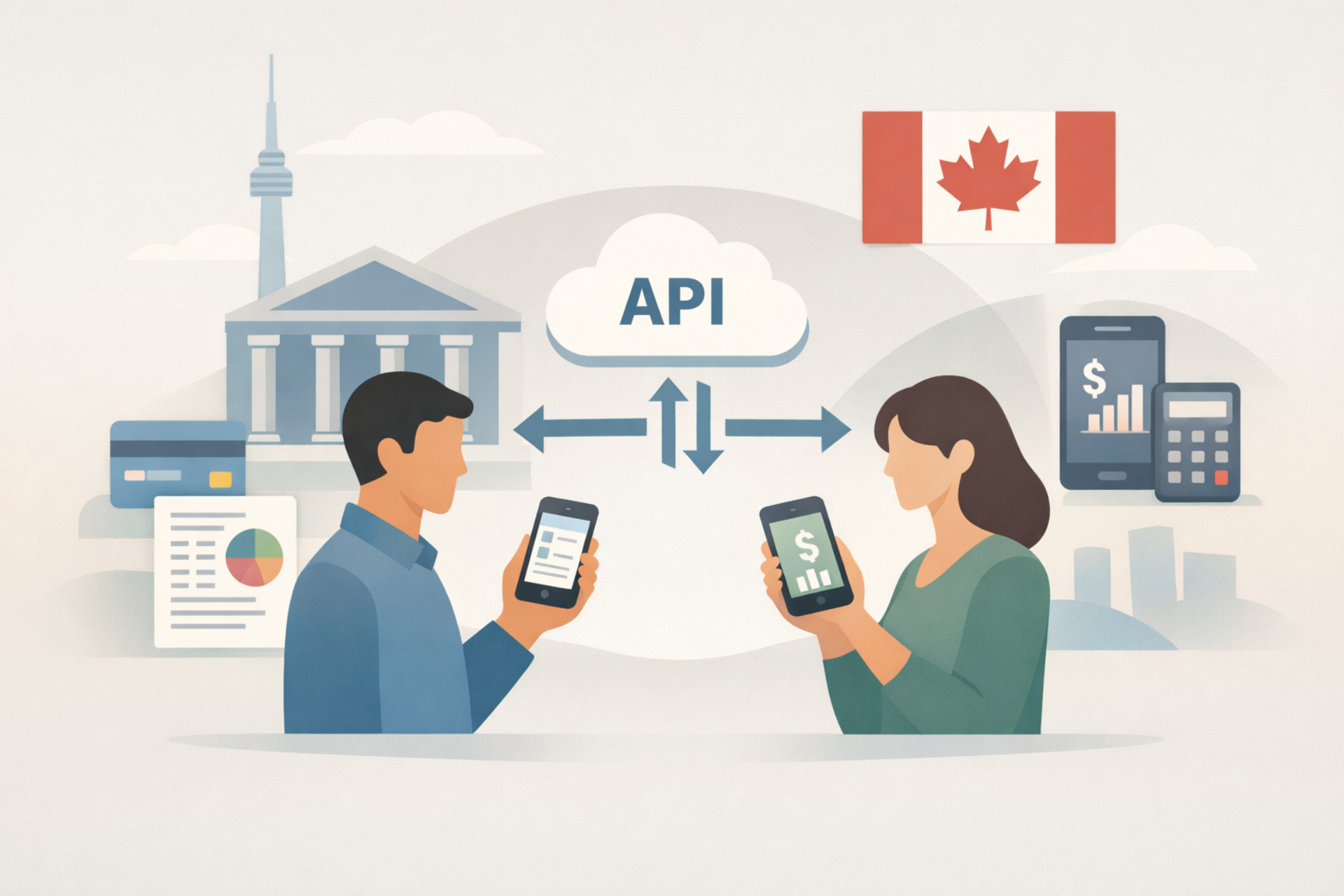
February 12, 2026 Canadians will finally gain legal control over their financial data in 2026 as the federal government confirms the launch of a national consumer-driven banking framework. The move will see the Bank of Canada oversee a two-phase rollout that ends the monopoly of the country’s largest financial institutions over user data and opens the door to secure, API-based data sharing with fintech apps.
For years, nearly nine million Canadians have shared their bank credentials with third-party tools to access budgeting and tax services — a workaround known as “screen scraping.” Not only is the practice insecure, it often strips users of fraud protections and places sensitive information in precarious hands. The new system is designed to eliminate that risk by replacing credentials with secure, government-supervised APIs.
Under the newly finalized Consumer-Driven Banking Act, Canadians will be legally entitled to direct their financial information, such as transaction histories or account balances, to accredited apps or service providers. In early 2026, the Bank of Canada will launch Phase 1, allowing for “read-access,” meaning fintechs will be able to securely pull data with user consent. Phase 2, expected by mid-2027, will introduce “write-access,” which enables account switching, payment initiation and deeper integrations.
This isn’t just a regulatory win but a structural overhaul. Open banking upends a system that has long benefitted from user inertia. By lowering switching costs and enabling financial comparison tools, it opens traditional banks to real competition from more agile fintechs.
The federal government has allocated $19.3 million to the Bank of Canada to support supervision, but the operational lift rests on banks and fintechs alike.
For the Big Six, open banking represents both existential risk and an avenue for reinvention. If they adapt quickly, banks can reposition themselves as aggregators and trusted data hubs, offering unified dashboards across multiple institutions and services. That, in turn, allows for more intelligent product recommendations, wealth insights, and user retention.
Partnerships with fintechs could also emerge as a lucrative model. While startups are nimble, they often lack the capital or regulatory standing to operate at national scale. Banks that offer secure access to infrastructure and charge for API usage could carve out new revenue streams while maintaining relevance.
A long time coming
Canada has lagged behind the U.K., Australia, and other G7 peers in implementing open banking. That delay has forced consumers to rely on insecure workarounds while foreign fintechs bypassed Canadian markets due to data inaccessibility.
With 2026 now set as the turning point, institutions are racing to modernize. The open era of Canadian banking won’t arrive with a bang, but its arrival marks the end of an era where data was siloed and customer choice was an afterthought.