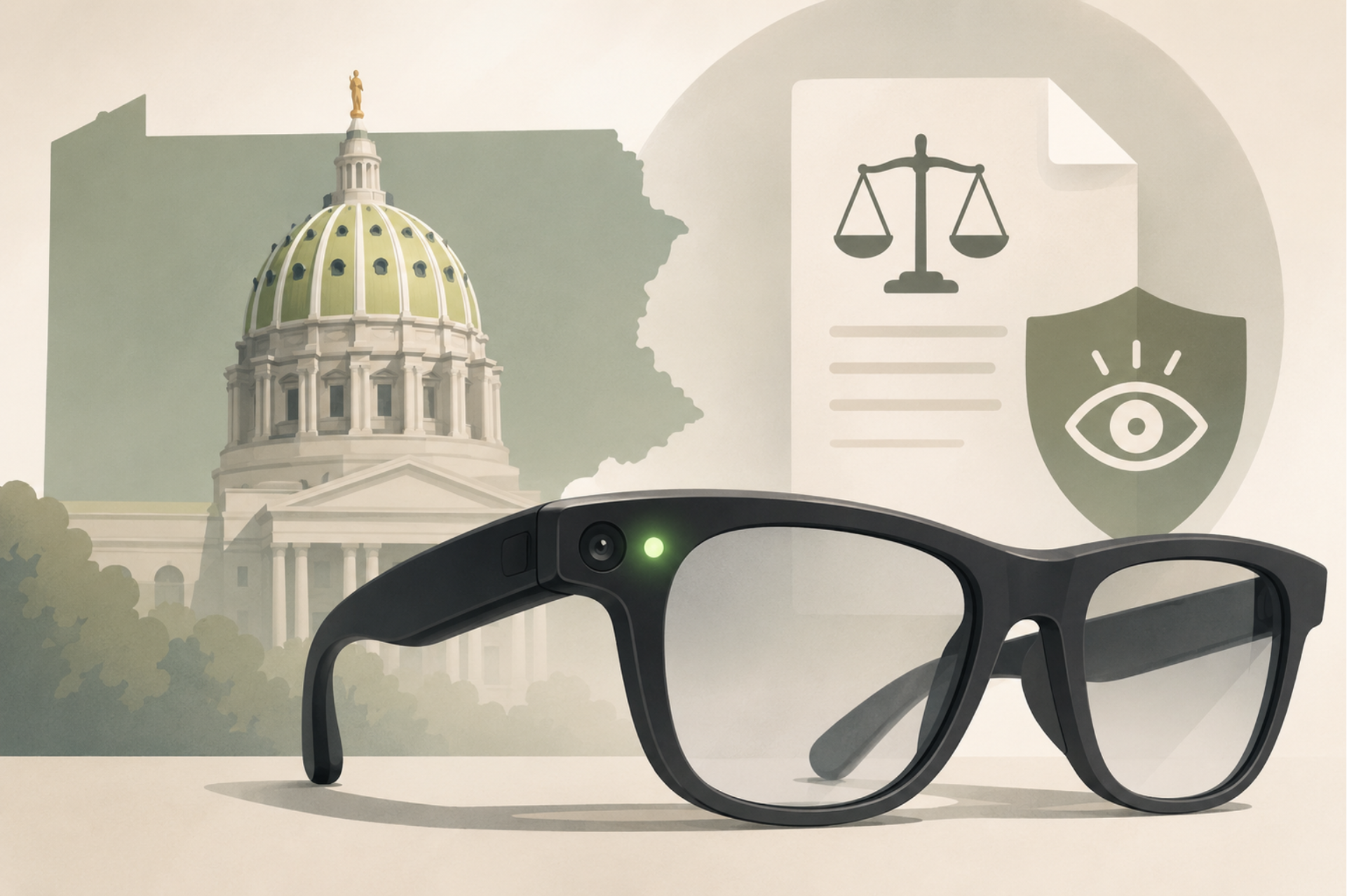
June 9, 2026 A Pennsylvania lawmaker has introduced legislation that would require smart glasses sold, used, or manufactured in the state to include a visible indicator whenever they are recording. The proposal would also prohibit users from disabling those indicators and require retailers to inform customers about Pennsylvania’s recording laws.
The bill, introduced by Representative Joe Ciresi, focuses on wearable devices capable of capturing audio or video. Under the proposed legislation, individuals would be prohibited from using a wearable recording device to record another person without their knowledge if the device lacks a visual recording indicator or if that indicator has been disabled.
The legislation states that a person may not operate a wearable recording device to capture sound or video if “the wearable recording device does not have a visual indicator” or if “the visual indicator of the recording device has been permanently or temporarily disabled.” Most major smart glasses already include recording indicators. Devices such as the Ray-Ban Meta AI glasses use a green LED light on the front of the glasses to signal when photos or videos are being captured. However, there is currently no legal requirement mandating such privacy features, nor is there a law specifically preventing users from disabling them.
In addition to requiring visual indicators, the bill would require retailers to clearly explain Pennsylvania’s recording laws to customers purchasing smart glasses. The proposal also seeks to ban any attempt to disable the recording indicator, although it does not specify penalties for violations.
The legislation arrives amid growing attention on privacy concerns surrounding smart glasses. Recently, reports emerged that some individuals have been modifying Ray-Ban Meta AI glasses by physically removing the recording light with a drill, allowing recordings to take place without others knowing. Other methods previously reported include covering the LED with specially designed stickers intended to bypass sensors that detect when the indicator light is blocked.
The proposal represents another example of increasing legislative scrutiny of wearable technology as smart glasses become more widely adopted. Privacy features, recording transparency, and the potential misuse of wearable cameras have become key issues for lawmakers examining the next generation of connected devices.
If enacted, the bill would establish one of the clearest legal requirements in the United States for visible recording indicators on smart glasses.