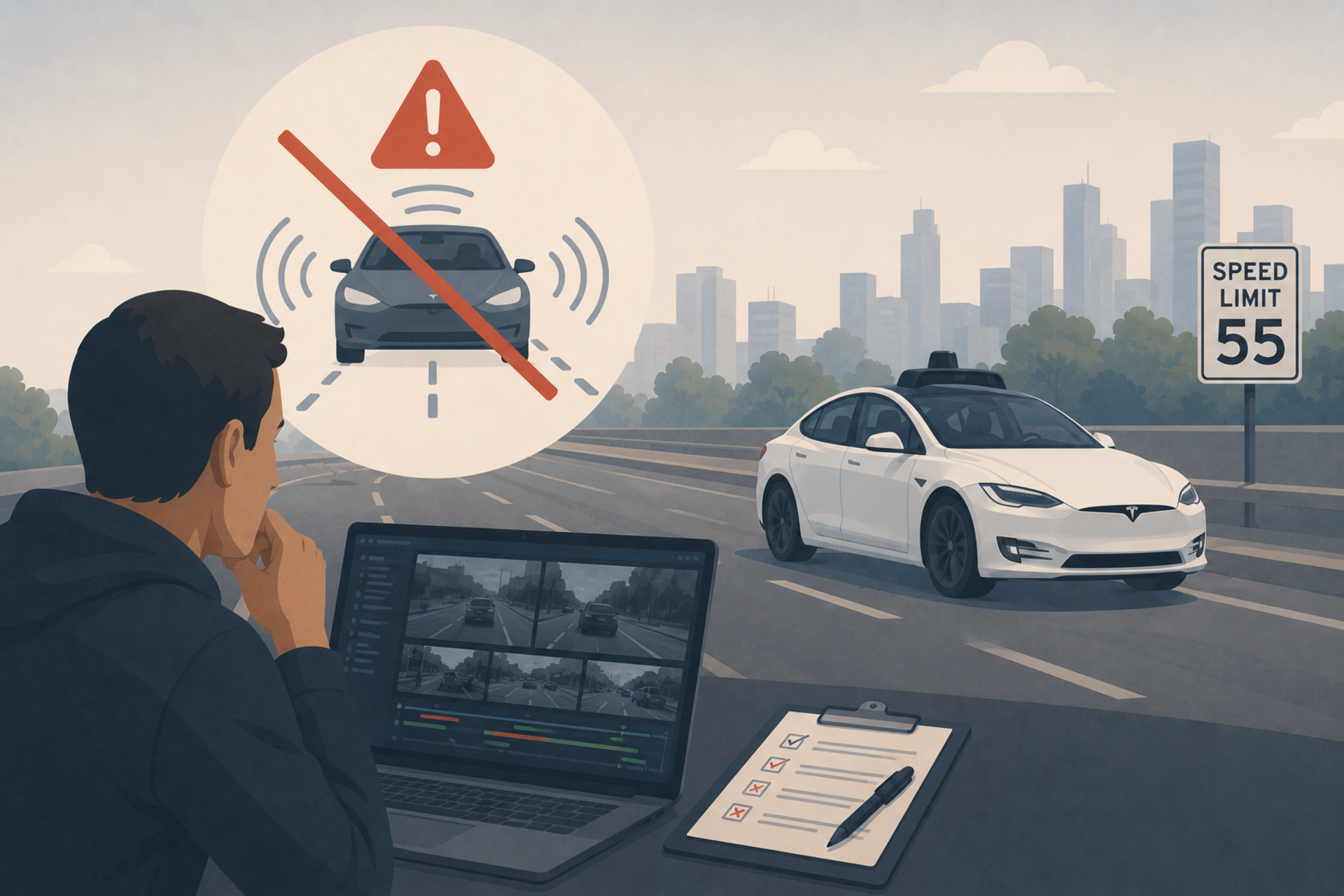
June 2, 2026 Seven of nine former Tesla data labelers interviewed by Reuters said they would not ride in a Tesla operating on Full Self-Driving (FSD), with one saying they would not get into a Tesla robotaxi “if you f**king paid me.”
The comments offer a rare glimpse into how some of the people closest to Tesla’s autonomous driving program view the technology behind it. While CEO Elon Musk has repeatedly argued that Tesla is on the verge of delivering truly autonomous transportation, several former workers who spent years reviewing and training the system say their own experiences left them unconvinced.
“We have all seen it fail,” one former data labeler told Reuters.
Another former employee, who worked as a self-driving engineer, was equally blunt.
“Definitely don’t trust Elon on this,” the engineer said, referring to Musk’s claims that Tesla vehicles are ready for safe, unsupervised driving.
The former data labelers occupied a critical role within Tesla’s self-driving operation. Their job involved reviewing vast amounts of driving footage collected from Tesla vehicles and helping train the software by identifying mistakes and edge cases. They worked directly with the raw data generated by the company’s autonomous driving systems and had access to enormous libraries of real-world driving behavior.
According to Reuters, at least five of those former workers said they frequently observed Tesla vehicles exceeding speed limits while operating in FSD mode.
What concerned them was not simply the behavior itself, but how it was treated internally. Several said speeding was often viewed as a relatively low-priority issue compared with more unusual scenarios such as strange road layouts, unexpected obstacles, or difficult lighting conditions.
That approach struck some former employees as problematic. While rare edge cases can cause serious failures, speeding is a behavior that can potentially affect every trip and every road. Yet according to those interviewed, it often received less attention than unusual driving scenarios.
The testimony arrives at a significant moment for Tesla’s self-driving ambitions, as the company recently expanded FSD availability into additional markets and confirmed availability in China. Meanwhile, Tesla continues to promote its broader vision of autonomous transportation, including robotaxi services that could eventually operate without human drivers.
Currently, Tesla’s consumer-facing FSD system remains classified as a Level 2 driver-assistance technology. That means drivers must remain attentive and ready to take control at all times.
Tesla has also been testing an unsupervised version of the technology through a limited robotaxi program in Austin, Texas. However, those operations remain geographically restricted and supported by remote safety oversight.
The gap between Tesla’s public messaging and the concerns raised by former employees has become one of the central debates surrounding the company’s self-driving efforts.
For nearly a decade, Musk has repeatedly forecast that fully autonomous Teslas were just around the corner. Since 2016, multiple timelines for robotaxis and autonomous driving have been announced, only to be delayed or revised later.
Supporters argue that Tesla’s approach is making steady progress and benefits from an unmatched volume of real-world driving data collected from millions of vehicles. On the other hand, critics counter that the company continues to overpromise while failing to meet its own timelines.
Recent incidents have further intensified scrutiny. Over the past several months, media reports have documented Teslas operating on FSD driving into lakes, heading toward damaged infrastructure, and entering dangerous traffic situations. While such incidents represent only a small portion of overall driving activity, critics argue they highlight persistent limitations in the technology.