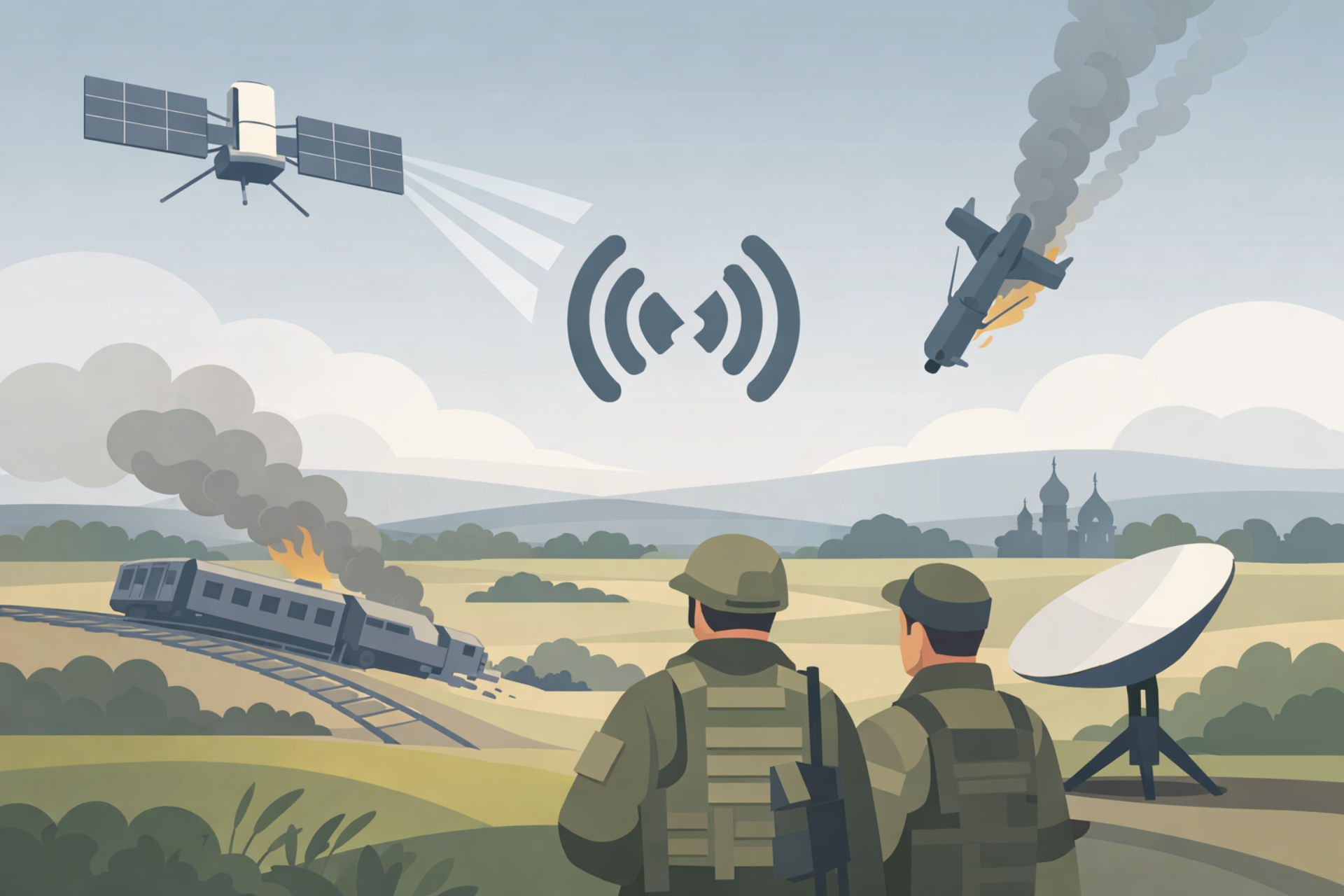
February 3, 2026 Ukraine’s defence ministry says recent steps taken by Elon Musk and SpaceX to restrict the use of Starlink satellite internet have delivered “real results” in limiting Russia’s ability to control attack drones over Ukrainian territory.
According to defence minister Mykhailo Fedorov, Russian forces had been using Starlink-connected drones in a series of deadly strikes, including an attack on a moving passenger train that killed six people. After Kyiv raised the issue, Fedorov said Musk moved quickly to address what Ukraine described as unauthorized use of the satellite network.
“Looks like the steps we took to stop the unauthorised use of Starlink by Russia have worked,” Elon Musk wrote on X, adding that further action could be taken if necessary.
Starlink, operated by SpaceX, has provided high-speed internet in Ukraine since the early days of Russia’s full-scale invasion in 2022 and has become a critical component of Ukrainian military communications. But Ukrainian officials say Russia has also been exploiting the system to enhance its drone operations.
According to Fedorov, Russian drones are particularly difficult to intercept because they fly at low altitudes, cannot be jammed using electronic warfare and are controlled in real time by operators located far from the battlefield. The Institute for the Study of War warned in mid-January that Russia’s use of Starlink-equipped Molniya-2 kamikaze drones had “dramatically” increased their effectiveness.
As reported by the ministry’s official ArmiyaInform website, SpaceX had imposed a 75-kilometre-per-hour speed limit on Starlink terminals operating over Ukraine. The restriction would prevent fast-moving drones from maintaining live connections, the report said.
Fedorov said Monday that Ukraine is also preparing to introduce a whitelist system for Starlink terminals. Under the plan, only approved and registered terminals would be allowed to operate in the country, with unregistered devices disconnected.
“We are implementing this in cooperation with SpaceX,” Fedorov said, adding that registration instructions would be released soon.
Russian military bloggers have warned that the move could have broader consequences, noting that Russian forces also rely on Starlink to provide internet access along parts of the front line.
Musk’s relationship with Kyiv has fluctuated since the start of the war. He enabled Starlink in Ukraine within hours of an early request in February 2022. The move was widely credited with helping stabilize communications as fighting intensified. Later that year, he refused to extend coverage to Crimea, arguing it could draw SpaceX directly into the conflict. Musk has also criticized Western governments for continuing to fund Ukraine’s war effort.
Despite those tensions, Musk has said Starlink would not be shut down in Ukraine, describing it as central to the country’s military communications.