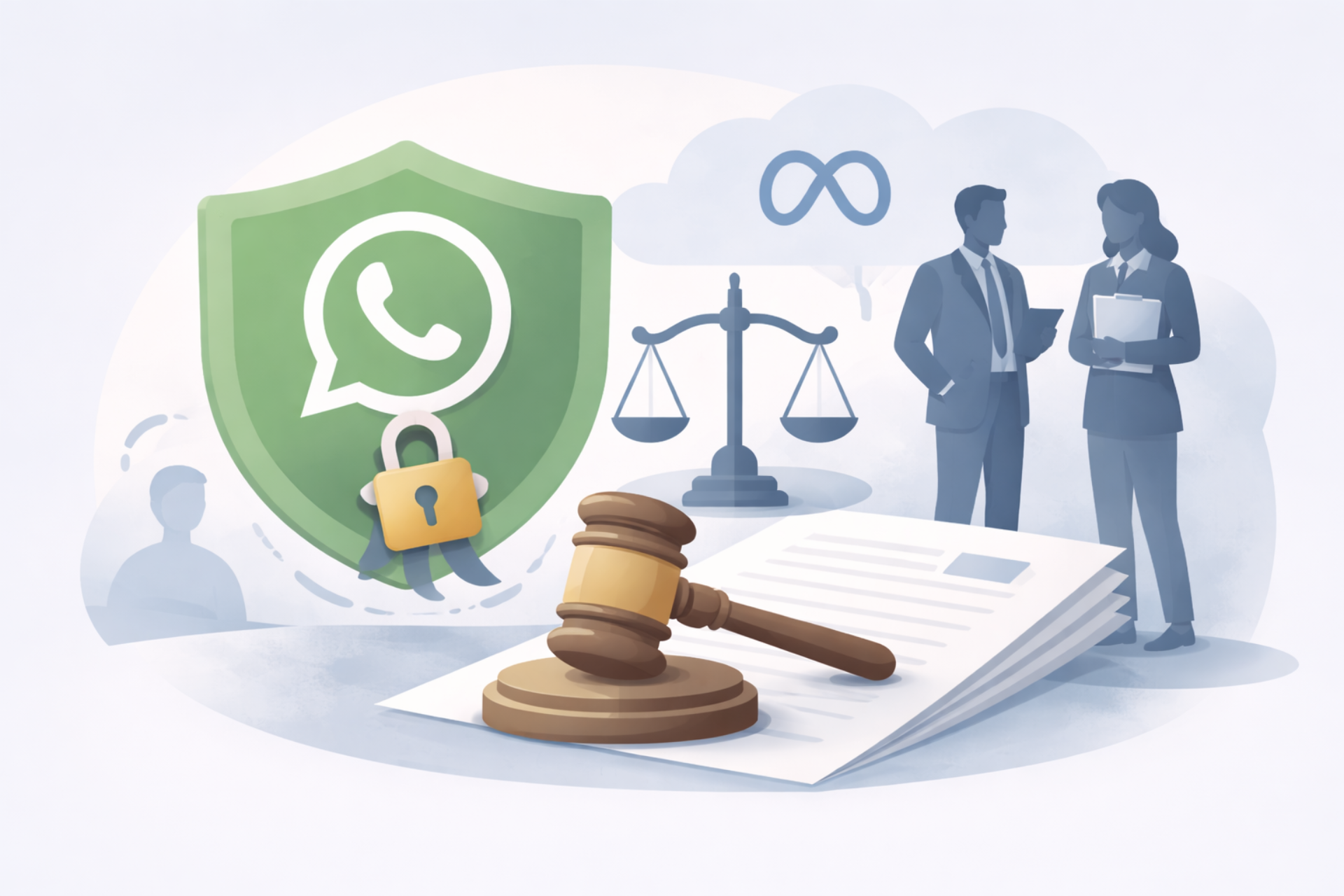
January 28, 2026 A complaint filed Friday in the U.S. District Court for the Northern District of California alleges that Meta misled billions of users about the security of WhatsApp’s end-to-end encryption. Plaintiffs from Australia, Brazil, India, Mexico and South Africa are asking the court to certify the case as a global class action on behalf of WhatsApp users worldwide.
At the heart of the case is WhatsApp’s claim that messages are protected by end-to-end encryption, meaning that even the company itself cannot read or listen to them. The lawsuit contends that this assurance is overstated. According to the filing, Meta and WhatsApp can “store, analyze, and access” user messages despite repeatedly telling the public that message content remains private.
In a statement to Bloomberg, Meta spokesperson Andy Stone called the claims “categorically false and absurd.” Clarifying that WhatsApp “has been end-to-end encrypted using the Signal protocol for a decade,” Stone described the lawsuit as “a frivolous work of fiction” and said Meta plans to seek sanctions against the plaintiffs’ legal team.
The Signal protocol, originally developed by Open Whisper Systems, is widely regarded by cryptography experts as a gold standard for secure messaging. It relies on asymmetric encryption and forward secrecy to ensure that only participants in a conversation can access its contents. WhatsApp has used the protocol for years and has consistently said encryption is enabled by default for all chats.
The lawsuit challenges that technical guarantee, arguing that Meta’s internal systems undermine the core premise of end-to-end encryption. According to the complaint, Meta retains access to data that should be unreadable even to its own servers and that employees are able to examine message content. These assertions are said to be based on information from unnamed whistleblowers, though the filing does not identify them or detail the supporting evidence.
The plaintiffs are represented by attorneys from Quinn Emanuel Urquhart & Sullivan and Keller Postman LLP, along with Jay Barnett of Barnett Legal. None of the lawyers involved has commented publicly beyond the court filings.
If the case proceeds, it could have implications well beyond WhatsApp. For years, encryption standards like the Signal protocol have been held up as models of secure communication for consumers. A court-backed finding that such systems were misrepresented could raise broader questions about how encryption claims are verified, audited and explained to users. There is also the question of whether trust in “end-to-end” messaging has been built on assumptions that deserve closer scrutiny.