May 5, 2026 Connecticut lawmakers are advancing a bill that would require students to keep cell phones switched off and out of use for the entire school day. If passed, the state would join 35 others with legal restrictions on phone use in schools, signalling a broader shift toward formalising policies that many districts already enforce informally.
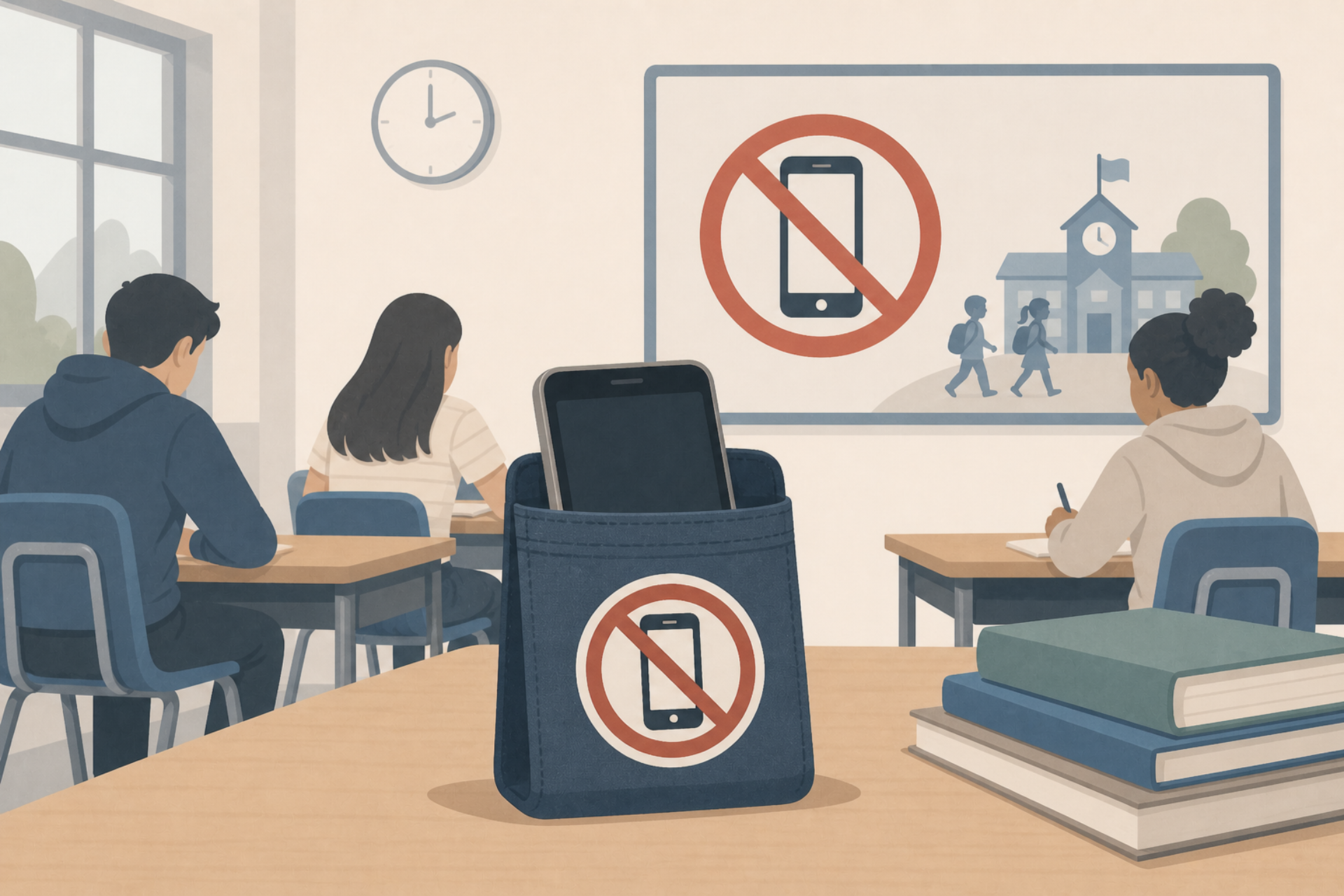
The proposal would apply from the first bell to the last, with schools given flexibility on how devices are stored whether in backpacks, lockers or locked pouches. While many schools already impose partial restrictions, the legislation would standardise expectations statewide and potentially make enforcement more consistent.
The move reflects a wider trend. Similar policies are being considered or implemented beyond the U.S., including plans in England to legislate phone bans in schools. Together, these efforts point to a growing consensus among policymakers that device use in classrooms needs tighter control, even as implementation details vary by region.
Support for these measures is largely driven by data from educators. A survey by the EdWeek Research Center found that 69 per cent of respondents reported improved classroom behaviour following phone restrictions, while 70 per cent saw better engagement in learning. Additional gains were noted in student wellbeing, skill development and social-emotional outcomes, suggesting that reduced device use may have broad effects beyond academics.
Other research reinforces those findings. A report from the Paragon Health Institute cited studies linking phone bans to measurable academic improvements, including a 6.4 per cent increase in national exam scores in the United Kingdom. While methodologies differ, the direction of the data has contributed to growing policy momentum.
However, the issue remains contested. Critics point to trade-offs around safety and communication, particularly the ability for students to contact parents during emergencies or throughout the day. There are also operational considerations, including the cost of enforcement tools like secure phone pouches and the administrative burden of monitoring compliance.
Educators themselves are not uniformly aligned. Some teachers have incorporated smartphones into classroom activities, using them for research or collaboration when school infrastructure falls short. In those environments, a blanket ban could remove a practical tool rather than a distraction.
Lawmakers in Connecticut have also raised concerns about how a uniform policy applies across age groups. Christie Carpino argued that younger children and older students should not necessarily be treated the same, while Lezlye Zupkus questioned whether restricting students while allowing staff to use phones sends the right message.