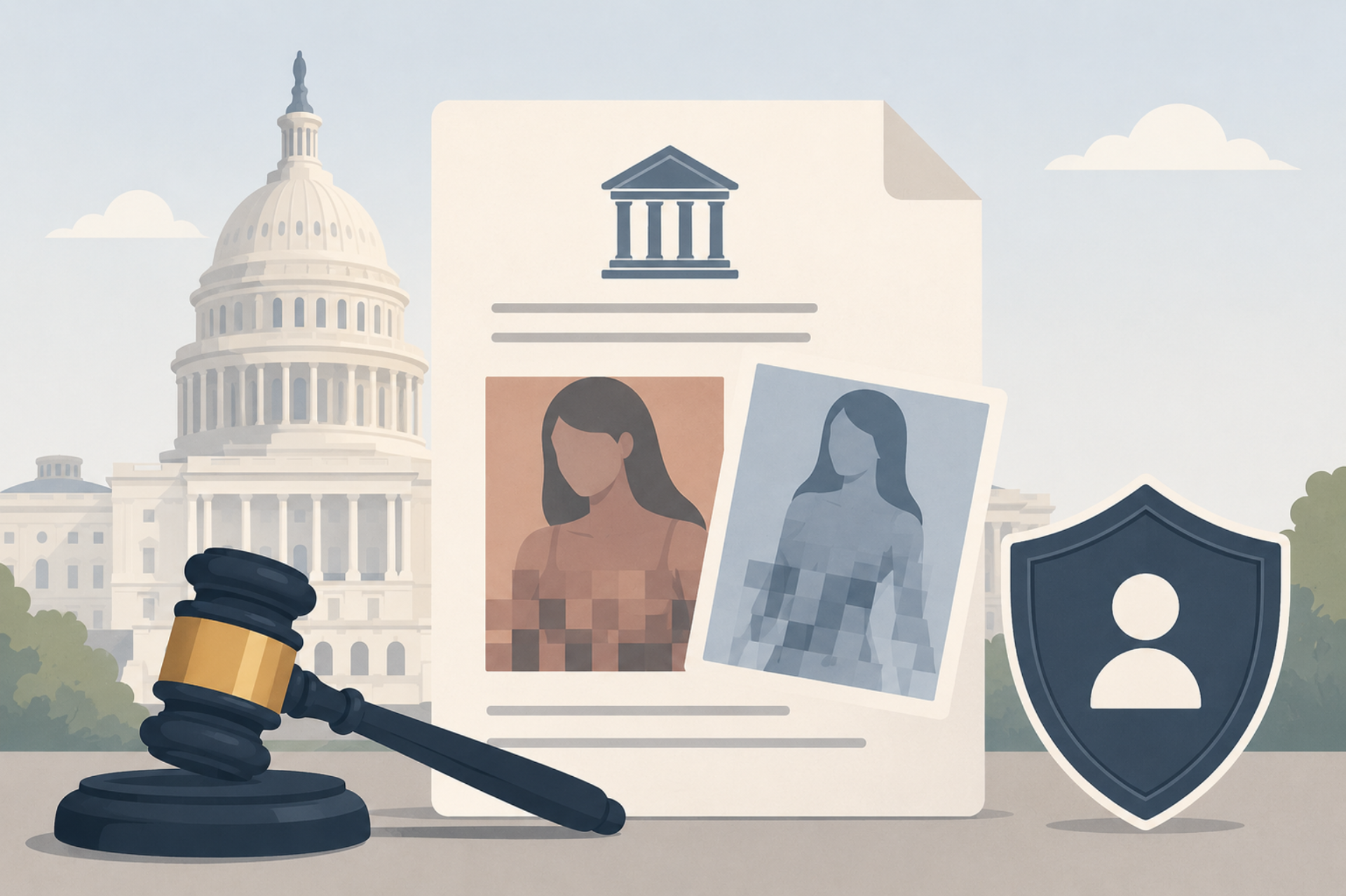
May 12, 2026 A House of Commons committee has amended Bill C-16 to expand Canada’s proposed criminal ban on non-consensual sexual deepfakes so it now includes “nearly nude” images. The change was introduced after concerns that many AI-generated images circulating online, including altered photos produced earlier this year through Grok on X, would not have met the bill’s original legal threshold.
The original version of the legislation focused on images depicting someone nude, exposing sexual organs or engaged in explicit sexual activity. Critics argued that definition was too narrow for modern AI-generated content, where manipulated images may appear sexually explicit or humiliating without technically qualifying as nudity under existing standards.
Conservative MP Andrew Lawton introduced the amendment, which passed during committee review. The revised language broadens the definition of prohibited material to include people shown nude or “nearly nude.”
“We are seeing with the advancement of technology these very sophisticated and in some cases quite traumatizing assaults taking place,” Lawton told the committee. “It simply just ensures that a small technicality is not excluding something that I think this law intends to capture.”
Liberal MP Patricia Lattanzio, parliamentary secretary to Justice Minister Sean Fraser, supported the amendment, saying it “clarifies the scope of the offence” while responding to evolving case law and the needs of victims.
Not all MPs agreed with the wording. Bloc Québécois MP Rhéal Fortin objected to the phrase “nearly nude,” arguing the definition lacked precision.
The committee also approved another amendment adding explicit references to artificial intelligence software within the definition of an “intimate image.” Lawton said the goal was to ensure the legislation remains relevant as generative AI systems evolve.
“We’re trying to ensure that we don’t end up having to come back to the drawing board because this fails to capture the technologies that we’re dealing with here,” he said.
The amendments come amid growing political and legal pressure globally to address AI-generated sexual imagery. Earlier this year, users widely circulated manipulated images generated by Grok that depicted women in transparent clothing or altered sexualized contexts without consent. Experts warned those examples exposed gaps in existing Canadian law.
NDP MP Leah Gazan proposed an additional amendment that would have expanded protections further to include sexualized or humiliating depictions that do not necessarily involve nudity. Examples discussed included transparent clothing, visible injuries or violent imagery.
Gazan argued those images still constitute forms of abuse and humiliation.
“We cannot leave open loopholes in this legislation that perpetrators can exploit to evade justice,” she said during committee hearings.
That amendment was ultimately not adopted.
Committee members also approved changes increasing maximum penalties when deepfake material depicts sexual assault. Another amendment would require platforms or services to remove prohibited images within 48 hours.
Lawton said the takedown provision is intended to place greater responsibility on technology companies hosting or distributing the material. However, departmental officials told MPs it remains unclear whether the rule would speed up removals in practice or create additional legal complexity around enforcement timelines.
Bill C-16 goes beyond deepfakes. The legislation also includes provisions related to coercive control and seeks to restore mandatory minimum prison penalties previously struck down by courts as unconstitutional.
The bill is one of several criminal justice measures introduced by the Liberal government as part of a broader tougher-on-crime legislative agenda. It has now completed clause-by-clause review in committee but still needs to pass both the House of Commons and the Senate before becoming law.