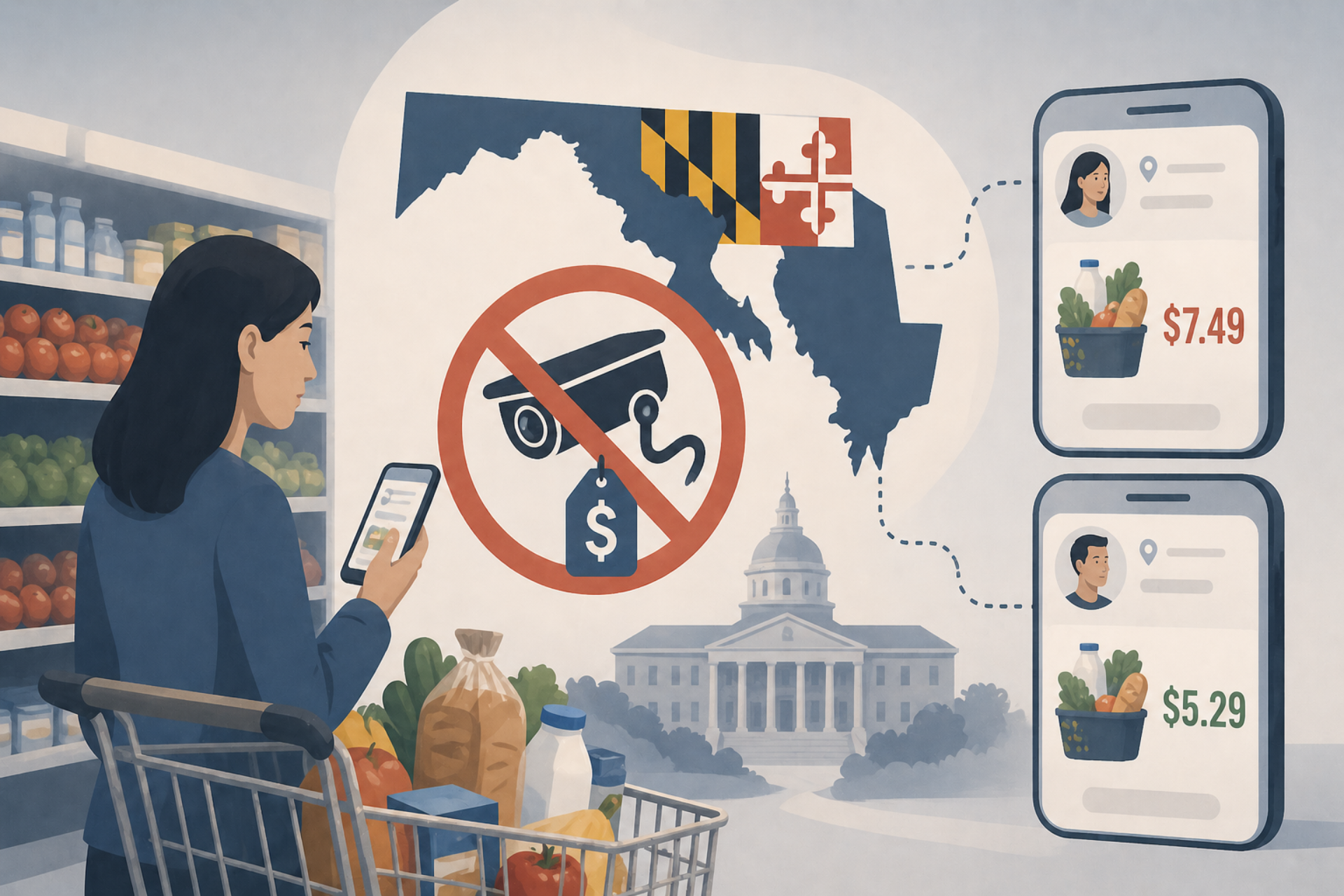
April 30, 2026 Maryland has become the first U.S. state to ban surveillance pricing in grocery stores, prohibiting retailers from using personal data to charge different customers different prices for the same items. The move targets a growing use of AI-driven pricing models that adjust costs based on factors like location, browsing history and demographics.
Governor Wes Moore signed the law this week, framing it as a consumer protection measure. “At a time when technology can predict what we need, when we need it, when we’ll pay for it and also – when we’ll pay more for it… Maryland is not just pushing back. Maryland is pushing forward because we are going to protect our people,” he said.
The legislation specifically blocks grocers and third-party delivery services from setting higher prices using personal data. Surveillance pricing, also referred to as dynamic pricing in this context, allows businesses to tailor prices in real time based on individual consumer profiles. Critics argue the practice effectively charges each customer the maximum they are willing to pay.
The issue extends beyond groceries. The Federal Trade Commission has identified similar pricing strategies across sectors including clothing, beauty products and home goods. However, policymakers have focused on food pricing due to its direct impact on affordability and access.
Maryland’s law includes notable exemptions. Loyalty programs and promotional offers remain allowed, and the legislation does not restrict lowering prices based on consumer data. Critics say these carve-outs could enable similar outcomes through different mechanisms, such as raising baseline prices and then offering targeted discounts.
Consumer advocacy groups have also raised concerns about enforcement. Consumer Reports said it supports the intent of the law but pointed to “weak enforcement provisions” that could limit its effectiveness. The group has previously investigated pricing practices on platforms like Instacart, which later said it would stop enabling variable pricing by retailers.
At the federal level, momentum remains uncertain, as the FTC launched an investigation into surveillance pricing under the previous administration and found companies were using a wide range of personal data to set prices. However, current leadership has been less supportive of regulatory action, increasing pressure on states to act independently.
The policy debate is also gaining traction in Canada, where the New Democratic Party is pushing for a nationwide ban on what it describes as “surveillance pricing.” The party has called on the federal government to prohibit retailers and platforms from using data such as browsing history, location and shopping habits to personalize prices both online and in physical stores.
In April 2026, the NDP introduced a motion in Parliament to address the issue, but it was rejected. Despite that, the party continues to advocate for federal action and has also signalled support for provincial-level measures, including efforts already underway in Manitoba. NDP figures have characterized the practice as unfair to consumers, warning that it could lead to widespread price discrimination across sectors including retail, travel and e-commerce.
The Canadian discussion mirrors concerns raised in the U.S.: that AI-enabled pricing could quietly shift markets toward individualized pricing models where transparency is limited and consumers have little visibility into how prices are set. Supporters of regulation argue that without intervention, the practice could become standard across digital and physical commerce.